Evil Dukpas, ‘Woke’ TV Reboots, and Dreams of Tibet: On the Blavatskyisms of Twin Peaks

black lodge

(Agent Cooper with the dwarf-spirit or ‘Man from Another Place’ in the Black Lodge, in Twin Peaks)

The twenty-five-year-in-the-making third season of cult series Twin Peaks has just piloted and sue me, but I have not yet watched all of the first two seasons of the show – my Dad who, aside from having worms was also into gimmick tees before they were like, even a thing, was a major fan of the series though, and he used to wear a shirt that said ‘I killed Laura Palmer’ when the show was running, so I recognize that I have very little excuse here.

i killed laura.jpg

(I guess my Dad’s t-shirt was cool, but clearly not as cool as this bro’s ‘I Killed Laura Palmer’ HOODIE. If you’re going to publicly confess to murder, I guess it makes sense to wear a hoodie?)

Still, even though I have not seen all of the show I AM well aware that the plot of Season 2 in particular is chock-full of references to Tibetan Buddhism and Native American religion as filtered through the muddy glass of Madame Blavatsky’s Theosophical imagination. It is well known that Twin Peaks’ writer Mark Frost is fascinated by Theosophy and the clips below from Season 2 offers a prime example of his Blavatsky fanboying. Appearing in a recording, Windom Earle, Agent Cooper’s former mentor, rants about the ‘evil sorcerers called Dukpas’ who tap into the sinister power of the ‘Black Lodge’ – the dark dimension out of time and almost out of space that is a key plot device in Twin Peaks – for their twisted enrichment. (As I will discuss at length below, the word ‘Dukpa’ ultimately derives from འབྲུག་པ or ‘brug pa which, meaning ‘Dragon’ in Tibetan, refers to both a particular sub-lineage of the Kagyu school of Tibetan Buddhism and the country of Bhutan).

Continue reading →

To See is to Call: Tantric Visualization, Summoning Spirits and the Mind as Petting Zoo

dakini-09

(Crushed marble sculptural installation ‘Flying Dakini’ 2014, by artist Agnes Arellano)

The other day I got sucked into a Facebook comment thread which got me thinking about the connection between translation strategies and the ways that practitioners think about and actually practice religious texts. To give you a little context, the thread was about spirit conjuration procedures and offering practices as found in Western magical traditions, and as the discussion unfolded I found myself reflecting upon the way that certain key technical terms often found in Tibetan sadhanas or tantric ritual manuals have been translated into English.

Translation is a double-edged process – to translate a thing involves both drawing it near and holding it apart. Depending on the circumstances, understanding can arise as much from domesticating a term in a target language as it can from choosing to hold onto a word’s strangeness through a literal translation. What is lost and gained, for example, when we translate the Sanskrit Dakini/Tibetan Khandroma – a tantric goddess – with a loaded Judeo-Christian-Islamic term like angel, and what is obscured, what is illuminated when we opt for say, a literal translation of the Tibetan term (khandroma, mkha’ ‘gro ma) ‘female sky-goer’? Continue reading →

Interview with Scott Gosnell on Bottle Rocket Science

(Yuthok Yönten Gönpo the Younger, the King of Doctors. While he is typically remembered as one of the founding figures of Sowa Rigpa or Tibetan traditional medicine, he was also a great and accomplished non-celibate tantric yogi and ngakpa. Exquisite painting by Anna Artemyeva)

An interview I did two weeks ago with Giordiano Bruno translator Scott Gosnell for his Start-up Geometry podcast is now up for listening on Scott’s podcast website Bottle Rocket Science.

I feel deeply flattered and overrated considering that my interview follows that of far more accomplished scholar Alan Wallace, but I am nonetheless happy to be in good virtual company (do yourself a favour and listen to Alan as well!). In my interview I talked a bit about my research with Tibetan Buddhist non-celibate tantric specialists or ngakpa, and also delved a little into issues surrounding the globalization of Tibetan esotericism as well as the links between Tibetan tantra and Tibetan traditional medicine. I hope you find it interesting or useful and that the things I said weren’t too boring or stupid. As always I’m probably not going to listen to this edited version, so please do tell me your thoughts! དགེའོ།

http://bottlerocketscience.blogspot.com/2017/04/ep-030-ben-joffe.html?m=1

A Banquet of Nectar: Dilgo Khyentse Rinpoche’s Advice for the Rebgong Tantric Community

image-21-657x540

(His Holiness, Dilgo Khyentse Rinpoche)

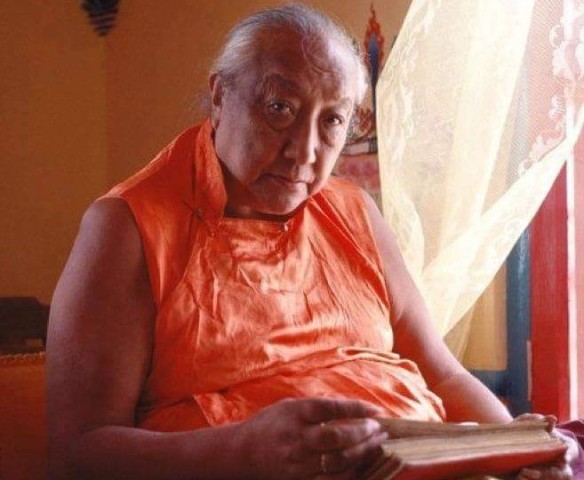
Following on from an earlier post where I offered a rough translation of a Tibetan praise-poem to the long-haired, white-robed community of non-celibate tantric Buddhist ngakpa and ngakma, I thought I would share an equally rough translation of another ཞལ་གདམས (zhal gdams, pronounced something like shaldahm/jaldahm) or ‘oral advice’ text for ngakpa – this time, one given by the great tantric yogi, scholar, treasure revealer and Dzogchen meditation master His Holiness Dilgo Khyentse Rinpoche. Continue reading →

Indigenous ‘Nature Spirits’, Bio-regional Animisms and the Legal Personhood of Other-than-human Persons

mauna_kea_from_mauna_loa_observatory,_hawaii_-_20100913-1

(Mauna Kea mountain in Hawaii. An inactive, million-year old vulcano, Mauna Kea is the largest mountain on earth. While Mount Everest is the tallest mountain when measured from sea-level up, Mauna Kea, when measured from its actual base deep in the Pacific Ocean to its peak, exceeds the Himalayan sacred mountain considerably)

The day before yesterday I was fortunate enough to catch some of the panels of the first day of a jam-packed two-day conference held at my University titled ‘Indigenous Storytelling and Law.’ The conference, which was presented by the University of Colorado Boulder’s Center for Native American and Indigenous Studies, brought together a great number of native and some non-native litigators, scholars, activists and community members to reflect on and discuss a range of pressing issues affecting native communities, with a spotlight on how indigenous politics, sovereignty, experiences, histories, and cultural, economic and legal practices have come up against those of both state and federal settler colonial U.S. authorities and non-native groups and institutions. Click here to see the fantastic line-up across the two-day event. Continue reading →

For the Religion and the Race: Words of Praise for Tibetan Non-Celibate Tantrikas

(A depiction of prominent 19th century poet, meditation master and promoter of the ‘white robed, dreadlocked community’ or ngakpa tradition, Shabkar Tsokdruk Rangdrol)

Recently, some non-Tibetan practitioners of Tibetan tantric Buddhism or Vajrayana were asking me about some informal advice texts or ‘speeches’ ༼གཏམ། tahm༽written in Tibetan by great ngakpa ༼སྔགས་པ།༽ or non-celibate tantric ritual specialists and whether these had been translated into English. In the course of looking into some of these older texts, I was reminded of a Tibetan blog post from 2009, which represents an interesting variation on the genre of advice speech for ngakpas, by ngakpas. So I thought I would translate it – very roughly! – and share it here.

Continue reading →

Celebrity Shamans and the Question of Indigenous Knowledge: A Review of, and some stray Reflections on ‘Inyanga: Sarah Mashele’s Story’

inyanga-1

I was wafting around a second-hand clothing store when I was in Cape Town, South Africa in December last year when I came across a curious little volume hidden behind some piles of clothing and gaudy costume jewelry. The book’s single word title ‘Inyanga’ caught my eye. Inyanga is a technical term in isiZulu and isiXhosa for a particular kind of traditional healer or curer (more on the technical specifications or lack thereof of this designation later). Written by white South African writer and journalist Lilian Simon, Inyanga was published in 1993, one year before the abolition of Apartheid, and constitutes a kind-of memoir for prominent black South African traditional healer Sarah Mashele. From roughly the 1950s until the present (I have not been able to determine yet if she is still alive) Sarah Mashele worked full-time as a healer in and around Pretoria and Johannesburg – and in the formally blacks-only segregated urban neighbourhood of Soweto in particular – providing services to patients across the race, class and cultural spectrum. I just finished reading the book, and so I thought I would offer a review of it as well as some reflections on its contents and Simon and Mashele’s collaboration for interested readers. Continue reading →

Embodying Healing: Tantric Ritual Short-hand and the Training of Anthropological Attention

AH syllable.jpg

Elaborate ritual procedures are a hallmark of Indo-Tibetan tantra. Tantric rites are often long and complex. Ceremonies typically involve multiple parts or stages, replete with lengthy chanted liturgies, extensive visualizations and gestures, and the making of both physical and imagined offerings. The ability to memorize such procedures, and to properly and elegantly execute the intricate choreographies of body posture and movement, recited mantras, and imagined forms which they require, is crucial to tantric expertise. Large-scale and extended rituals which involve a lot of people, ritual trappings, and processes are important in Tibetan Buddhist contexts and are conducted frequently. Yet the prevalence of externally elaborate ritual performances should not be taken to mean that smaller, quicker and more ‘internal’ rites are not also a vital part of Tibetan ritual specialists’ work. Continue reading →

Anthropology, Esotericism, and ‘Fringe’ Buddhism: Interview on the Imperfect Buddha Podcast

devil-woodcut

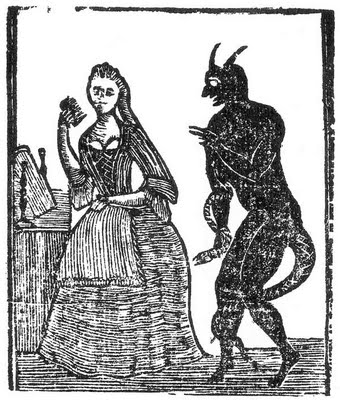
A month or two ago I did an interview with Matthew O’Connell for his ‘Imperfect Buddha’ podcast, where I talked about doing research on Western esotericism as an anthropologist and scholar-practitioner, and about some of the more ‘fringe’ dimensions of global Tibetan Buddhism today. I ended up talking a lot about myself and not that much about the specific details of my research, and Matthew barely got a word in edgeways, but it is what it is. Many of the posts and articles on this blog get a mention. I no doubt said a lot of things that would benefit from further qualification and which I would probably take issue with if I heard myself saying them now. The thought of listening to my voice drone on for that long curdles my juices and fills me with acute horror though, so I’m can’t be sure – you’ll just have to listen to the interview yourselves and tell me how it makes you feel instead.

Shout out to Matt for arranging things, and thinking I was interesting enough to have on the show. Let me know what you think!

https://posttraditionalbuddhism.com/2016/07/27/8-0-imperfect-buddha-podcast-ben-joffe-on-the-paranormal-tibetan-buddhism-the-ngakpa/


‘As Wealthy as a King’: Common Tools and Substances used in Mantra Healing

10403621_860892917278683_1693782508765882216_n

(A regal-looking Dilgo Khyentse Rinpoche (1910-1991), with tantric ritual bell or dril bu, seated behind a sbyin sreg or ‘burnt offering’ fire)

As a follow-up to my recent translation of Dr Nida Chenagtang’s chapter on how mantras work, I decided to translate a subsequent chapter in Dr Nida’s Mantra Healing book which deals with the ritual tools and substances most commonly used by ngakpa/ma. Dr Nida la gives a brief summary of some of the most salient ritual implements and objects used by mantra-healers and tantric wizards, and describes their functions, rationale, and construction, along with rules for their proper handling and use. The subject of ritual tools necessarily ties in which more general, theoretical reflections I have made on this blog about the role of materiality in magic and religion. How ought we to understand the status of magical, blessed or powerful objects or materials, in a Buddhist context where nothing that exists has any innate or enduring substantiality on the ultimate level, or for that matter where subtle, ‘imagined forms’ may be just as ontologically real, agentive, and efficacious as gross, material ones? As we saw in Dr Nida’s earlier chapter about mantras’ efficacy, the ultimate emptiness of phenomena is in fact directly related to their functionality or agency – it is precisely because material things are impermanent, compounded and conditional, that they are able to be transformed, and to transform in kind. Buddhist notions of dependent-origination and emptiness are wholesale dispensations that apply across divides of body-and-mind, real-and-representational, which are themselves also categories that operate quite differently in Buddhist philosophical contexts versus non-Buddhist ones. Continue reading →