We arrive now at the fourth and final Part of this series on Patrül Rinpoche’s nineteenth century reworking of a twelfth century text by Kadampa master Chegompa, which explains how Buddhist practitioners can identify and respond to the influence of Mara or maras in their spiritual practice and lives (see here, here, and here for Parts I, II, and III respectively). In this concluding section of the text, Chegompa outlines the methods that Buddhist practitioners can use to treat and prevent mara-obstacles (as in previous posts, I have alternated between translating dü བདུད་ as singular ‘Mara’ with a capital M and as lower case m ‘mara’ in the singular or ‘maras’ in the plural. I’ve also translated the term neljor, nenjor རྣལ་འབྱོར་ as ‘yogic practitioner/s’ or ‘yogis and yoginis’ even thought this term is not explicitly feminized in Chegompa’s text. See Part I for a brief introduction to the Buddhist concept of Mara/maras).
The good news about Chegompa’s recommendations for treating and preventing mara-obstacles is that they are already fundamental elements of Buddhist spiritual practice. Some of the most interesting aspects of this closing section are also the reflections Chegompa offers on the fact that maras themselves are not the problem. What ultimately matters is how practitioners of tantric yoga orient themselves to ‘demonic’ adversaries and obstacles more broadly. As before, let’s dive into the text and I’ll share some observations at the end.
PART FOUR:
Complete Victory over Mara: Pith Instructions on how to Diagnose the Causes of Mara or Obstructing Demons and the Methods for Avoiding Them
Now I will describe the methods for pacifying or curing these maras. There are six methods:
Method One:
Pacifying maras though tingngedzin (samadhi or mental absorption) on the Emptiness of Dharmata, the Ultimate Nature or Reality
In general, the root of all maras is the clear, fast-acting mind itself which clings onto self-less-ness as if it were a self. As it says in the Chöjuk (i.e. Shantideva’s Bodhisattvacaryavatara):
“Whatever harms there may be in the universe,
Whatever fear and suffering is to be found,
These all come from clinging onto a self, an I –
So, what use do I have for this Great Demon?
And:
“Mara is your own mind – purify your own mind into sky-like spaciousness.”
And:
“Your own mind is what is what is called ‘Mara’. Your own mind is the gek or obstacle.”
Thus, the self which is obstructed, the mara which does the obstructing and the actual obstacle itself – all three of these are the namtok – i.e. the thoughts, concepts, projections – of your own mind. And those namtok are illusory – like a magical illusion, they appear yet don’t really exist, aren’t really there. A magical illusion doesn’t have any inherent nature at all: it has been Emptiness from the beginning. Thus, all three elements – the self that is obstructed, the mara that obstructs, and the actual obstacle are all of the same nature, they all have the same ‘flavour’ or ‘taste’ of your own namtok. They are all equally like magical illusions, illusory in flavour. They also all have the single flavour, the one taste of the empty Dharmata. There is no separate Mara to be rejected that is other than the Dharmata; there is no Dharmata separate from Mara to be sought out. Maras appear as adornments (gyen – beautifying, ornamenting jewelry or accessories), magical emanations (trülpa), and signs and symptoms (tak) of Dharmata. They appear from the Dhatu, the expanse of Emptiness, they abide in the Dhatu, and subside within the Dhatu. In this there is no cause for clinging to duality to be found, nothing to give rise to hopes or fears, to rejecting and adopting, or any other dualisms. You should understand that when rigpa (i.e. knowing or seeing of the nature of one’s mind) is free from grasping and completely root-less, without basis, then there is nothing nor anyone at all that can be obstructed by Mara or by any mara-like entity or thing. Maras won’t have opportunity to harm yogic practitioners who possess such a realization.
As is stated in the Düpa (Ratnaguṇasaṃcayagāthā, a sutra summarizing the teachings of the Prajnaparamita Sutra):
“When those sages who possess the best outlook, look day and night into the ultimate significance of the sublime Prajnaparamita, the Perfection of Wisdom, their bodies and minds move through space like birds flying in the sky – how then could the Clan of Darkness, the Family of Maras, have any opportunity to do them harm?”
And also:
“[Whoever masters] the Perfection of Wisdom in which the Buddha-Protectors are continually engaged will be impervious to poisons, weapons, fire, and water. The maras and mara factions will have no opportunity to harm them.”
And in the Yum (the Mother Prajnaparamita Sutra itself):
“There is no way Emptiness can harm Emptiness. There is no way Characteristic-less-ness can harm Characteristic-less-ness. There is no way Aspiration-less-ness can harm Aspiration-less-ness.”
And:
“Once you’ve meditated on Emptiness, not even the Lord of Death can harm you. How then could even all the tens of millions of maras do you any harm?”
And:
“If you stay within the empty nature of the Dharmata, whatever harmful characteristic of phenomena may arise, even if sentient beings within the Three Realms rise up against you as enemies, no harm whatsoever will affect you.”
And so on.
Method Two:
Pacifying maras through Loving-kindness, Compassion, and Bodhichitta:
In general, if you meditate uninterruptedly on Loving-kindness and Compassion towards all sentient beings and give rise to these qualities in your mind-stream, no hurt or harm from outer enemies can affect you and all these adversaries will be pacified naturally, just as they are, within their own ground of being. In particular, when loving-kindness and compassion arise sincerely from deep within towards maras, they will be pacified naturally. For example, in the world, it is very difficult to answer benefit with harm and very difficult to answer harm with benefit. In the same way, if you give rise to an uncontrived attitude of wanting to benefit in response to maras who inflict harm on you, all the harmful vindictiveness, all the capacities and powers of these maras and all their factions will be put to shame and will be perfectly pacified and repulsed. As is taught in the Dorjé Köpa (རྡོ་རྗེ་བཀོད་པ་):
“Even all the obstacle-creating maras are turned back into the state of Great Peace through the antidote of Supreme Bodhichitta”
And as the Gyacher Rölpa (i.e.the Lalitavistara sutra) states as well:
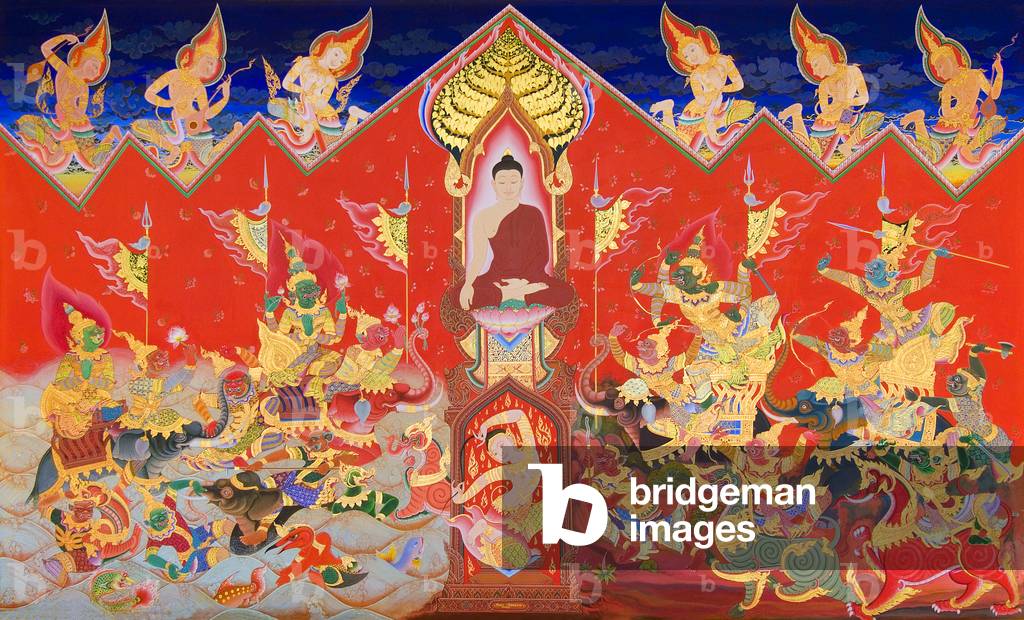
“When the shower of weapons of the millions upon millions of mara armies rained down on the Bhagavan, he entered into the samadhi of Great Loving-Kindness and through this, all these weapons raining down were transformed into showers of flowers. All the sounds of striking and killing and the like transformed into Buddha sounds, Dharma sounds, and Sangha sounds. Being put to shame, all the mara battalions departed for their own abodes.”*
*This quotation seems like it might be a paraphrase or from a different version to the account found in this 84000 translation.
Method Three:
Pacifying maras through devotion, mantra, and profound tendrel (i.e. interdependent magical links):
The primary point is that when you see your Guru as Buddha and feel intense, uninterrupted devotion towards them, then you cannot be harmed by maras. It is taught that Guru devotion is the Profound Path free from obstacles. When you have continual devotion for the Three Jewels and make continual offerings to them, the maras cannot harm you. This is due to the Three Jewels’ blessings. When your body, speech, and mind are never separate from the Three Mandalas of Enlightened Body, Speech, and Mind (i.e. your body is never separate from the yidam’s Body, your speech-energy from its Mantra, your mind from the Dharmata etc.) and you engage in Secret Mantra recitations and visualizations to the fullest extent you can, the mara category of yidak (hungry, restless spirit) cannot harm you.
As the Rigpa Chok ki gyü (the Vidyottama Tantra, a Mahayoga class Vajrakilaya tantra) states:
“Gek (obstacles to meditation) deplete every last bit of sönam (merit, positive force). When you are free from gek, sönam completely multiplies. For this reason, you should be diligent in Secret Mantra recitation and visualization practices.”
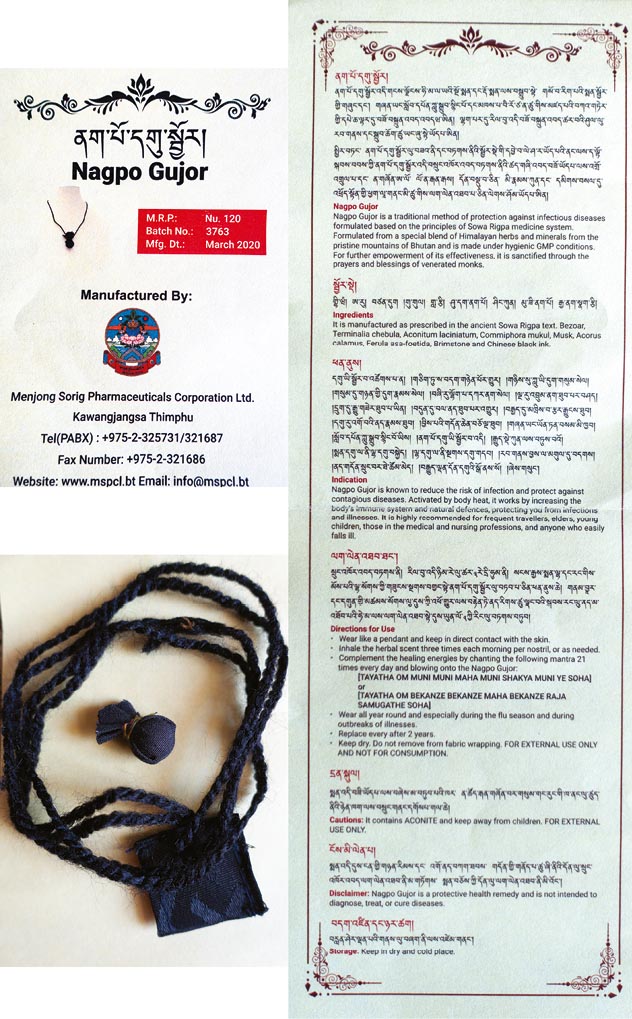
Additionally, if you rely on profound tendrel – ritual methods involving interdependent magical links – like medicinal formulas (such as Nagarjuna’s Nakpo Gujor – the ‘Black Nine Ingredient formula’) and Stick Therapy (like the Stick Therapy practices found in the Mother Tantras etc.), incense formulas for fumigation, protective circle charms, and mantric/tantric protection cords (worn on one’s chest, from gurus and dharma siblings), mara-type spirits won’t be able to harm you and will be put to flight.
**************************************************************************************
Nakpo Gujor, ནག་པོ་དགུ་སྦྱོར་ is a famous Tibetan medical formula which is especially prized for its ability to protect those who wear and smell it from infectious diseases, especially those connected with the disturbed, harmful spirits. Small dark-colored, pungent-smelling pills are made from powdered bezoar, arura (Terminalia chebula) fruit, detoxified aconite root, deer musk, calamus root (Acorus calamus), black gugul myrrh (Commiphora wightii), sulfur, and asafetida (Ferula assa-foetida), mixed with a base of black ink. The pills are typically blessed with mantras and kept in a small pouch which is worn around the neck. Just smelling the pills everyday is said to be sufficient to protect against serious infectious diseases and illnesses and ‘poisoning’ linked with spirits. The formula is associated with the Indian Buddhist master Nagarjuna.
See this earlier post of mine for more on yukchö or Tibetan ‘Stick Therapy’, a fascinating form of medical-cum-tantric yogic treatment for humoral, energetic imbalances.
******************************************************************************
Method Four:
Pacifying maras through special accumulation of Merit:
All obstacles will be quickly pacified if you make an effort to accumulate sönam or merit by doing things like writing out and reading the profound sutric and tantric scriptures, erecting statues and stupas, making tsa tsa (votive moulds), making offerings to the Three Jewels /enlightened objects of worship, serving and venerating the sangha, offering torma offering cakes, doing jinsek fire offerings, engaging in life-release of fish and other aquatic creatures (ཉེའུ་འདོན་པ་ nye’u dön, in some contexts this can also can mean exonerating human prisoners), repairing dangerous paths or roads, and so on. Once they are pacified your merit will increase greatly and as a result all causes for non-merit will be pacified as well
Method Five:
Pacifying maras through Firm Faith:
When yogis and yoginis face adverse outer circumstances – like hatred towards enemies, kindness towards relatives, bad friends, bad gurus and so on – these create obstacles and unfavorable conditions for studying, reflecting, and meditating. Inner unfavorable conditions – like internal kleshas and the obstacles connected with things like the eight worldly concerns – may also arise. Whatever happens, yogic practitioners should understand all these to be maras and should recall and meditate on the impermanence of their human life and reflect on the sufferings of samsara and the three realms of lower rebirth. They should generate the armour of great courage, they should possess firm faith which will prevent them from being diverted by outer circumstances. Internally, they should undertake practice with intense and irreversible diligence so as not to fall under to the power of attachments to this life. When you have both faith and diligence obstacles will not be able to affect or harm you.
As it says in the Sutras:
“Just as it is difficult to make a great river flow upwards in the opposite direction, so too is it difficult for Mara and mara-type spirits to turn back practitioners from the path and to create obstacles for them if they have a Bodhichitta mindset, firm faith, and are courageous and undeterrable in their diligence.”
Method Six:
Pacification through Yogic Practitioners’ Mental Correction:
Generally speaking, all outer and inner maras come from the concretization of your kleshas – from their flowing into concrete, manifest form; from your namtok – i.e. mental projections, concepts, thoughts – which create fears and doubts; and from the eight worldly concerns.
As it says in the Dorjé Köpa:
“The five obstacle-making maras come from the actions yogic practitioners confidently engage in. There is the mara of mental projections of doubt itself, the mara of indifference and laziness which thus arises, the mara of distractions caused by desire-for-and-attachment to material wealth and resources, the mara of the sharp weapon of harsh, hurtful language, and the mara of the delusion of ferocious anger and short-temperedness. These are the five maras of yogic practitioners, which obscure the authentic reality or truth (yangdak dön, ཡང་དག་དོན་)”.
And as it says in the Düpa yet again:
“You should understand that Bodhisattvas who praise themselves and malign others have been completely contaminated by maras, they are of little mental capacity.”
And:
“How could a person who hates people and doesn’t have forbearance attain Buddhahood? All the maras and all their factions rejoice when this is so.”
And:
“Teaching Dharma amidst crowds of students and getting distracted by fame without contemplating the ultimate meaning of Reality in solitude and without taming one’s hard to-tame mind is a sign of having been blessed by the maras”.
And as it says in the Pakpa Namkha Dzö ki Zhüpé Do (འཕགས་པ་ནམ་མཁའ་མཛོད་ཀྱིས་ཞུས་པའི་མདོ་Āryagaganagañjaparipṛcchānāmamahāyānasūtra, The Questions of Gaganagañja) :
“Just as wind gets through a hole, so too does Mara enter the minds of yogic practitioners and find opportunities to harm them wherever there are faults. Thus, the Bodhisattva’s mind should be free from faults like kleshas and the like. This is what one’s mind being free from faults means: that one should fully perfect the inseparability of Form-and-Emptiness, Emptiness endowed with every sublime attribute.”
As such, yogic practitioners should look into their own mind-streams, be constantly mindful and rely on mental vigilance during all the four behaviours (i.e. while eating, sitting, moving, and sleeping), at all times and in all situations and states of consciousness. They should not let their mind stay with any of the kleshas, should not a mind of desire-attachment, a mind of anger-animosity, a mind of ignorance-confusion, a mind of pride-arrogance, a mind of jealousy-envy, and so on. Yogic practitioners should not let their mind rest in conceptual states of self-grasping, states of worry and terror, states of fright, states of pleasure and displeasure, states of doubt, vacillation, and uncertainty, states of hope and fear, and the like. They should also not dwell on the eight worldly concerns – being glad when they get things and are respected and honoured and being unhappy when they don’t lack things and aren’t honoured; being glad when they are happy and comfortable and unhappy when they suffer and are in pain; being glad when they are praised and unhappy when they’re maligned; being happy when they have a good reputation and are famous and unhappy when aren’t highly regarded or famous and so on.
In sum, you should completely abandon attachment to the concreteness and characteristics of all phenomena. In this way, you should rest your mind in a state that understands the Emptiness of all phenomena. You should rest within their characteristic-less-ness. You should rest within their aspiration-less-ness. You should keep your mind resting in the loving-kindness and compassion of Bodhichitta. You should rest your mind in the equality of all phenomena. You should rest your mind in in the dream-like, illusory, sky-like nature of all phenomena. You should rest in a state that experiences all phenomena to be impermanent, non-stable, and changing. You should constantly rest your mind in a state of peace, you should rest in a gentle, tamed mind. You should rest in an upright, honest mind. You should keep your mind mindful. You should keep your mind vigilant. You should keep your mind careful and scrupulous. Keep your mind like that and if by doing that you keep your own mind-stream pure and faultless, then outer and inner maras will find no means, no moment, nor opportunity to harm you.
As it says in the Düpa:
“They have total vigilance while moving, walking, laying down, and sitting, they look just a ox-yoke’s distance ahead of them as they go, their mind undeluded. Pure, wearing pure, clean garments, pure in their performance of the Three Withdrawals (i.e. of body, speech, and mind). Not desirous, they are the cream of the crop, leaders among men (i.e. khyu chok, ཁྱུ་མཆོག་ literally, ‘the best of the herd’ a traditional epithet for enlightened beings), ever-inclined towards Dharma. They transcend the realm of Mara and do not depend on others.”
And further:
“The Four Causes make it difficult for the four maras to harm wise and powerful Bodhisattvas, they have no power to move or sway them. (These Four Causes are): realizing Emptiness without throwing away sentient beings entirely in the process, doing what one promises and being blessed by the Sugatas.”
And (alternatively), as it states in the Pakpa Könchok Tsekpa (འཕགས་པ་དཀོན་མཆོག་བརྩེགས་པ་ the Mahāratnakūṭasūtra, ‘The Heap of Jewels’ sutra collection):
“If you possess the chö zhi or Four Principles, you will be able to tame or discipline (the mind and maras). These Four are: not being envious about others possessions and achievements, completely abandoning divisive speech, making many people completely commit to fundamentally virtuous actions, and cultivating unobscured loving-kindness.”
And:
“When you don’t have any valuables, no thieves steal from you, when you don’t have any duties or responsibilities, enemies don’t oppose you. Likewise, when you don’t have any namtok – any thoughts, conceptual projections, doubts, anxieties etc. – maras cannot enter.”
And:
“When you constantly employ mindfulness and vigilance, the characteristics of wrong thinking/deluded conceptuality (loktok tsenmé, ལོག་རྟོག་མཚན་མས) won’t be able to get near you.”
Likewise, for individuals who are well-versed in the methods for averting maras, all outer and inner maras with appear as friends (i.e. allies, companions, and supports) on the path. They are encouragements to diligence, they are the servants or domestic workers of realization**, they are what introduce you or bring you into contact with siddhis, they are the adverse conditions which enhance meditative experience. As such, maras are the magical emanations (i.e. སྤྲུལ་པ་ tulpa) of the Buddhas. They are supporting resources or necessary provisions (i.e. ཆ་རྐྱེན་ chakyen) for the teachings. The Enlightened View of all the Buddhas of the three times is to humble maras and non-Buddhist heretics, not to completely ‘liberate’ or slay them.
*****************************************************************************
** The Tibetan word ནང་བྱན nangchyen means a housekeeper who cooks and cleans and does other miscellaneous, small tasks around the home – in this sense, nang means, ‘home’, rather than ‘inside’, ‘inner’ and byan means ‘cook’ or ‘chef’, as in ma byan, a variant spelling of ma chen. The term can mean ‘deeply mastering, understanding, or internalizing some sort of knowledge’ as well, so this line in Chegompa’s text could also be read as “they are the deep internalizing of realization”. Given the context and sentence structure though, I think the first interpretation makes more sense. From this perspective, maras are intimate helpers or support staff who help facilitate or ‘prepare the meal of realization’ for meditators to consume, who live and work in the ‘home’ or personal, inner abodes of yogic practitioners.
*****************************************************************************
If devoted, diligent individuals possess these pith instructions on diagnosing mara they will not fall under the maras’ control, regardless of how big or small outer, inner, and secret level mara obstacles may be, unless these maras come from the ripening of (unavoidable) past life karma. If you have put on the armour of courage and have been taken on as a student by a genuine guru, whatever obstacles maras may cause, these will be mere goads that spur on the devoted and diligent. If you have profoundly turned away from attachment to samsara, if have great intelligence, and have studied a lot, then every mara obstacle will be a great friend to you on the yogic path. When a yogic practitioner has realized the ultimate basic reality or nature (དོན་དམ་གཤིས་ཀྱི་གནས་ལུགས་, döndam shi ki neluk) and has understood the characteristics of all phenomena, thoughts, and appearances, whatever arises for them is an experience clarifying their realization (རྟོགས་པ་ཉམས་ཀྱི་གསལ་འདེབས་ tokpa nyam ki seldep).
If you have a stable mind that understands the ultimate truth of the equality of phenomena and if you act in a way that is free from both attachment and pre-judgement, whatever adverse circumstances arise or appear they will be a great ornament to your rigpa as a yogic practitioner. Those who haven’t been taken on as a student by genuine gurus, who have poor intelligence, who have studied little, don’t possess any oral instructions, and are driven along by bad karma from previous lives will be carried away by maras even if they are devoted and diligent.
Thus, if devoted and diligent practitioners have not yet achieved a stable mind, they should rely constantly on a genuine guru. If they don’t have one, they should rely on (genuine) oral instructions (from various sources) without partiality. They should cherish oral instructions like these on diagnosing maras as singularly important.
Victory over Mara is assured through four things:
1. Realizing the Emptiness of all phenomena
2. Never abandoning Compassion for sentient beings
3. Being firmly committed to the vows one has made (or alternatively to one’s yidam or tantric deity practice, i.e. ཁས་བླང་ཡིད་དམ་བརྟན་པ་ khelang yidam tenpa)
4. Having devotion for the Gurus and Three Jewels
Ultimately, on the level of ultimate reality (i.e. döndam shi ki neluk, as above) not even the name dü or ‘mara’ exists. All worldly, samsaric maras on the level of conventional, relative reality are imputations of individual beings’ deluded minds. For yogic practitioners who realize the Ultimate Truth, maras and obstacles (gek) are great allies. Mara obstacles are the objective field for rigpa, they are the objects by which the nature of mind is seen (i.e. རིག་པའི་ལྟ་ཡུལ་, rigpé tayul). If there are no mara obstacles, there is no field, no objects of rigpa. Mara obstacles are objects for the mind to meditate on. If there are no mara obstacles, there are no objects for meditation. Mara obstacles are the field, object, or domain of engagement for the mind (i.e. སེམས་ཀྱི་སྤྱོད་ཡུལ་ sem ki chöyul). Without mara obstacles, there is no cause for engagement. Mara obstacles are incitements for the mind. Without mara obstacles, there is no incitement. Mara obstacles are enhancements for meditation experiences (i.e. ཉམས་ཀྱི་བོགས་འདོན་ nyam ki bokdön). Without mara obstacles, there is no enhancement. Obstacles and interruptions (barchö) are directly connected with siddhis or spiritual accomplishments. Suffering is the path to happiness. Without suffering, there can be no happiness. The ultimate nature of afflictive emotions (i.e. kleshas) is yeshé, primordial wisdom, ever-present gnosis. Without afflictive emotions, there is no yeshé. Namtok, conceptual projections or thoughts are the mirror of Dharmata, Ultimate Reality itself. Without namtok, there is no Ultimate Reality. For wise yogic practitioners, there is nothing at all which is without yönten, positive spiritual value. All adverse circumstances are the highest allies, they are yogis and yoginis’ best friends. Whatever is done, whatever occurs is good and auspicious, it is the right path for them.
The Colophon:
The contents of this text are a summary of the chapter on diagnosing and avoiding maras from the Mengngak Rinpoché Pungpa (by Chegompa). The wording was cut down a little and it was rewritten in the form of notes. Mangalam! Auspiciousness!
FINIS.
********************************************************************************
Some Closing Reflections:
– Chegompa and Patrül certainly end on a bang here. This is one of the clearest and pithiest articulations of how the problem of demonic adversaries is approached in non-dual spiritual traditions one could hope to encounter, I think. As always though, ultimate non-dual teachings might be true and profound, but they aren’t the same thing as existential get-out-of-jail-free cards or spiritual by-passing. Protecting oneself from derailing, demonic influences is necessary, pressing, and ‘real’, until it isn’t, or better, the very process of grappling with such things is precisely the staging ground in which realization of that ‘All Good’ yogic attitude the authors close with becomes possible.

– If maras mostly have to do with with either self-inflation and self-importance or the sowing of doubt, division, and anxiety, then it makes perfect sense why the main methods Chegompa suggests for dealing with them emphasize the things that they do: understanding the empty nature of phenomena, activating selfless compassion, cultivating non-dual devotion, steadfastness, accumulating merit through care and concern for others, and so on. It is interesting and telling, I think, that out of the six primary methods for combatting maras that are giving here, the practice of non-dual devotion is grouped along with reliance on tantric yogic and magical techniques. In Vajrayana at least, Guru Yoga, the realization of non-dual awareness in an intimate, human form, is a great protective and empowering mechanism, a doorway to blessings beyond the narrow confines of self. Like the Solomonic conjuror who depends on divine consecration, on reaching out to the Divine to call upon lower spirits, tantric devotional methods deeply empower the myriad magical, medical, and yogic technologies that ritualists can call upon to respond to everyday, changing circumstances.
– One sentence really jumped out me, tiger-style, in this closing section, namely this one:
དུས་གསུམ་གྱི་སངས་རྒྱས་ཐམས་ཅད་ཀྱིས་བདུད་དང་མུ་སྟེགས་ཐམས་ཅད་མགོ་སྨད་ཅིང་རྩད་ནས་མ་བསྒྲལ་བའི་དགོངས་པ་དེ་ཡིན་ནོ། ། which I have translated as follows and also referenced in the title of this post:
“The Enlightened View of all the Buddhas of the three times is to humble maras and non-Buddhist heretics, not to completely ‘liberate’ or slay them.”
The term for ‘humble’ here is མགོ་སྨད་ go mé, which literally means ‘to bend one’s head low’, basically to be cowed and it aligns with earlier comments in the text about the routing of Mara and his armies by the Buddha who embarrassed or who put the mara hordes to shame. It would be easy to miss the single small syllable ma in this sentence, which negates the verb བསྒྲལ་བ་ drelwa. This verb literally means ‘to liberate, free, deliver, loosen’ but with the sense of tantric ritual violence, the dispatching of demonic enemies. This is a very striking and important point – Mara and his armies do not exist to be annihilated or utterly destroyed. The enlightened perspective of all Buddhas is that they perform a role in a kind of dualistic cosmic drama – like in the introduction to Mara kids book in the last post, we are embroiled in a kind of moral ‘peek-a-boo’ where Mara – and by extension, non-Buddhist adversaries, philosophical ‘enemies’ – have to be outed and embarrassed, deflated and sent packing by the Buddhas, rather than eviscerated. This is also the reason why demons and adversaries are conquered through ‘taming’ or through ‘disciplining’, through being made into disciples, through being taught, redirected, retrained, and ‘civilized’ in Buddhist contexts. The more we demonize a demon or enemy the more we inflate and cement it, whereas deflating and defusing it makes it possible to reframe it entirely. It is interesting to think about how these ideas may play out in other-than-meditation or spirituality-related contexts as well, like in social, cultural, and political arenas.
What jumped out for you in this Part and in the series as a whole? Do you have any new thoughts on maras or tigers?