A Devil to be Humbled, not Destroyed: Patrül Rinpoche’s Text on Diagnosing and Avoiding Maras, Part IV

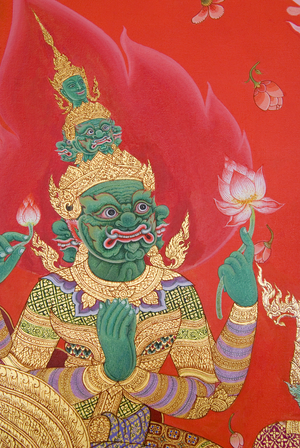
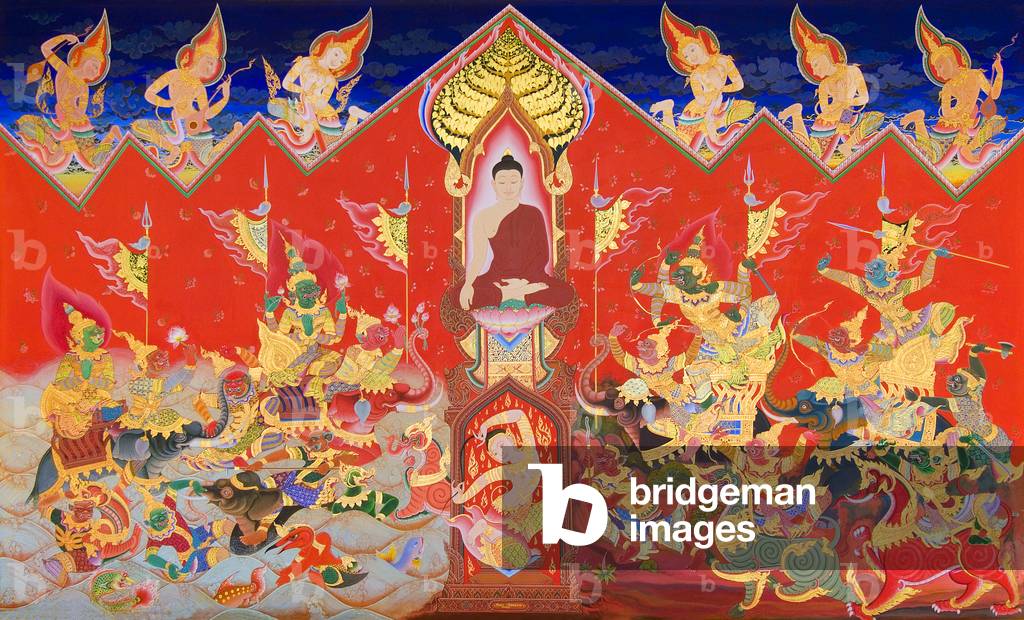
A detail from a mural depicting the Buddha conquering Mara, by Thai artist Pang Chinasai, apparently located at the Aruna Ratanagiri or Harnham Buddhist Monastery, Northumberland, United Kingdom. Here a demon in Mara’s army offers the Buddha a flower, reverently. See here for more details about the painting and here and here for more information about this beautiful Theravadan monastery on the border of England and Scotland.

We arrive now at the fourth and final Part of this series on Patrül Rinpoche’s nineteenth century reworking of a twelfth century text by Kadampa master Chegompa, which explains how Buddhist practitioners can identify and respond to the influence of Mara or maras in their spiritual practice and lives (see here, here, and here for Parts I, II, and III respectively). In this concluding section of the text, Chegompa outlines the methods that Buddhist practitioners can use to treat and prevent mara-obstacles (as in previous posts, I have alternated between translating dü བདུད་ as singular ‘Mara’ with a capital M and as lower case m ‘mara’ in the singular or ‘maras’ in the plural. I’ve also translated the term neljor, nenjor རྣལ་འབྱོར་ as ‘yogic practitioner/s’ or ‘yogis and yoginis’ even thought this term is not explicitly feminized in Chegompa’s text. See Part I for a brief introduction to the Buddhist concept of Mara/maras).

The good news about Chegompa’s recommendations for treating and preventing mara-obstacles is that they are already fundamental elements of Buddhist spiritual practice. Some of the most interesting aspects of this closing section are also the reflections Chegompa offers on the fact that maras themselves are not the problem. What ultimately matters is how practitioners of tantric yoga orient themselves to ‘demonic’ adversaries and obstacles more broadly. As before, let’s dive into the text and I’ll share some observations at the end.
Continue reading →

Blessed But Badly – The Causes and Signs of Mara Influence: Patrül Rinpoche’s Text on Diagnosing and Avoiding Maras, Part III

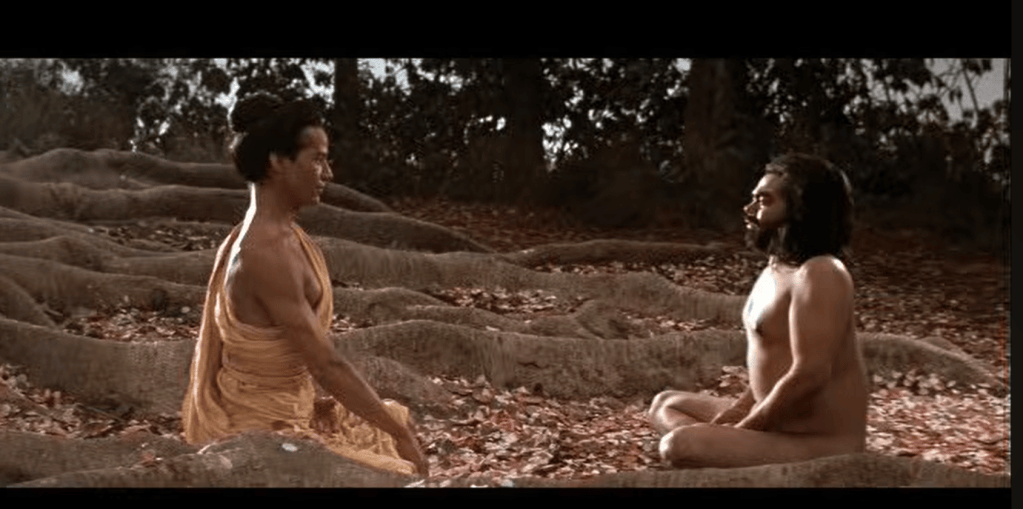
‘The Earth is My Witness’. A rather bronzed Keanu Reeves as the Buddha unmasking Mara in the 1993 Bernardo Bertolucci film ‘Little Buddha’.

In Part III of Patrül Rinpoche and Chegompa’s text on maras, the discussion shifts to behaviours and situations which enable maras and their influence to enter into your life and being and to the various signs which indicate that the maras have you in their hold. Let’s dive right in (as before, I’ll share some brief reflections at the end of the translation. For Part I and II of the text see here and here, respectively).

Continue reading →

Devils Outside, Devils Inside, Devils of the View: Patrül Rinpoche’s Text on Diagnosing and Avoiding Maras, Part II

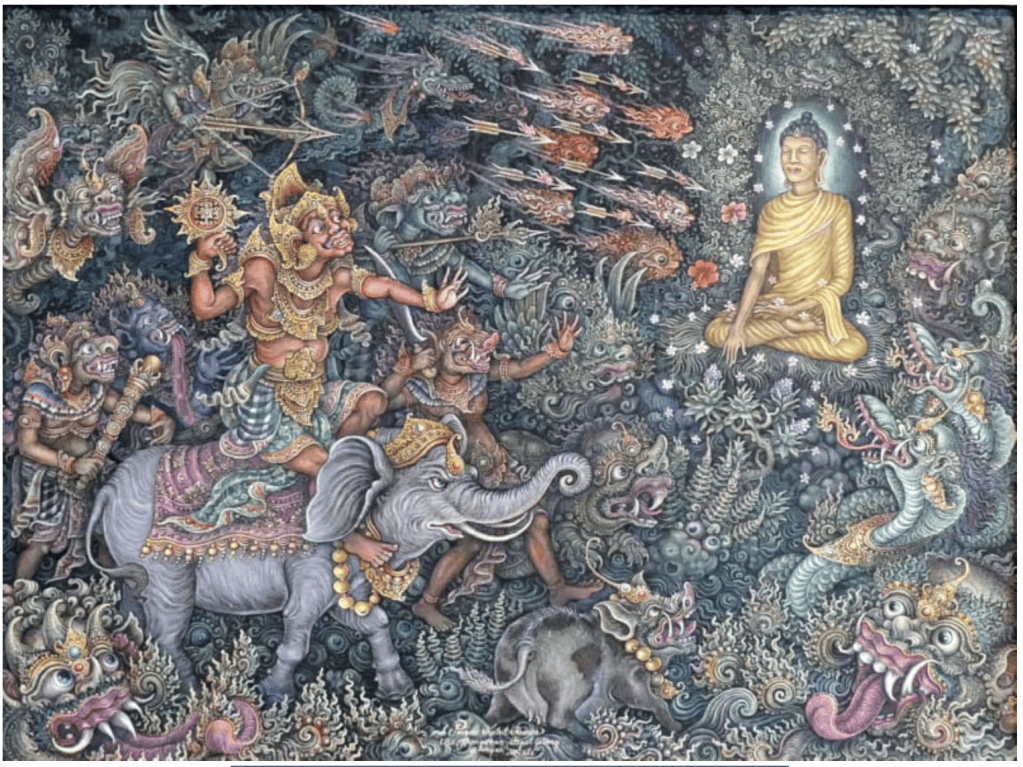
Painting of maras attacking the Buddha, by Balinese artist Pande Ketut Bawa

Here is part II of a multi-part series in which I share a preliminary translation of a text on Maras – ‘demonic’ obstacles on the spiritual path – by the nineteenth century Tibetan Buddhist teacher Patrül Rinpoche. As I mentioned in Part I, this text is Patrül’s reworking of an earlier text by the twelfth century Kadampa master Chegompa (see Part I for more details). In the opening section of the text, Chegompa describes the Four General Maras – these maras are ‘general’ because they are overarching, they encompass the obstacles and challenges of samsaric broadly. In this next Part, Chegom outlines three levels of specific or particular maras – chedrak ki dü, བྱེ་བྲག་གི་བདུད་ – namely, outer level maras, inner level maras, and secret level maras. There are six types for each level, making eighteen specific maras in total. The scheme of ‘outer, inner, secret’ – chi nang sang sum, ཕྱི་ནང་གསང་གསུམ་ in Tibetan – will be familiar to many readers. It is an ubiquitous framework in Tibetan Buddhism and charts a spectrum from other beings and gross, external, objective reality on one end, to more internal, intangible, personal, and subjective experiences and orientations on the other. Let’s dive right into the translation (I’ll include some reflections on the section at the end!).

Continue reading →