
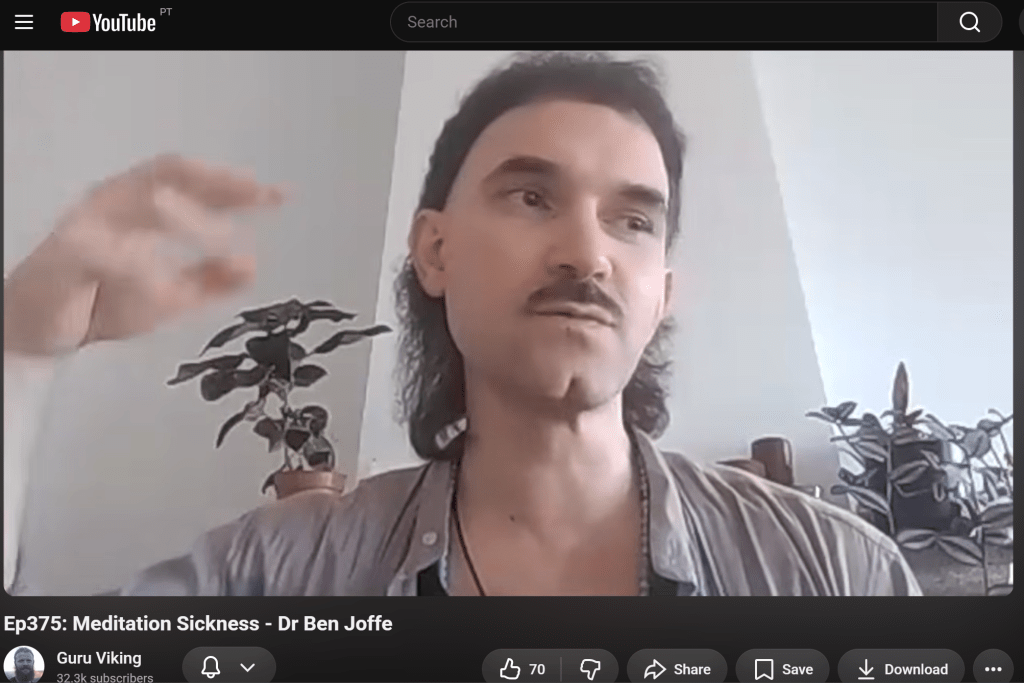
A quick post here to call attention to yet another interview I did with Steve James for his Guru Viking podcast, which came out a day ago.
In the interview, Steve and I discuss two pieces of research I recently did on the subject of so-called ‘meditation sickness’ and the Tibetan genre of geksel, gegs sel གེགས་སེལ་, i.e. instructions and practices for resolving obstacles – adverse reactions, sicknesses and so on – which get in the way of accomplishing meditation and yogic practice. Both pieces of research were developed with the kind editorial support and encouragement of Dr Pierce Salguero – the first, an annotated interview with Dr Nida Chenagtsang, a Tibetan traditional doctor and tantric householder yogi, which is featured in Pierce’s recent University of Hawaii Press edited volume ‘Meditation Sickness: A Sourcebook on the Dangers of Buddhist Practice’ and the other, an annotated translation of a Tibetan gegs sel manual written by the seventeenth century Tibetan meditation master Taranatha, which will be appearing in an upcoming special volume of the Asian Medicine Journal.
Geksel literature is such a fascinating genre of Tibetan writing and knowledge. It sits at the rich intersection of medicine and Tantric Buddhist yoga, of exoteric and naturalistic and esoteric and ritual approaches to healing. It’s also been surprisingly under-researched and discussed. I’ve learned a great deal comparing and contrasting Tibetan geksel texts – I hope that the conversation and these modest research contributions will inspire further interdisciplinary conversations and research as well. Here’s Steve’s description and timestamps for the interview:
“Dr Ben Joffe is an anthropologist and scholar practitioner of Tibetan Buddhism.
Available on Youtube, iTunes, SoundCloud & Spotify – search ‘Guru Viking Podcast’.
Dr Joffe shares his recent research and publications on the topic of gegs gsel, Tibetan writing about how to remedy the various obstacles and illnesses that can arise during meditation.
Dr Joffe draws on Tibetan gegs gsel texts to describe three types of meditation problems and five categories of solution and explains the surprising technique that Taranatha emphasises as central to removing spiritual obstacles.
Dr Joffe also argues that although there has been increased interest in the negative effects of meditation, gegs gsel literature remains understudied, and we reflect on the possible incompatibility between Tibetan medical and spiritual cures and modern psychological and psychiatric approaches to meditation injury.
00:00 – Intro
01:00 – Spiritual obstacles
02:53 – Ben’s research into meditation sickness
07:20 – Tibetan oral instructions for adverse yogic effects
11:47 – Taranatha on gegs gsel
14:03 – Ben’s personal experience with gegs gsel
16:26 – Why is gegs gsel so understudied?
21:58 – Is intensive tantric practice dangerous?
24:06 – Practices should produce signs
28:22 – It is timely to talk about meditation sickness
31:47 – Differing medical and therapeutic models
36:33 – Catching lice in retreat
38:40 – Gegs gsel literature is for committed practitioners
42:38 – Do tantric solutions make psychiatric symptoms worse?
48:40 – Dr Nida on psychosis in retreat
56:50 – Dza Paltrul on demons
01:01:28 – Ultimate vs relative
01:03:31 – Guru Yoga and a psychodynamic lens on gegs gsel
01:09:42 – Night terrors and deity devotion
01:12:50 – Ben’s experience of devotion
01:17:29 – 3 categories of problems, 5 categories of solutions
01:31:55 – 5 fundamental gegs gsel methods
01:33:55 – Dispelling demonic obstacles
01:38:56 – Warning to not ignore devotion
01:40:23 – Meditation experiences vs obstacles
01:44:09 – Simple visualisation methods
01:46:35 – Tsa, rlung, thig le
01:50:49 – Breathing techniques
01:54:37 – How common is meditation sickness?
02:11:22 – The most important thing
02:13:43 – PTSD and MDMA
02:23:16 – Where to read more…”
https://www.guruviking.com/podcast/ep375-meditation-sickness-dr-ben-joffe


Pingback: Four Common Devils: Patrül Rinpoche’s Text on Diagnosing and Avoiding Maras, Part I | A Perfumed Skull
Pingback: Blessed But Badly – The Causes and Signs of Mara Influence: Patrül Rinpoche’s Text on Diagnosing and Avoiding Maras, Part III | A Perfumed Skull