Four Common Devils: Patrül Rinpoche’s Text on Diagnosing and Avoiding Maras, Part I

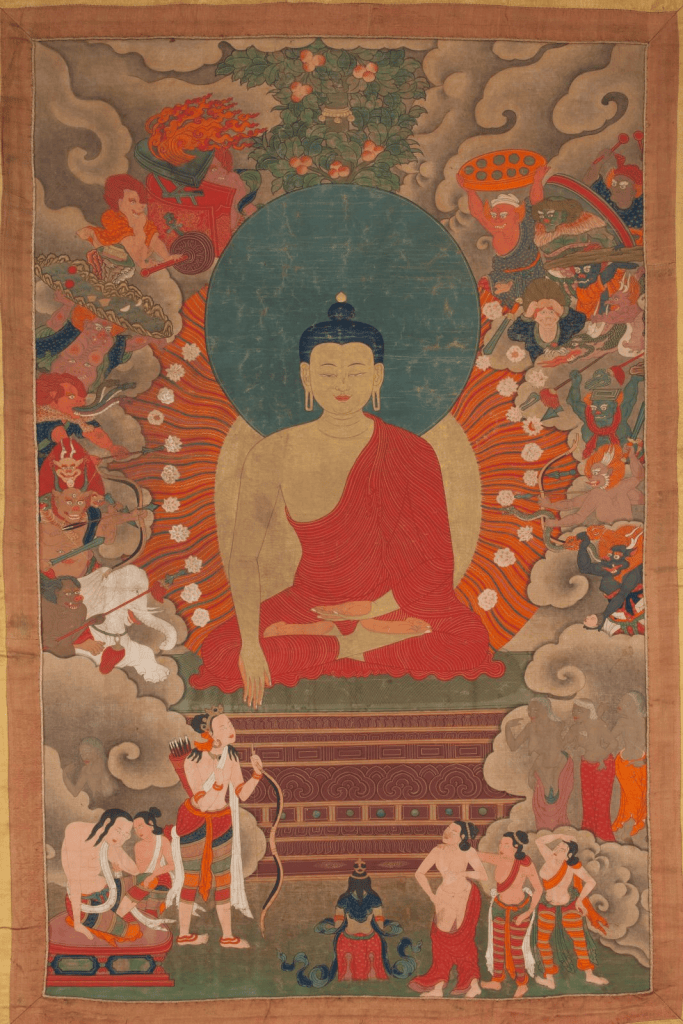
A nineteenth century tangka painting of the Buddha conquering maras, housed at Rubin Museum of Himalayan Art, purchased from the Collection of Navin Kumar, New York. See here for more details.

In the interest of starting to post here a bit more regularly, I figured I would share, in installments, a rough translation of an interesting Tibetan text I came across recently. The text is by Dza Patrül Rinpoche (1808 – 1887 – Patrül has become the quasi-standard English phoneticization, but it could just as well be Peltrül), a prominent scholar-practitioner of the Nyingma school of Tibetan Buddhism, who is perhaps best known today for his extensive commentary on the ngöndro, i.e. the foundational, preliminary practices of the Longchen Nyingthig system, called ཀུན་བཟང་བླ་མའི་ཞལ་ལུང་ Künzang Lamé Zhelung, ‘The Direct Oral Instructions of the Guru who is one and the same as Samantabhadra’, better-known as ‘Words of My Perfect Teacher’. The text I’d like to share here is, also included in Patrül Rinpoche’s collected works and is titled བདུད་ཀྱི་རྒྱུ་བརྟགས་ཏེ་སྤོང་ཚུལ་གྱི་མན་ངག་བདུད་ལས་རྣམ་རྒྱལ་ ‘Complete Victory over Mara: Pith Instructions on how to Diagnose the Causes of Mara or Obstructing Demons and the Methods for Avoiding Them’. I cited the final paragraph from this ‘Complete Victory over Mara’ text in a recent interview I did with Steve James on the Guru Viking podcast on the Tibetan concept of gek or obstacles which arise in the course of meditation and spiritual practice. As it happens, the text is not an original composition, but as Patrül explains in the colophon, is his reworking of a chapter by the same name found in ‘The Heap of Precious Pith Oral Instructions’ མན་ངག་རིན་ཆེན་སྤུངས་པ་ Mengngak Rinchen Pungpa, a treatise by the influential Tibetan Kadampa master Chegompa, who was born in 1130. Patrül Rinpoche notes that he has summarized the original chapter, has edited its wording slightly, in order to rework it into ‘notes’ or a more bulleted form (ཟིན་ཐུན་དུ་སྤེལ་བ་). This is very kind of him, since it makes the key points of Chegompa’s chapter easier for students like us to access, study, and memorize. Since there’s so much of interest in the text, I’d like to share it in its entirety here, with a few personal reflections along the way.

Continue reading →
‘The Man with the Turquoise Roof’: Spirits as Patients and how the Father of Tibetan Medicine got his Name

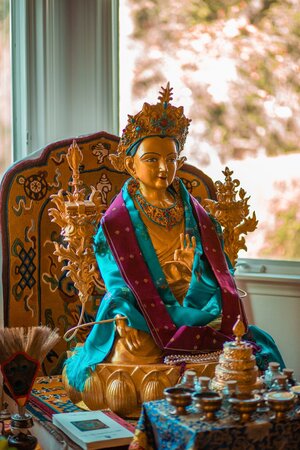
The statue of Yuthok the Younger at Yuthok Ling temple at Pure Land Farms, Topanga.

The Tibetan physician and tantric yogi Yuthok Yönten Gönpo is one of the most important figures in the history of Tibetan medicine or Sowa Rigpa, ‘The Science of Healing’ (Yuthok is pronounced a bit like the English words ‘you’ tock’. The th represents aspiration rather than a dipthong, so you should use a breathy tah sound as in the English word ‘top’, rather than a th sound like in ‘thought’ or ‘these’!). Born in or around 1126 in Western Tibet, Yuthok is one of Sowa Rigpa’s chief systematizers. He is widely regarded as the author of the Gyü Zhi or ‘Four Medical Tantras’, the four-volume Tibetan-language medical textbook which still holds pride of place in Tibetan medical curricula today. Yuthok’s influence on the history of Tibetan medicine is pervasive, so pervasive that there are two of him. Two key figures in Sowa Rigpa history share the name Yuthok Yönten Gönpo. The eleventh century Yuthok pictured above is referred to as Yuthok Sarma or ‘Yuthok the Younger’. Yuthok Nyingma or ‘Yuthok the Elder’, on the other hand, refers to a different hereditary doctor from the eighth century, who is said to be the biological ancestor of Yuthok the Younger. Yuthok the Younger is also understood to be Yuthok the Elder’s reincarnation. There is a close connection between these two figures and their life-stories often blur considerably. Both Yuthok the Younger and Elder are celebrated for their accomplishments in medicine and meditation. Both are remembered as having been consummate ngak-men or ‘tantric yogi-doctors’: individuals equally trained in medical science and tantric yoga and ritual. The biographies of both Yuthoks are hagiographies – in both his younger and older incarnation, Yuthok appears as both a highly-skilled physician and as a highly realized siddha, a tantric saint or adept capable of reading minds and performing miracles. Both Yuthoks are said to have achieved the ‘Rainbow Body’, to have dissolved into light upon their death.

Continue reading →

Some Dos and Don’ts of Mantric or Tantric Healing

nyingma yogi chapman


(A photograph of an itinerant Nyingmapa yogi with prominently displayed trengwa or Buddhist prayer beads, one of the central tools of mantra healing, taken in 1936 in Lhasa by British army officer Frederick Spencer Chapman, 1907-1971. Chapman visited the Tibetan capitol between 1936 and 1937, where he served as personal secretary to Basil Gould, the British Raj Political Officer to Sikkim, Bhutan and Tibet. Gould went to Tibet in the hopes of persuading the then 9th Panchen Lama to return to Tibet from China, to where he had fled after the 13th Dalai Lama had clamped down on his power and holding due to political differences) 

In the post that follows I offer yet another translation of a chapter from Tibetan tantric yogi and traditional doctor Dr Nida Chenagtsang’s book on Tibetan Mantra Healing (I’ve already provided translations of a number of chapters from this book, called rten ‘brel sngags bcos rig pa in Tibetan, here on my blog – you can find these posts by searching under the tags ‘dr nyida chenaktsang’ and ‘mantra healing’). In this short chapter Dr Nida provides an overview of ‘things to avoid and things to take up’ (spang blang) when doing mantra healing, using a traditional Buddhist turn of phrase which I’ve rendered more colloquially and chattily here as ‘dos and don’ts’. In the sections that follow, Dr Nida outlines suggested everyday behaviour and dietary prohibitions for tantrikas and mantrins and describes common ritual taboos connected with mantra healing practice as well as the optimal times and locations to do different kinds of tantric or mantric rituals.

Central to Dr Nida’s explanations is the concept of ngaki nüpa (sngags kyi nus pa) or ‘mantric/tantric power’ or ‘efficacy’. Anyone can recite the syllables of a mantra, but according to Tibetan cultural understanding there are a number of factors which contribute to whether or not a mantra will actually produce tangible results Continue reading →

Buddhist Bromance and Homoerotic Hermits: Queer Sociality as an Obstacle to Spiritual Attainment

jewel neck

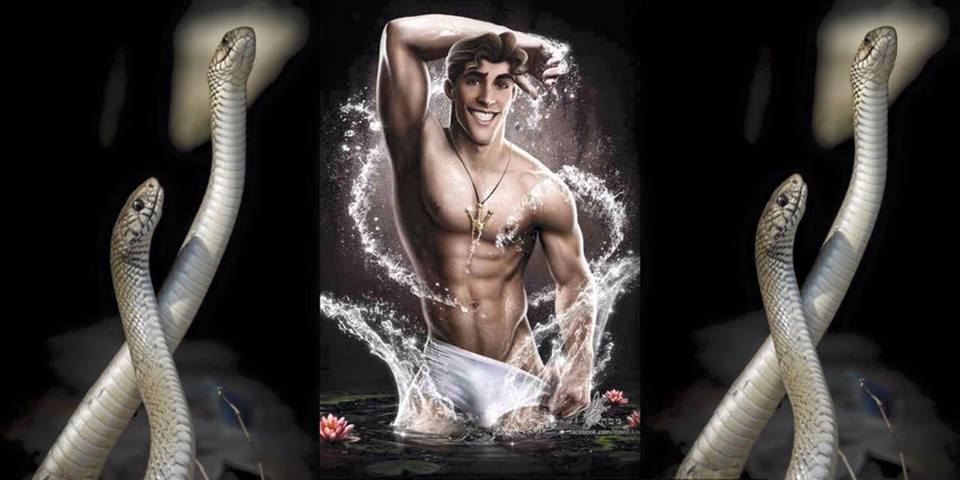
I was recently looking through the Jataka Tales, that sizable collection of fables about the previous incarnations of the Buddha and his close disciples, when I came across one story, called ‘Jewel-Throat’, which you could call a queer, Buddhist version of ‘The Little Mermaid’. In this story about the relationship between a naga or snake-spirit king and two ascetic brothers, homoeroticism and homosexual love appear incidentally as obstacles to ascetic attainment. The story’s vivid account of homosexual spirit-love with reptile-people raises a number of points. Continue reading →