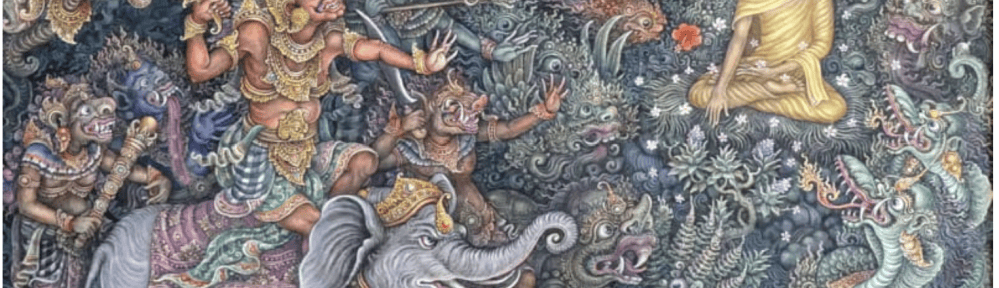
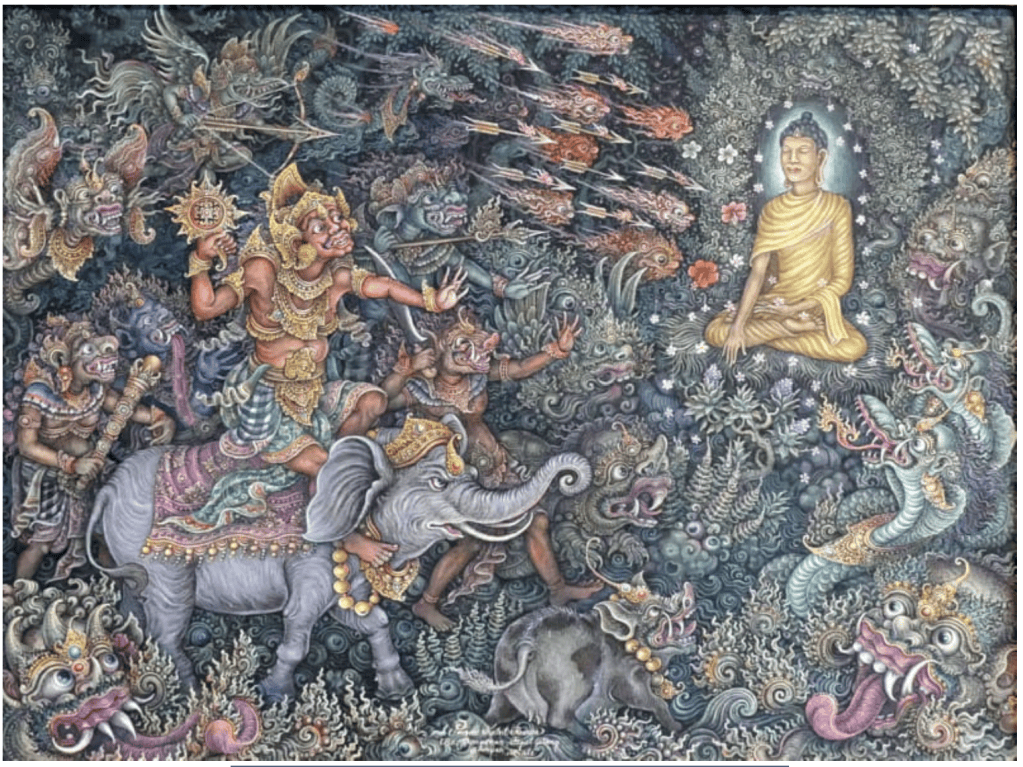
Here is part II of a multi-part series in which I share a preliminary translation of a text on Maras – ‘demonic’ obstacles on the spiritual path – by the nineteenth century Tibetan Buddhist teacher Patrül Rinpoche. As I mentioned in Part I, this text is Patrül’s reworking of an earlier text by the twelfth century Kadampa master Chegompa (see Part I for more details). In the opening section of the text, Chegompa describes the Four General Maras – these maras are ‘general’ because they are overarching, they encompass the obstacles and challenges of samsaric broadly. In this next Part, Chegom outlines three levels of specific or particular maras – chedrak ki dü, བྱེ་བྲག་གི་བདུད་ – namely, outer level maras, inner level maras, and secret level maras. There are six types for each level, making eighteen specific maras in total. The scheme of ‘outer, inner, secret’ – chi nang sang sum, ཕྱི་ནང་གསང་གསུམ་ in Tibetan – will be familiar to many readers. It is an ubiquitous framework in Tibetan Buddhism and charts a spectrum from other beings and gross, external, objective reality on one end, to more internal, intangible, personal, and subjective experiences and orientations on the other. Let’s dive right into the translation (I’ll include some reflections on the section at the end!).
Complete Victory over Mara: Pith Instructions on how to Diagnose the Causes of Mara or Obstructing Demons and the Methods for Avoiding Them’
PART II:
2. Specific Types of Maras
There are three levels of specific mara: outer, inner, and secret specific maras.
2.1. Outer Level Specific Maras:
There are six kinds of outer level mara:
2.1.1. The maras of attachment and aversion to friends and enemies:
Initially, when one is first entering onto the path of Dharma, the hostility – the hatred, anger, aversion etc. – you have towards your enemies causes harm and conflicts or else the love and goodwill you have towards your friends results in strong feelings of affection and longing, which delay your efforts. Both of these create obstacles to Dharma. (To deal) with this, stable devotion is very important.
2.1.2. Jungpo lokdren maras, mara spirits who lead one astray:
Once you enter onto the path of Dharma, when you start making diligent effort, the mara types of yidak (preta) spirits, such as senmo, pekar and so on, can’t stand it and come to bring you harm. They make Dharma practitioners depressed and mentally ill-at-ease and stop them from being able to apply their minds to Dharma, from being able to use their minds productively for practice. They send sicknesses into their bodies, rob them of their life/life-force and send enemies and thieves to harm their livelihood. If these mara spirits are not able to (do all this) themselves, they will incite discord between the zhipdak – the local spirit lord of the place or territory – where the practitioner is and another big non-human spirit and will bring harm to practitioners that way. To deal with this, it is important to meditate on Loving-kindness and Compassion, to make daily torma offerings to the zhipdak spirit, and to engage in deity yoga visualizations and mantra recitations for whatever wrathful yidam you practice.
Alternatively, the outer jungpo spirit will incite discord between the practitioner and their spiritual masters, patrons, and Dharma friends and will pervert their perceptions and destroy their compassion and devotion. Or else, they will create unhappiness by giving rise to worldly infamy, false charges when one is innocent, and other such obstacles. For this, you should keep the three gates of your body, speech-energy, and mind impervious through stable devotion. It is vital to understand that these phenomena are maras and to have forbearance as a result.
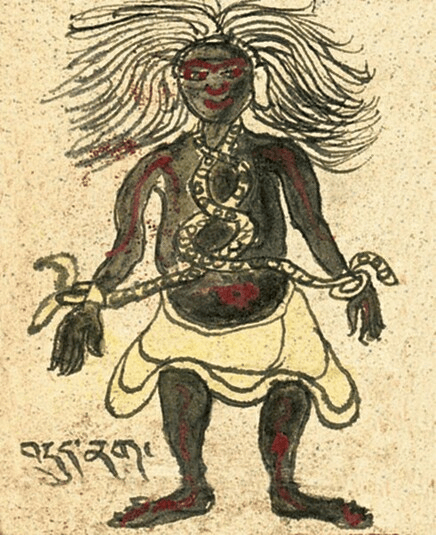
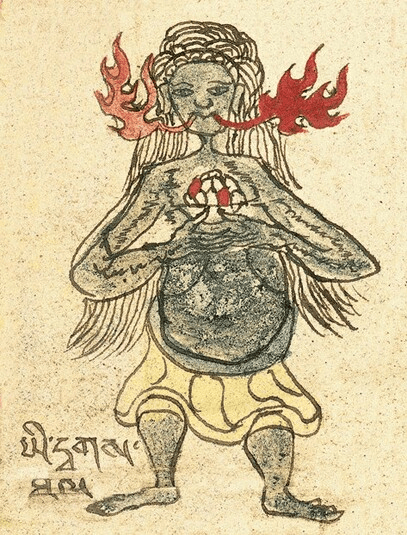

2.1.3. The maras of masters and friends who’ve been carried away by Mara/maras:
By causing you to meet with bad spiritual masters who have been carried way by maras and by making you associate with bad friends, these maras will cause your asceticism or austerities to decline and will cause you to become involved with non-Dharmic activities. You should avoid the strategies of these bad spiritual masters and friends and rely on authentic, good ones instead.
2.1.4. The maras of the good fortune of material things and worldly distractions:
When the good fortune of having worldly connections, wealth, and so on arises for practitioners these maras distract their minds with worldly business and material things and weaken their diligence and dedication. For this reason, until you gain stability, you should stay far away from all places of worldly distractions and preoccupations.
2.1.5. The maras of attachment to food and wealth:
These maras make Dharma practitioners have the thought, ‘To do spiritual practice, I can’t be badly provisioned in life, I need to be able to support myself. I need to have abundant resources’. Practitioners then try to find food and wealth, to increase their resources and profits, and so on. Through this, their desire increases, they spend their life simply preparing to practice, and they die without having practiced Dharma. For this reason, you should practice while being content with only the barest of material resources for survival.
2.1.6. The maras of the skills (i.e. yönten) of a spiritually learned person:
Skills associated with things like with medicines and mantras, tendrel (i.e. interdependent magical links or correspondences), blessings, handicrafts, and so on, may divert you involuntarily, generate wealth and worldly distractions, and create obstacles for the three activities of listening, analyzing, and meditation. Given this, until you have gained stability of mind, you should hide all special skills, capacities, and magical powers like a tortoise hides its limbs (in its shell).

These are the maras that cause obstacles on the path via external conditions. You should diagnose them appropriately and avoid them.
2. Inner Level Specific Maras:
There are six kinds of internal specific maras.
2.2.1. The maras of the root of the I and ego:
This is marigpa, ignorance or ‘not-knowing’. Every suffering of samsara comes from grasping onto I-less-ness as an I, from grasping onto selflessness as self or ego. As such, you should exert yourself in studying, analyzing, and meditating on the ultimate significance of selflessness.
2.2.2. The maras of the spreading of the poisons of afflictive mental-emotional states:
When the five mental-emotional poisons are not restrained by their antidotes and end up having free rein, the root of all virtues is destroyed and many non-virtues increase, as a result of which one is drawn into samsara and rebirth in the lower realms. One should restrain all kleshas with their antidotes.
2.2.3. The maras of anxious projections (namtok) and fears (khutrik):
This has to do with self-cherising. As a result of this, various kinds of hopes and fears and negations and affirmations are triggered and external maras are agitated. This being so, you should cast aside all cherishing of your own body and life.
2.2.4. The maras of indifference and laziness:
When your mindfulness and vigilance deteriorate, you fail to root out negative worldly activities like distractions and everyday chatter, and the like. You spend your time on meaningless actions, on things of very little importance, on apathy and laziness, on sleeping and mental haziness and confusion and you waste the freedoms and advantages of your human rebirth. For this reason, consistently relying on mindfulness and vigilance and not casting aside diligence is really essential.
2.2.5. The maras of doubt and two-minded-ness:
If you leave certainty regarding View and Conduct at the crossroads, you will not know what to do and your mind will fall into agitation, swirling this way and that. Due to that you fail avoid and adopt the relevant behaviours in connection with the practice of your yidam (i.e. tantric meditational deity) and thus won’t achieve any ngödrup, siddhis or spiritual accomplishments. As such, you should ask the Guru about whatever you do and study the namtar (i.e. spiritual biographies) of holy gurus (to gain certainty and clarity).
2.2.6. The maras of the delusions of subject-object dualism:
This has to do with holding onto things as real and concrete, which means that your mind-stream succumbs (to the illusion) of all external and internal phenomena, of all objects and subjective minds being distinct and separate. It succumbs to the illusion that the Two Truths, Ultimate and Relative, are distinct and separate and through this, all paths of practice fail to become causes for Omniscient Enlightenment. It is thus essential to realize the ultimate significance of non-duality, in terms of View and Meditation.
These are the internal maras that disturb one’s mind-stream due to one’s own bad karma and create obstacles on the path. Diagnose them appropriately and avoid them.
3. Secret Level Specific Maras:
There are six kinds of secret level maras as well:
2.3.1. The maras of preferences and biases:
When you are attached to your own philosophical view (tapuk) and sectarian doctrine (drupta), you have desire and preference for them and through this are biased against other doctrines.
2.3.2. The maras of the pride of holding (onto limited views):
You hold onto the view that all knowable phenomena are just Emptiness and then think to yourself, “Now I’ve realized the deep Truth, the profound meaning of things!” You then become proud and conceited and disparage and attack other Dharma teachings and individuals.
2.3.3. The maras of impartial, direction-less openness:
You talk about the View of open, all-pervasive ‘direction-less-ness’ without having any meditative experience of what it actually means. This becomes a direction-less openness of mere empty words and your behavior is no different than that of an ordinary worldly person.
2.3.4. The maras of expectation and conceitedness about signs of accomplishment:
Hoping and wishing for common signs of accomplishment, leads you to lie about having visions where you see the yidams directly, face-to-face, when you don’t have them. Despite not having ngönshé (i.e. clairvoyance or psychic perceptions) you lie and say you do. Despite not having meditative experiences, you lie about having them. You get attached to the features of subtle signs of accomplishment and this gives rise to a conceited attitude.
2.3.5. The maras of (false) devotion and mental amputation**:
You would rather maintain the appearance of engaging in meditation, prematurely, without having yet liberated your inner mind-stream and would prefer not to listen (to the teachings, i.e. to study and educate yourself).
****************************************************************************************************
This secret level specific mara is described slightly differently in Chegompa’s original text compared to Patrül Rinpoche’s. In Patrül’s text this mara is described as follows:
དད་པ་བློས་བརྡུམས་ཀྱི་བདུད་ནི། ནང་གི་ཤེས་རྒྱུད་མ་གྲོལ་བར་སྒོམ་ཚུགས་འཛིན་སྔ་བ་གཅིག་ལ་དགའ་ཞིང་ཐོས་པ་ལ་མི་དགའ་བའོ། །
The name of this mara is said to be depa lö dum ki dü, i.e. the mara (བདུད་ dü, bdud) of faith or devotion (དད་པ་ depa, dad pa) cut off, amputated (བརྡུམས་ dum, brdums) by the ordinary conceptual mind or intellect (བློས་ lö, blos). Dum is a rather specific term. It specifically refers to when one’s full appendages or limbs have been cut off, or when a portion of a rope or some other object has been lopped off. Chegompa’s version is as follows. The editors (?) of this published version seem to have added a gloss in parenthesis to clarify that the depa in question here is a mistaken or perverted one:
(རང་གི་མ་རྟོགས་པའི་དད་པ་ཆེས་གོལ་བ་)དད་པ་བློ་དུབ་ཀྱི་བདུད་ནི། ནང་གི་ཤེས་རྒྱུད་མི་གྲོལ་བར་བསྒོམ་པ་ཞིག་ལ་དགའ་ཞིང་ཐོས་པ་ལ་མི་དགའ་བའོ། །
“The mara of (greatly deluded/mistaken) devotion (not based on personal realization or understanding) and an exhausted mind/worn out intellect (lo dup). You prefer to practice a meditation without liberating your inner mental-continuum and would rather not study.”
Notwithstanding variant phrasings, the general meaning here is clear: this kind of mara refers to cases in which practitioners would rather just spend their time engaging in meditation (or as Patrül highlights, maintaining the appearance of meditating, sgom tshugs (ka) ‘dzin) without having actually liberated their minds. This is the practitioner who makes a big show of being pious and of being a dedicated meditator, but has not only not has any inner realizations but also has a tired or incapacitated mind which has no desire to study further to actually improve their understanding.
*************************************************************************************************
2.3.6. The maras of the incorrect path or practice of compassion:
Without having any actual capacity themselves, beginners try to benefit beings via Compassion and don’t make an effort to learn how to meditate, to cultivate meditative equipoise. This is the mistake of pursuing lofty goals first and only practicing later.
Then, according to an alternative system, there are six kinds of secret level maras connected with yogis and yoginis who practice tantric sadhanas:
1. The mara of (the Perfection of) generosity which turns into a distraction:
When you meditate and cultivate samten (i.e. meditative concentration or stability), this mara creates mental distractions and obstacles for samten, by encouraging you to teach Dharma to others, to give out material goods and resources, to engage in other acts of generosity.
2. The mara of (the Perfection of) discipline which turns into excessive asceticism:
If you are in isolated retreat and are trying to nurture samten and the foods you eat and behaviors you engage in are too restrictive, tingngedzin (samadhi, non-conceptual meditative absorption) will not arise. If you get sick and you don’t know when the proper time is to increase or restrict certain foods or behaviours and you avoid eating foods which can balance the imbalanced elements of your body, this can lead to obstacles for your body (and physical health) and (threats to) your life.
3. The mara of (the Perfection of) patience which turns into excessive endurance:
If you engage in a lot of inappropriate practices, sickness can enter your body. When you get sick, if you insist on sticking it out and not using any remedies, like medications, external therapies, and so on, this will create obstacles for your physical body, (and health), and (threats to) your life.
4. The mara of (the Perfection of) diligence which turns into exhaustion:
If you do your practices with too much tightness, focus, and intensity, your health or system (kham ki ma tubpa) won’t be able to withstand it and you will become sick and tired of the practices and will turn away from them.
5. The mara of the (Perfection of) meditation which turns into fixation:
You think that just through settling the mind you have grasped the Ultimate Truth or Reality (i.e. dön dam) and then you no longer exert yourself in learning about and reflecting on the profound cause(s) that enable(s) liberation from the ordinary conceptual mind.
6. The mara of (the Perfection of) intelligence or wisdom which turns into a spreading poison:
The Three Intelligences of Listening (i.e. Studying), Analyzing, and Meditating can multiply kleshas like pride and so on. The antidote for this is to study with and rely on an expert Guru and to put a lot of effort into listening and analyzing.
These are the secret level maras which create obstacles on the path, in the same way that medicine which is not properly digested can become sickness. Diagnose them appropriately and avoid them.
In summary, everything which has a negative impact on the mind-stream of yogic practitioners and which prevents them from being liberated should be understood as a mara and should be avoided.
This concludes Part II…
Closing Reflections:
– I think that in general the above specific maras are quite self-explanatory. Broadly, we can see how the scheme of outer, inner, secret moves from external to more internal distractions, all the way to obstacles involving one’s actual orientation or attitude towards spiritual practice itself. Particularly noteworthy in the Outer Maras section, for me at least, is the idea that when maras can’t reach practitioners directly to disrupt them, they may rile up the spirits of the location where a practitioner is living and practicing, so as to derail practitioners that way. Chegompa and Patrül note that in addition to propitiating upset spirits through offerings one should maintain benevolence and Compassion, to recognize that these local spirits are also suffering and deserve and can benefit from your kindness and support, which I think is apt and lovely. These beings, as different as they may be from us humans in some ways, they too suffer from kleshas, delusion, sickness, rebirth, pain, and so on.
The final outer mara is interesting too and very in keeping with warnings found throughout different Buddhist and contemplative traditions. A spiritual practitioner’s powers, capacities, and skills may be real, but they can also direct one uncontrollably and yet again derail things. So, be discreet, withdraw these capacities into yourself like a little tortoise so that they don’t lead you astray and create obstacles, with yourself and others out there.
– The inner level specific maras have to do with our own psychology and perception in relation to practice: self-clinging, afflictive emotions and concepts, fear and insecurity, laziness and apathy, doubt and indecision, and dualistic perception. As with the outer maras, a good way to defend against them is to minimize our attachments, to stabilize our mind and intentions, to clarify our doubts, and to maintain diligent practice. These maras are the inner reactions and delusions which distract and disturb us. As the authors note, which of these devils will specifically derail us and at what moments has to do with our individual karma and conditioning.
– There are two systems of secret level maras: one that has to do with practitioners’ subtle philosophical and personal orientation to the practices they are doing and another set of six which is more about how the Six Paramitas or Perfections of Buddhism – i.e. the perfecting of Generosity, Discipline, Patience, Diligence, Meditation, and Intelligence – these great ‘Medicines’ as the authors put it, can become obstacles themselves, when they are not ‘digested’ correctly (or we could say, to continue the metaphor, when they are misapplied, misunderstood etc.). Perhaps more than any of the other maras, the secret level ones reveal the extent to which the actual ingredients of spiritual practice can become their own problems, can become obstacles to practice itself. Spiritual practice, at least for the more fledgling practitioner, necessitates regular self-assessment, regular return to key core principles and foundational practices, regular appraisal of whether one’s own commitments and practices are doing something different than what they’re supposed to. Sometimes we can see this ourselves, sometimes we need feedback from trusted teachers and friends, the perspective offered by others’ examples enshrined in sacred biographies. Subtle calibration and re-calibration is key, tuning the fine vibrating cord of our spiriuality like a musician tightening the strings of their instrument.
In Part III, we will explore the behaviours, attitudes, and situations which are causes for maras ‘entering’ into practitioners, and what the various signs and symptoms are of being influenced by them. Until then, what jumped out for you in this second Part? Feel free to let me know!


Pingback: Blessed But Badly -The Causes and Signs of Mara Influence: Patrül Rinpoche’s Text on Diagnosing and Avoiding Maras, Part III | A Perfumed Skull