Who Needs a Man When You’ve Got Medicine: Yuthok the Elder’s Teaching to the Yogini-doctor Dami Mentsün

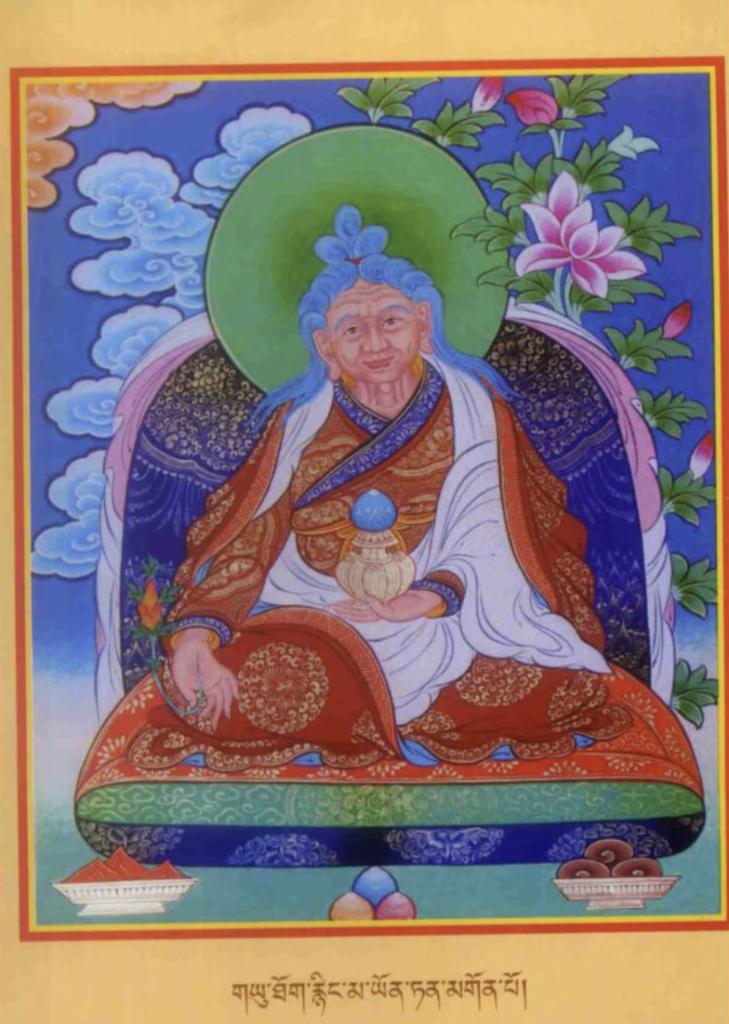
A painting of Yuthok Yönten Gönpo the Elder, from a 2006 compilation of medical biographies

Recently, a student from Brazil in our ongoing one-year deep-dive course on the Ngöndro or Foundation practices of the Yuthok Nyingthig tantric Buddhist teachings, which is happening right now through Sowa Rigpa Institute, asked me if I could provide a little more information about an important female disciple of Yuthok the Elder, who I mentioned in passing during in a class for the course. The main reference we have relating to this disciple is in Yuthok the Elder’s namtar or biography. Since this reference is really quite interesting, I thought I would make a short post about it here so others could appreciate it.

As I touched on in a previous post about the origins and meaning of the family name Yuthok, there are two Yuthoks/Yutoks, གཡུ་ཐོག་, in Tibetan tradition, a Yuthok the Elder and a Yuthok the Younger. Both of these important figures bear the personal name Yönten Gönpo, which translates to something like ‘Lord-Protector of Spiritual Qualities’. Yuthok the Elder is said to have lived in the eighth century, but the most extensive biography we currently have for him was commissioned and composed in the seventeenth century (this biography as well as a shorter companion biography of Yuthok the Younger was compiled by Menrampa Lopzang Chödrak 1638 – 1710, based on materials from a descendant of the Yuthok lineage called Jowo Lhündrup Tashi). Yuthok the Elder’s biography, whose full title is A Treasury of Resplendent Jewels: The Sealed Biography of Venerable Yuthok Yönten Gönpo the Elder, is full of many fascinating moments, many of which involve interesting interactions between Yuthok and various remarkable figures, human and otherwise. The female student of medicine and Dharma mentioned in the biography is named Dami Mentsün, མདའ་མི་དམན་བཙུན་. Yuthok the Elder, who is said to have been one hundred and twenty-five when he died, was something of a late bloomer, only getting married and having children in his nineties. His encounter with Dami Mentsün seems to take place sometime in Yuthok’s mid-to-late nineties, during an exstensive set of pilgrimages Yuthok went on with a sizeable entourage of students. As part of these travels, Yuthok visitied various parts of Tibet and went to sacred sites in India, China, and Uddiyana. It is during Yuthok’s tour of a part of Southern Tibet called Chayul, བྱ་ཡུལ་ (‘Land of Birds’ or possibly ‘Vultures’, located within the boundaries of colonial China’s Lhünzê  County), that the great yogi-doctor meets with Dami Mentsün.
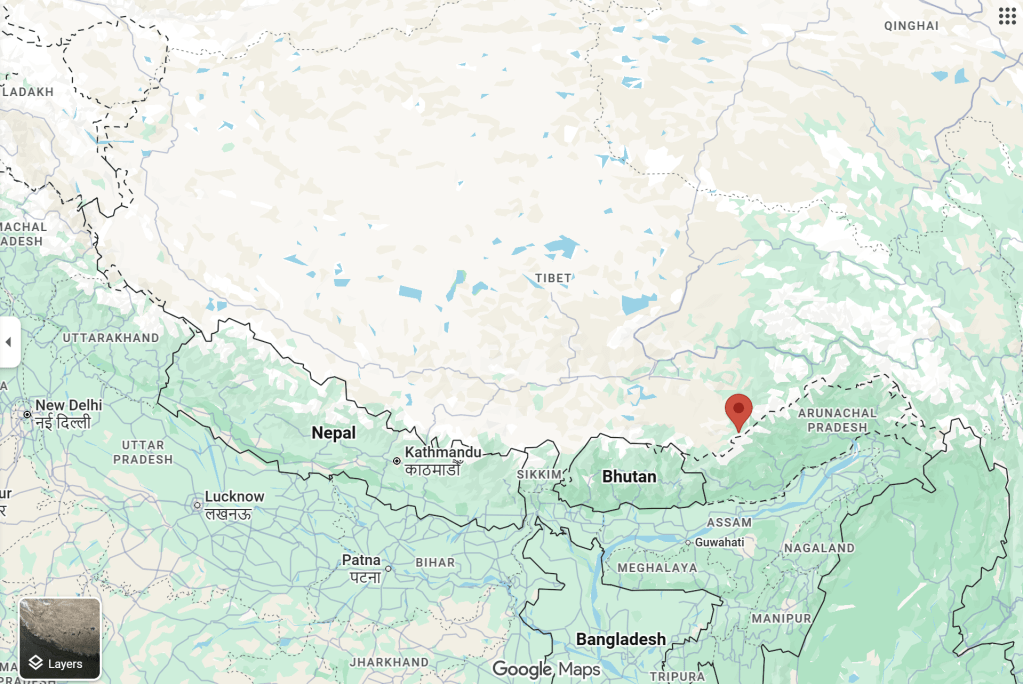
Google Maps image showing the approximate location of Chayul in Tibet.

The passage from Yuthok’s biography that details the encounter runs as follows:

Continue reading

‘The Man with the Turquoise Roof’: Spirits as Patients and how the Father of Tibetan Medicine got his Name

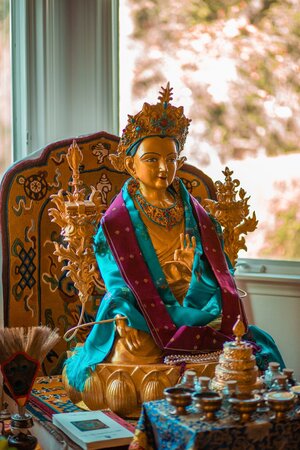
The statue of Yuthok the Younger at Yuthok Ling temple at Pure Land Farms, Topanga.

The Tibetan physician and tantric yogi Yuthok Yönten Gönpo is one of the most important figures in the history of Tibetan medicine or Sowa Rigpa, ‘The Science of Healing’ (Yuthok is pronounced a bit like the English words ‘you’ tock’. The th represents aspiration rather than a dipthong, so you should use a breathy tah sound as in the English word ‘top’, rather than a th sound like in ‘thought’ or ‘these’!). Born in or around 1126 in Western Tibet, Yuthok is one of Sowa Rigpa’s chief systematizers. He is widely regarded as the author of the Gyü Zhi or ‘Four Medical Tantras’, the four-volume Tibetan-language medical textbook which still holds pride of place in Tibetan medical curricula today. Yuthok’s influence on the history of Tibetan medicine is pervasive, so pervasive that there are two of him. Two key figures in Sowa Rigpa history share the name Yuthok Yönten Gönpo. The eleventh century Yuthok pictured above is referred to as Yuthok Sarma or ‘Yuthok the Younger’. Yuthok Nyingma or ‘Yuthok the Elder’, on the other hand, refers to a different hereditary doctor from the eighth century, who is said to be the biological ancestor of Yuthok the Younger. Yuthok the Younger is also understood to be Yuthok the Elder’s reincarnation. There is a close connection between these two figures and their life-stories often blur considerably. Both Yuthok the Younger and Elder are celebrated for their accomplishments in medicine and meditation. Both are remembered as having been consummate ngak-men or ‘tantric yogi-doctors’: individuals equally trained in medical science and tantric yoga and ritual. The biographies of both Yuthoks are hagiographies – in both his younger and older incarnation, Yuthok appears as both a highly-skilled physician and as a highly realized siddha, a tantric saint or adept capable of reading minds and performing miracles. Both Yuthoks are said to have achieved the ‘Rainbow Body’, to have dissolved into light upon their death.

Continue reading

No More Metaphors: Milarepa’s Teaching to a Ngakpa about the Magic of True Siddhas

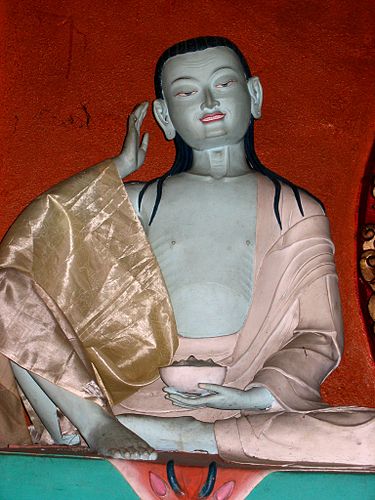
A statue of Milarepa, in his characteristic green colour, from Helambu, Nepal, and Wikipedia.

I was recently reading through Tsangnyön Heruka’s 15th century (1488 to be exact) biography of the celebrated 11th century Tibetan yogi and cultural hero Milarepa. Tsangnyön Heruka – the ‘crazy tantric yogi from Tsang’ (1452 – 1507) – reorganized and codified Milarepa’s biography from various sources, and separated this out from Milarepa’s མགུར་འབུམ་ gurbum or compendium of spiritual teaching songs. Gur is a Buddhist/tantric textual genre for which Milarepa is most famous, and refers to songs or poems which accomplished spiritual adepts are said to compose on the spot to convey in musical and poetic form key spiritual truths for audiences.

While perusing Tsangnyön Heruka’s collection of Milarepa’s songs I came across a narrative which he calls སྔགས་པའི་ཞུས་ལན་གྱི་སྐོར་ ‘Concerning Questions-and-Answers with a Ngakpa’. Readers here will probably know that my doctoral research as a cultural anthropologist was focused on Tibetan Buddhist ngakpa, or non-celibate, non-monastic tantric householders and sorcerers. I find Milarepa’s exchange with this unnamed ngakpa quite beautiful and interesting, so I thought I would share my own translation of it here. Garma C.C. Chang translated this song into English in the 60s in his ‘The Hundred Thousand Songs of Milarepa’ (Vol. 2). I’ve reproduced his translation at the end of this post. While it has many lovely qualities, I feel that it doesn’t quite capture the thrust of some of Milarepa’s responses, which I’d like draw out more here. The gist of the short narrative is that an unnamed ngakpa from དབུས་ཕྱོགས་ Üchok, Wüchok, the region of Central Tibet, comes one day to have an audience with Milarepa. Milarepa’s yogi disciple Seban Repa asks this ngakpa what type of གྲུབ་ཐོབ་ druptop or siddhas there are where he’s from. Siddhas – literally ‘spiritually accomplished ones’, people with spiritual attainments – are yogis who have achieved various spiritual powers, ranging from mastery of psychic and healing abilities, magical powers, to meditative attainment and complete Buddhahood. Seban Repa’s opening salvo is effectively, ‘How powerful/realized are your yogis and sorcerers back home, yogi-sorcerer?’ The visiting ngakpa explains that the siddhas in his region are of such calibre that they are served or waited upon by non-human beings. It is at this point that Milarepa chimes in with a provocation:

Continue reading

Celebrity Shamans and the Question of Indigenous Knowledge: A Review of, and some stray Reflections on ‘Inyanga: Sarah Mashele’s Story’

inyanga-1

I was wafting around a second-hand clothing store when I was in Cape Town, South Africa in December last year when I came across a curious little volume hidden behind some piles of clothing and gaudy costume jewelry. The book’s single word title ‘Inyanga’ caught my eye. Inyanga is a technical term in isiZulu and isiXhosa for a particular kind of traditional healer or curer (more on the technical specifications or lack thereof of this designation later). Written by white South African writer and journalist Lilian Simon, Inyanga was published in 1993, one year before the abolition of Apartheid, and constitutes a kind-of memoir for prominent black South African traditional healer Sarah Mashele. From roughly the 1950s until the present (I have not been able to determine yet if she is still alive) Sarah Mashele worked full-time as a healer in and around Pretoria and Johannesburg – and in the formally blacks-only segregated urban neighbourhood of Soweto in particular – providing services to patients across the race, class and cultural spectrum. I just finished reading the book, and so I thought I would offer a review of it as well as some reflections on its contents and Simon and Mashele’s collaboration for interested readers. Continue reading