“If You Don’t Wear Them, We Will”: Preservation, Appropriation, and the Importance of Role-models in Tibetan Cultural Life

tibetan chupa

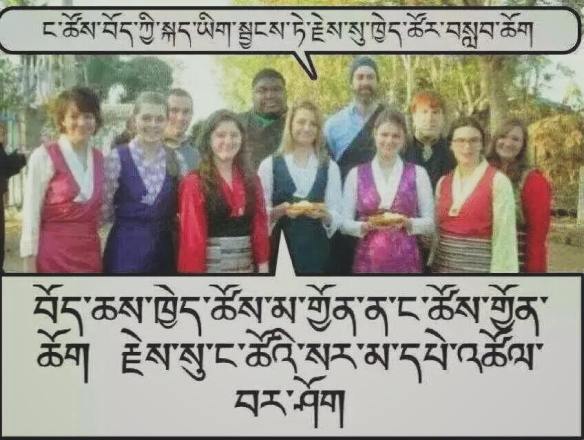
I came across this Tibetan meme on Facebook a few months ago. In true meme style, pithy as it is, it manages to encapsulate and gesture towards a great deal. The image shows an assortment of beaming non-Tibetan foreigners wearing traditional Tibetan dress. The top speech bubble says:

“We will learn spoken and written Tibetan and then we will teach it to you” Continue reading

Secrets of the Scoby: Tibetan Taoist Gummiberry Juice and Boulder’s Buddha’s Brew

gummiberry juice

I was recently reminded of an old entry from the annals of Shangri-La La Land: the apparently Tibetan fermented drink known as ‘Jun’. Jun is a relative of the classic fermented health-drink Kombucha. Whereas Kombucha is born from the alchemy of adding a kombucha culture or ‘scoby’ to black tea and sugar, Jun is made from Jun cultures mixed with green tea and honey. According to popular legend, besides being more obscure and more magical than Kombucha, Jun also hails from Tibet.

On August 4th, 2010, Emma Blue penned an article for The Elephant Journal which she, mincing no words, called ‘Jun: Nobody Wants us to Know About it’. The Elephant Journal claims to be committed to a more thoughtful, ‘non-New Agey’ brand of spirituality, but you could be forgiven for not quite believing this after reading Blue’s article. Continue reading

De-calcifying your Pineal Gland, and other New Age Literalisms

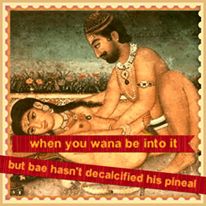
“It’s not you…I just don’t think our pineal glands are in the same place right now.”#NewAgeDatingProblems

A while back, I was kinda bored and for reasons I still don’t fully understand, I made this meme. I thought it came out quite well.

decalcifying your pineal gland.jpg

I was just going to post this meme here, but then it got me thinking. Jokes aside, I find the idea of doing something like ‘de-calcifying your pineal gland’ quite fascinating. The concept is one of a panoply of New Age lifestyle/purificatory options, which rely at least in part on a veneer of scienc-i-ness for their legitimacy. Continue reading

Economies of Curiosity: The Dalai Lama’s email inbox, the Foreign Researcher in Mcleod Ganj and Artaud Syndrome

artaud.jpg

(Antonin Artaud, gazing upon the summit of interiority)

So, McLeod Ganj, India where I am living, ‘Little Lhasa’, or the Tibetan capital in exile, is a funny kind of place. It’s really only a very small town, but its few streets and rural mountain town feel belies its cosmopolitanism. It is a junction point for a virtually unceasing stream of Tibetan and foreign visitors, for news and information from all over the globe. Besides formal support from the Tibetan government in exile, and informal flows of money from friends and family – everything from transnational remittances, informal/illegal trade, community saving unions, personal support structures centered around people from the same home regions in Tibet and exile, from common Tibetan exile or Indian school graduating groups, or shared monastic colleges – many Tibetans rely on tourist dollars to survive.

I have often said that this town exists for better or worse in the midst of overlapping economies of curiosity. Romantic stereotypes and Tibetans’ global reputation precedes them. One silver lining about this curiosity or global gaze is that it can at least be turned into a source of continued survival and livelihood for exile Tibetans, who let it not be forgotten, remain by and large stateless refugees living deeply precarious lives.

Continue reading

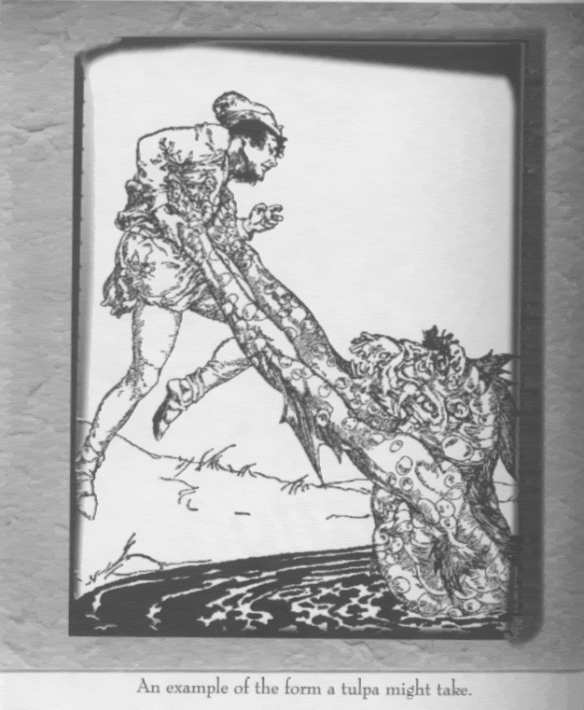
Paranormalizing the Popular through the Tibetan Tulpa: Or what the next Dalai Lama, the X Files, and Affect Theory (might) have in common

fua.gif

This most recent essay of mine on Savage Minds also took place as part of a running conversation with popular media and representations. I think that it does a decent job of re-iterating and extending some of the ideas that came up in the Tibetan aliens and singing bowl essays about the sometimes bewildering cross-fertilizations between Indo-Tibetan esotericisms, Western occultism, and popular culture.

There’s a lot more to be said in all this about Continue reading

Tripping on Good Vibrations: Cultural Commodification and ‘Tibetan’ Singing Bowls


pizza yoga.jpeg

This was also a piece I did not expect to write. Popular media, and reactions to popular media however, got me thinking more about issues of commodification and cultural appropriation, and the singing bowl turned out to be a particularly useful entry point into a lot of these.

I find it quite surprising that so little academic material has been written about singing bowls and their history, despite them being such iconic and familiar New Age objects. Continue reading

Secrets of the Sex Magic Space Lamas Revealed! Tibetan Buddhist Aliens and Religious Syncretism

tibetan aliens

This was probably my favourite of the four October essays to write, probably because it involved so many things that I love to think and talk about, but was also something I never, ever imagined I’d be writing for an anthropological audience, or maybe at all.

Years ago I was warned by a lovely acting HoD in an anthropology department to be careful of pursuing the study of esotericism Continue reading

My Mother was a Rock-ogress Yeti Monster: True Tales of Dharma, Demons, and Darwin

srin mo.png

Despite the ridiculous title, I get the feeling this next Savage Minds essay was a little less widely read. This may have something to do with the fact that the technicalities of Tibetan exile secularism and school curricula have less of a wide appeal than some of the other subjects I’ve covered. Whatever the case, I think that this particular Tibetan origin myth Continue reading

Tantra and Transparency, or Cultural Contradictions and Today’s Tibetan Buddhist Wizard

white-and-red-robes.jpg

Here’s my second piece for Savage Minds, and the first of the four-part guest-blogger series I did during October last year.

This essay offers a brief overview of my current dissertation research project on ngakpa and ngakpa lineages in exile and outside of Tibet. I tried to make this piece a useful summary of some of the dimensions of ngakpa/ma histories, orientations, practices, and lineages that I thought were of interest, especially for an anthropological audience perhaps less familiar with Tibetan societies and Vajrayana. Continue reading

Angry White Buddhists and the Dalai Lama: Appropriation and Politics in the Globalization of Tibetan Buddhism

voldemort.jpg

Since I’m just now launching this blog, I thought I would re-post links to my earlier Savage Minds blog essays for readers, with some additional comments.

This is the first piece I put out on the Savage Minds blog, and deals with the controversial Western Buddhist organization, the New Kadampa Tradition (NKT). This was a modest piece on my part. Continue reading