How to Mind Your Tantric Business: Padmasambhava’s Parting Words of Advice to Tibetan Ngakpa

188 Padmasambhava

(The One Born From A Lotus, the Precious tantric Buddhist Guru, Padmasambhava)

One of my favourite genres of Tibetan Buddhist literature is so-called ‘words or songs of advice’ texts, known as gtam or zhal gdams in Tibetan. These sorts of texts are great for a number of reasons. For one, they tend to be both pithy and poetic, which makes them a pleasure to read. They often have quite a colloquial flavour, which makes them interesting in terms of style and register. And they are also uniquely practical. While their ethical orientation means that they are focused on ideals and best case-scenarios, the fact that they are intended to be useful as guides means that they are forced to point out faults realistically, to take stock of where their target audience may actually be in their lives or religious practice. After all, the only thing worse than unsolicited advice is advice that has no bearing on the realities of one’s life.

I previously translated and shared a ‘words of advice’ text aimed at ngakpa or non-celibate, tantric vow-holder yogi-householders on this blog. You can read that text by famous 20th century ngakpa Dilgo Khyentse Rinpoche, and some stray thoughts on it here. Today I was taking a read of the much older text of advice for ngakpa on which Dilgo Khyentse Rinpoche based his later commentary: the ‘final words’ or parting testament (zhal chems) of the legendary ON (‘Original Ngakpa’) Padmasambhava (‘The Lotus Born one’) a.k.a. Guru Rinpoche, the ‘Precious Guru’, as found in a biography of this Great Tantric Master who secured the spread of Buddhism in Tibet which was revealed by the tantric visionary saint Nyangral Nyima Ozer in the 12th century. Dilgo Khyentse’s words of advice for ngakpa in the early twentieth century are directly inspired by the testament of the eighth century Padmasambhava as reported in Nyangral Nyima Ozer’s twelfth century revelation, Continue reading
Tibetan Master Meets Theosophical Mahatmas: Gendun Choepel’s Reflections on Blavatsky and Theosophy

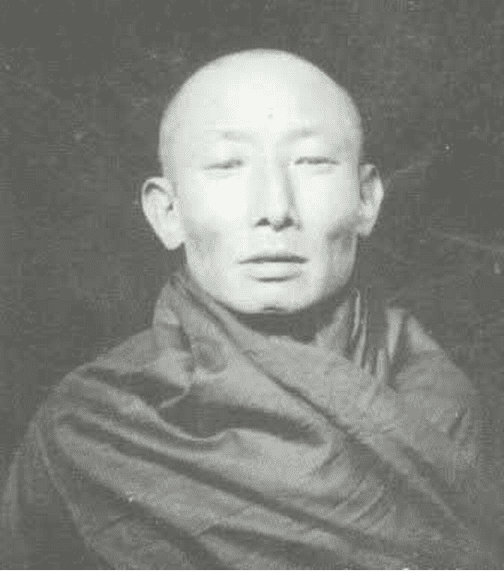
gendun choepel

(Celebrated ex-monk Tibetan intellectual Gendun Choepel)

I was recently reading through Donald Lopez’s excellent book “The Madman’s Middle Way’ on the contributions of controversial and brilliant early twentieth century Tibetan intellectual Gendun Choepel (1903-1951), and I came across something I had missed before, namely, Gendun Choepel’s reflections in Tibetan on the popularity of Helena Petrovna Blavatsky (1831-1891) and the nature of her new religious movement Theosophy, as found in his ‘Serki Thangma’ or ‘Field/Surface of Gold’. This travelogue (which has been fully translated into English by Lopez and Thupten Jinpa) constitutes an extensive autobiographical account of the ex-monk’s wanderings in the 1930s and 40s throughout India and then Ceylon/now Sri Lanka. It is chock-full of fascinating insights about British empire, comparative religion, gender, and science as seen through the eyes and experience of an extremely gifted and innovative Tibetan scholar, poet, and artist.   Continue reading

Absent Fathers and Missing Camels: Notes on Sudanese Sand Divination

Mali geomancer

(A geomancer or sand diviner from Mali traces geomantic figures in a prepared bed of sand)

A few days ago a member of a Geomancy study group that I am a part of on Facebook posted some interesting links to 19th century material that mentions geomancy. Many of the links this person posted included accounts of geomantic procedures that European colonial explorers like Sir Richard Burton had observed during their travels through parts of Africa. One of the links was a little different however: it was a facsimile of Voyage au Darfour (Journey to Darfur), the 1845 translation into French of a travelogue written in Arabic by Sheikh Mohammed Ibn Omar El-Tounsy (Al-Tunisi), who served as chief reviewer of translations of medical texts translated from European languages into Arabic at the School of Medicine in Cairo. This particular source thus jumped out at me, not only for its content but because rather than yet another white colonist’s account of native culture, it represented the reflections of a colonized non-white foreigner observing cultural practices that were both different from and cognate with his own.

Continue reading

Telling the Future: Some Thoughts on Fortune, Fingers and Tibetan Rosary Divination

I have performed divinatory services for clients since I was about eleven years old. As both a scholar and a practitioner, I am deeply fascinated by the incredible range of – but also significant similarities between – forms of divination as practiced across the centuries and the globe, and I know that readers of this blog – many of whom also practice some kind of divination – are too. With that in mind, I thought I’d offer some casual thoughts and a few original rough translations relating to Tibetan divination practices here, with a focus on one type of prognostication in particular: ‘phreng mo (pronounced treng moh), or divination through the use of a prayer beads or rosaries (‘phreng ba). Continue reading

Tibetan Spells for Calling Vultures to a Corpse: On Human-Bird Relations and Practicing Magic

Himalayan griffon vulture running

(A Himalayan vulture coming in for landing)

A day or two ago I was looking through a compilation of simple Tibetan healing rituals when I came across a short entry on a genre of Tibetan magic that I find quite lovely and interesting: vulture summoning spells.  I thought I would share these spells here and offer some reflections on why I found them significant. Continue reading

Tantra as Religion, Tantra as Medicine, Tantra as Technique: Reflections on the Globalization of Tibetan Buddhist Esotericism

A few weeks ago I travelled to Washington D.C. for the first time to attend the American Anthropological Association annual meeting, which is one of the largest conferences for anthropologists in the U.S. and maybe the world (that said, while the conference is decidedly more international than the title might imply, it’s also a lot less international than some attendees seem to think, so let’s just go with that there were over 7000 attendees there, presenting and networking over five days from sunrise to sundown, and more gaudy scarves crammed into a single hotel space than you could shake a Margaret Mead wizard staff at)

MargaretMead1

(Famous American anthropologist Margaret Mead might not have worn colourful scarves at conferences as all genuine cultural anthropologists are known to do today, but she sure knew how to hold – and shake – a stick)

For the conference this year (which was christened ‘Anthropology Matters’) I organized a panel titled ‘Reframing Ritual and Ritualizing Return: Where, When, and How Religion Matters’. Theorizing religious difference has been a concern of anthropology since the very beginnings of the discipline, but it’s still quite rare to find whole panels devoted to ‘religion’ at the AAA. Continue reading

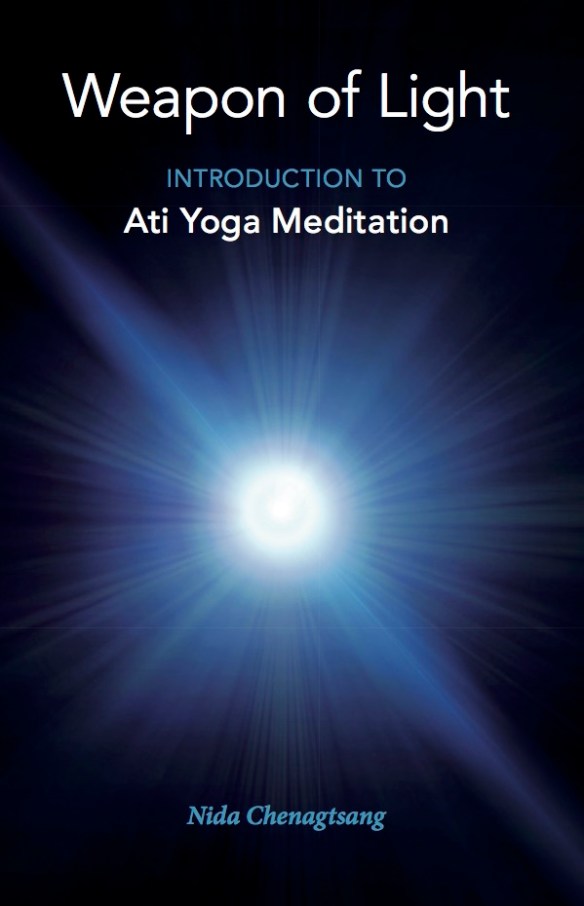
Meditation Made Easy: Announcing Dr Nida Chenagtsang’s New Book ‘The Weapon of Light’

weapon of light cover

A week or few ago, Sky Press’s newest publication, The Weapon of Light: Introduction to Ati Yoga Meditation by Tibetan traditional doctor and tantric yogi Dr Nida Chenagtsang was released for sale. Since I helped with editing and translation for this book, you would think I would have thought to mention it on this blog, but distracted by other things as I was, I forgot to make an announcement. So, since ‘The Weapon of Light’ is actually quite a special little book, I thought I’d make a post about it now. Continue reading

Some Dos and Don’ts of Mantric or Tantric Healing

nyingma yogi chapman


(A photograph of an itinerant Nyingmapa yogi with prominently displayed trengwa or Buddhist prayer beads, one of the central tools of mantra healing, taken in 1936 in Lhasa by British army officer Frederick Spencer Chapman, 1907-1971. Chapman visited the Tibetan capitol between 1936 and 1937, where he served as personal secretary to Basil Gould, the British Raj Political Officer to Sikkim, Bhutan and Tibet. Gould went to Tibet in the hopes of persuading the then 9th Panchen Lama to return to Tibet from China, to where he had fled after the 13th Dalai Lama had clamped down on his power and holding due to political differences) 

In the post that follows I offer yet another translation of a chapter from Tibetan tantric yogi and traditional doctor Dr Nida Chenagtsang’s book on Tibetan Mantra Healing (I’ve already provided translations of a number of chapters from this book, called rten ‘brel sngags bcos rig pa in Tibetan, here on my blog – you can find these posts by searching under the tags ‘dr nyida chenaktsang’ and ‘mantra healing’). In this short chapter Dr Nida provides an overview of ‘things to avoid and things to take up’ (spang blang) when doing mantra healing, using a traditional Buddhist turn of phrase which I’ve rendered more colloquially and chattily here as ‘dos and don’ts’. In the sections that follow, Dr Nida outlines suggested everyday behaviour and dietary prohibitions for tantrikas and mantrins and describes common ritual taboos connected with mantra healing practice as well as the optimal times and locations to do different kinds of tantric or mantric rituals.

Central to Dr Nida’s explanations is the concept of ngaki nüpa (sngags kyi nus pa) or ‘mantric/tantric power’ or ‘efficacy’. Anyone can recite the syllables of a mantra, but according to Tibetan cultural understanding there are a number of factors which contribute to whether or not a mantra will actually produce tangible results Continue reading

Evil Dukpas, ‘Woke’ TV Reboots, and Dreams of Tibet: On the Blavatskyisms of Twin Peaks

black lodge

(Agent Cooper with the dwarf-spirit or ‘Man from Another Place’ in the Black Lodge, in Twin Peaks)

The twenty-five-year-in-the-making third season of cult series Twin Peaks has just piloted and sue me, but I have not yet watched all of the first two seasons of the show – my Dad who, aside from having worms was also into gimmick tees before they were like, even a thing, was a major fan of the series though, and he used to wear a shirt that said ‘I killed Laura Palmer’ when the show was running, so I recognize that I have very little excuse here.

i killed laura.jpg

(I guess my Dad’s t-shirt was cool, but clearly not as cool as this bro’s ‘I Killed Laura Palmer’ HOODIE. If you’re going to publicly confess to murder, I guess it makes sense to wear a hoodie?)

Still, even though I have not seen all of the show I AM well aware that the plot of Season 2 in particular is chock-full of references to Tibetan Buddhism and Native American religion as filtered through the muddy glass of Madame Blavatsky’s Theosophical imagination. It is well known that Twin Peaks’ writer Mark Frost is fascinated by Theosophy and the clips below from Season 2 offers a prime example of his Blavatsky fanboying. Appearing in a recording, Windom Earle, Agent Cooper’s former mentor, rants about the ‘evil sorcerers called Dukpas’ who tap into the sinister power of the ‘Black Lodge’ – the dark dimension out of time and almost out of space that is a key plot device in Twin Peaks – for their twisted enrichment. (As I will discuss at length below, the word ‘Dukpa’ ultimately derives from འབྲུག་པ or ‘brug pa which, meaning ‘Dragon’ in Tibetan, refers to both a particular sub-lineage of the Kagyu school of Tibetan Buddhism and the country of Bhutan).

Continue reading

To See is to Call: Tantric Visualization, Summoning Spirits and the Mind as Petting Zoo

dakini-09

(Crushed marble sculptural installation ‘Flying Dakini’ 2014, by artist Agnes Arellano)

The other day I got sucked into a Facebook comment thread which got me thinking about the connection between translation strategies and the ways that practitioners think about and actually practice religious texts. To give you a little context, the thread was about spirit conjuration procedures and offering practices as found in Western magical traditions, and as the discussion unfolded I found myself reflecting upon the way that certain key technical terms often found in Tibetan sadhanas or tantric ritual manuals have been translated into English.

Translation is a double-edged process – to translate a thing involves both drawing it near and holding it apart. Depending on the circumstances, understanding can arise as much from domesticating a term in a target language as it can from choosing to hold onto a word’s strangeness through a literal translation. What is lost and gained, for example, when we translate the Sanskrit Dakini/Tibetan Khandroma – a tantric goddess – with a loaded Judeo-Christian-Islamic term like angel, and what is obscured, what is illuminated when we opt for say, a literal translation of the Tibetan term (khandroma, mkha’ ‘gro ma) ‘female sky-goer’? Continue reading