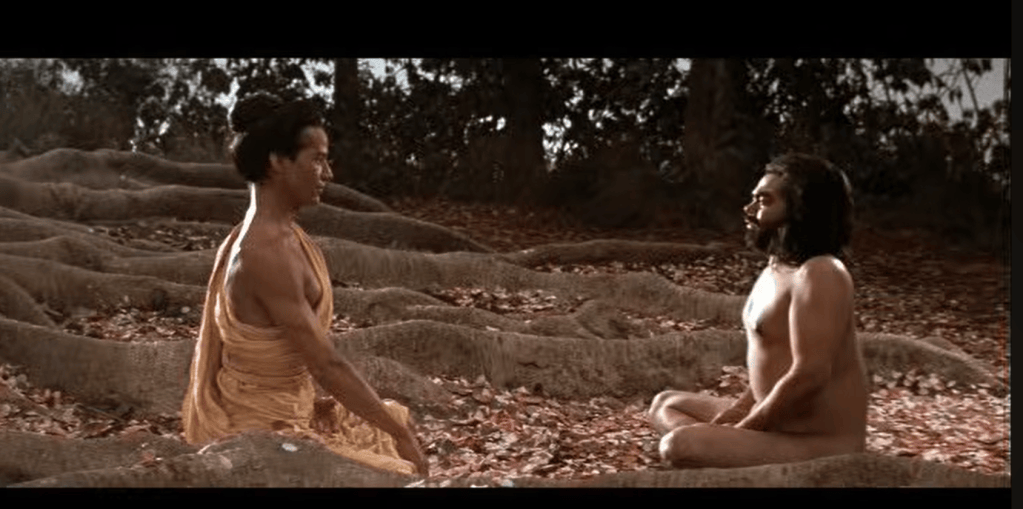
‘The Earth is My Witness’. A rather bronzed Keanu Reeves as the Buddha unmasking Mara in the 1993 Bernardo Bertolucci film ‘Little Buddha’.
In Part III of Patrül Rinpoche and Chegompa’s text on maras, the discussion shifts to behaviours and situations which enable maras and their influence to enter into your life and being and to the various signs which indicate that the maras have you in their hold. Let’s dive right in (as before, I’ll share some brief reflections at the end of the translation. For Part I and II of the text see here and here, respectively).
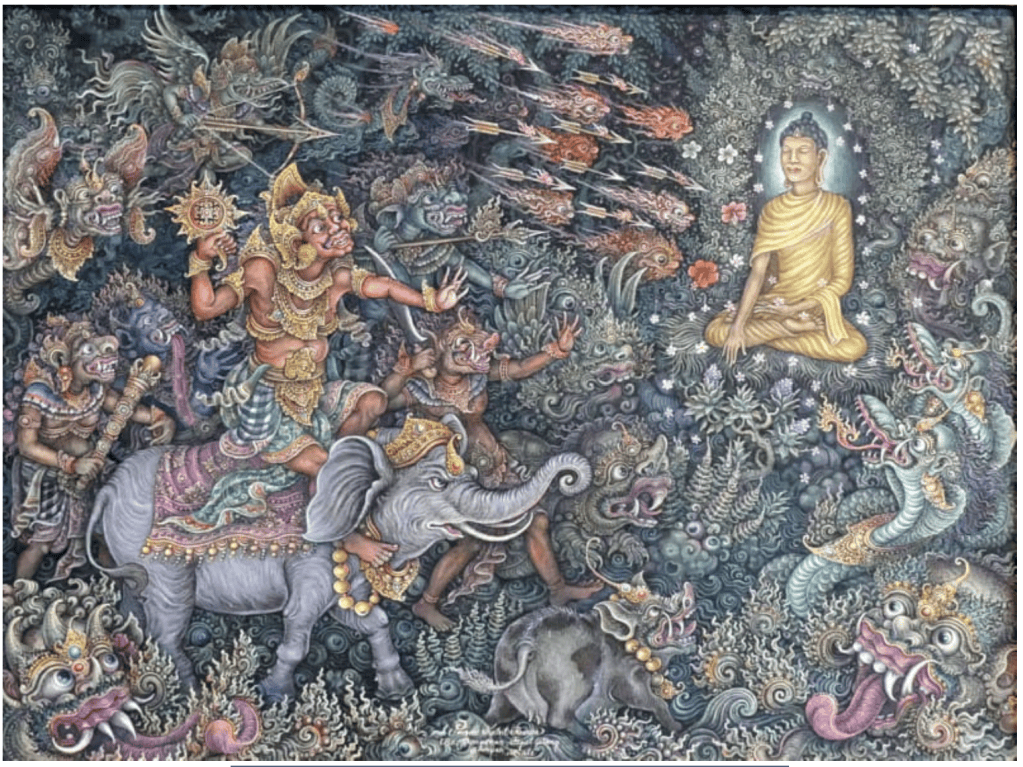
Painting of maras attacking the Buddha, by Balinese artist Pande Ketut Bawa
Here is part II of a multi-part series in which I share a preliminary translation of a text on Maras – ‘demonic’ obstacles on the spiritual path – by the nineteenth century Tibetan Buddhist teacher Patrül Rinpoche. As I mentioned in Part I, this text is Patrül’s reworking of an earlier text by the twelfth century Kadampa master Chegompa (see Part I for more details). In the opening section of the text, Chegompa describes the Four General Maras – these maras are ‘general’ because they are overarching, they encompass the obstacles and challenges of samsaric broadly. In this next Part, Chegom outlines three levels of specific or particular maras – chedrak ki dü, བྱེ་བྲག་གི་བདུད་ – namely, outer level maras, inner level maras, and secret level maras. There are six types for each level, making eighteen specific maras in total. The scheme of ‘outer, inner, secret’ – chi nang sang sum, ཕྱི་ནང་གསང་གསུམ་ in Tibetan – will be familiar to many readers. It is an ubiquitous framework in Tibetan Buddhism and charts a spectrum from other beings and gross, external, objective reality on one end, to more internal, intangible, personal, and subjective experiences and orientations on the other. Let’s dive right into the translation (I’ll include some reflections on the section at the end!).
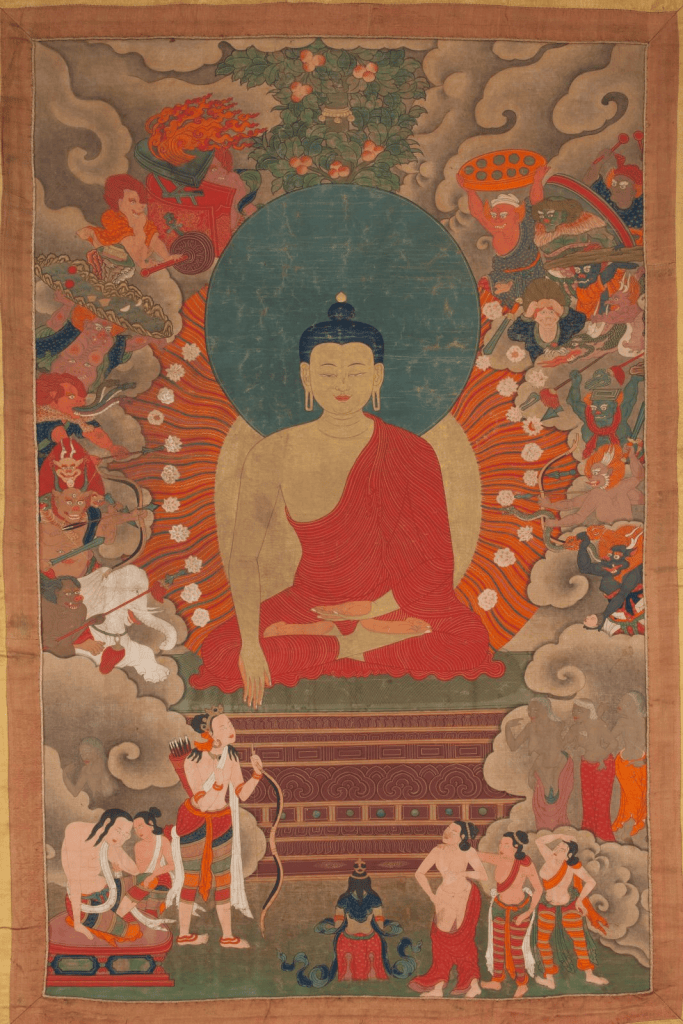
A nineteenth century tangka painting of the Buddha conquering maras, housed at Rubin Museum of Himalayan Art, purchased from the Collection of Navin Kumar, New York. See here for more details.
In the interest of starting to post here a bit more regularly, I figured I would share, in installments, a rough translation of an interesting Tibetan text I came across recently. The text is by Dza Patrül Rinpoche (1808 – 1887 – Patrül has become the quasi-standard English phoneticization, but it could just as well be Peltrül), a prominent scholar-practitioner of the Nyingma school of Tibetan Buddhism, who is perhaps best known today for his extensive commentary on the ngöndro, i.e. the foundational, preliminary practices of the Longchen Nyingthig system, called ཀུན་བཟང་བླ་མའི་ཞལ་ལུང་ Künzang Lamé Zhelung, ‘The Direct Oral Instructions of the Guru who is one and the same as Samantabhadra’, better-known as ‘Words of My Perfect Teacher’. The text I’d like to share here is, also included in Patrül Rinpoche’s collected works and is titled བདུད་ཀྱི་རྒྱུ་བརྟགས་ཏེ་སྤོང་ཚུལ་གྱི་མན་ངག་བདུད་ལས་རྣམ་རྒྱལ་ ‘Complete Victory over Mara: Pith Instructions on how to Diagnose the Causes of Mara or Obstructing Demons and the Methods for Avoiding Them’. I cited the final paragraph from this ‘Complete Victory over Mara’ text in a recent interview I did with Steve James on the Guru Viking podcast on the Tibetan concept of gek or obstacles which arise in the course of meditation and spiritual practice.As it happens, the text is not an original composition, but as Patrül explains in the colophon, is his reworking of a chapter by the same name found in ‘The Heap of Precious Pith Oral Instructions’ མན་ངག་རིན་ཆེན་སྤུངས་པ་ Mengngak Rinchen Pungpa, a treatise by the influential Tibetan Kadampa master Chegompa, who was born in 1130. Patrül Rinpoche notes that he has summarized the original chapter, has edited its wording slightly, in order to rework it into ‘notes’ or a more bulleted form (ཟིན་ཐུན་དུ་སྤེལ་བ་). This is very kind of him, since it makes the key points of Chegompa’s chapter easier for students like us to access, study, and memorize. Since there’s so much of interest in the text, I’d like to share it in its entirety here, with a few personal reflections along the way.