Tantric Sex Partners, Actual and ‘Imagined’: Tibetan Karmamudra, and the Life and Times of Lelung Jedrung Zhepai Dorje

lelung shepe dorje

(The Great Fifth Lelung Jedrung Rinpoche, Zhepai Dorje)

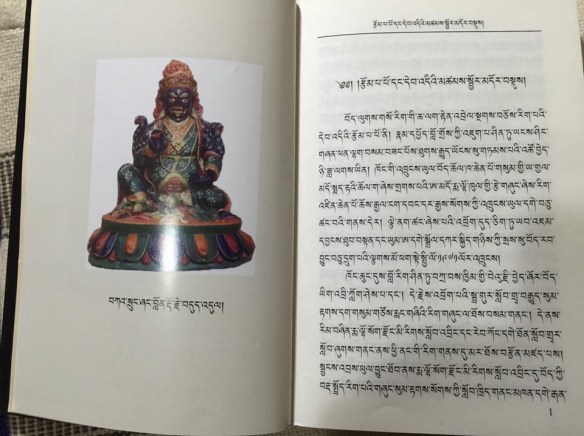
Recently, Tibetan scholar, traditional physician and yogi Dr Nyida Chenaktsang told me about (and gave me permission to read) a short text by the 18th century Tibetan yogi and visionary saint or ‘treasure revealer’, Lelung Jedrung Zhepai Dorje (sle lung rje drung bzhad pa’i rdo rje, 1697-1740). This saint, whose name means something like ‘the Jedrung reincanation, the laughing/proclaiming tantric thunderbolt, or non-dual reality from the Lelung region’, is also known by the personal names Trinlay Wangpo and Lobsang Trinlay. He was born in Ölga/Ölkha, a region in Lhoka in South-Western Tibet, and was recognized as the Fifth Jedrung Rinpoche – that is to say, as the reincarnation of Drubchen Namkha Gyaltsen (1326-1401), the celebrated master who was one of Je Tsongkhapa (1357-1419), the founder of the Gelukpa lineage’s, principal gurus. Yet, despite being the re-embodiment of a celibate master – of one who played mentor to boot to a figure strongly associated with the monastic regulation and circumscription of tantra in Tibet, AND despite the fact that Lelung Zhepai Dorje had himself received monk’s ordination from the Sixth Dalai Lama at the age of seven, the text that Dr Nyida brought to my attention has nothing to do with either vows of celibacy or monasticism. Continue reading

Signs of Sinicization: Katia Buffetrille on Road Signs and Cultural Erasure in Tibet

buffetrille.jpg

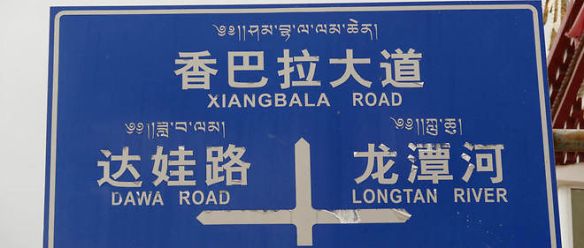
The following is a quick translation into English from French that I made of what seems like an excerpt of a longer interview that Le Point.fr did with anthropologist and Tibetologist Katia Buffetrille. Although it is short, it covers important ground, so I thought non-readers of French might appreciate a version in English. The focus of the interview is the topic of Han Chinese Sincization of Tibet and Tibetans. In a very nice and concise way Katia, describes the little everyday ways – particularly in relation to naming – that Tibetan cultural and lived, embodied realities are erased and suppressed to make way for the steam-rolling priorities of Chinese settler-occupiers. Continue reading

Illuminati Penis Enlargement: Foreigness and Cross-cultural Healing in the South African Magical Market-place

Recently, for laughs, a friend of mine shared this picture on Facebook:

image1 (8)

It is a somewhat unique example of a certain type of advertisement that one commonly sees plastered on various public surfaces, handed out as flyers, or posted in classifieds sections all over South Africa. These notices, which advertise the services of various kinds of spiritual doctors, healers and ritual specialists – have become their own genre, and their curious English phrasings, frequent references to exotic materials and methods, and claims to provide such services as penile enlargement, vaginal tightening or the magical return of straying lovers are a regular source of amusement for non-customers and skeptics.  Continue reading

An Unhappy Mother’s Day: Tibetan Self-immolation protests and Splaining over Corpses

sonam tso.jpg

(Tibetan self-immolater Sonam Tso)

Today is Mother’s Day. The day before yesterday, on Friday, the 6th of May, news broke about yet another Tibetan self-immolation protest that took place inside Tibet. This was delayed news, however. The self-immolation took place some two months ago, but Tibetan exile media organizations had only now been able to even verify that it had happened. The woman who self-immolated was a mother of five. I had got up from being asleep and saw the news on Facebook. I shared this link, after quickly making a rough translation of the initial written information in the article: Continue reading

‘His Weight in Gold’: Women of Power in Game of Thrones and Tibetan Buddhism (*SPOILERS!)

melisandre

FOR THE INTERNET IS DARK AND FULL OF SPOILERS! GAME OF THRONES AND TIBETAN BUDDDHIST SPOILERS AHEAD FOR THOSE WHO HAVE NOT WATCHED THE MOST RECENT EPISODE OF THE SERIES OR HAVE NOT ACHIEVED ENLIGHTENMENT!

Last week’s episode of Game of Thrones, the second in this current season, saw fans’ questions about whether we’d be seeing more of a moving version of the Lord Commander of the Night’s Watch Jon Snow put to rest. Continue reading

Tibetan ‘Yogi-Doctors’ Today: Professor Gojo Wangdu’s Preface to Dr Nida’s new book on Mantra Healing

image1 (7)

The following is a translation of Professor Gojo Wangdu’s preface to Dr Nida Chenagtsang’s new Tibetan-language volume on the ‘Interdependent/Auspicious Science of Mantra Healing’. In his preface, the Professor supplies a brief overview of Dr Nida’s upbringing, education, and achievements. He describes the important contributions that Dr Nida has made to re-invigorating Tibetan traditional medicine, like his efforts to preserve and revive lapsed oral lineage practices such as the ‘stick-therapy’ methods that were taught by Padampa Sangye and others centuries ago. The Professor makes a strong case for why Tibetan doctors today should practice as the founding lineage masters of Tibetan traditional medicine did, as ‘yogi or ngakpa doctors’, that is, as practitioners who seamlessly integrate mantra healing rituals, yogic practice, and medicine. He also responds to questions readers might have about the issue of secrecy, and of the pre-requisites – the transmissions and training – required to put mantra healing into practice to benefit beings. While the Professor follows the traditional Tibetan style of modestly talking-down his own achievements, he is a highly respected and learned scholar, and his endorsement of Dr Nida’s book speaks to its value.

Continue reading

“If You Don’t Wear Them, We Will”: Preservation, Appropriation, and the Importance of Role-models in Tibetan Cultural Life

tibetan chupa

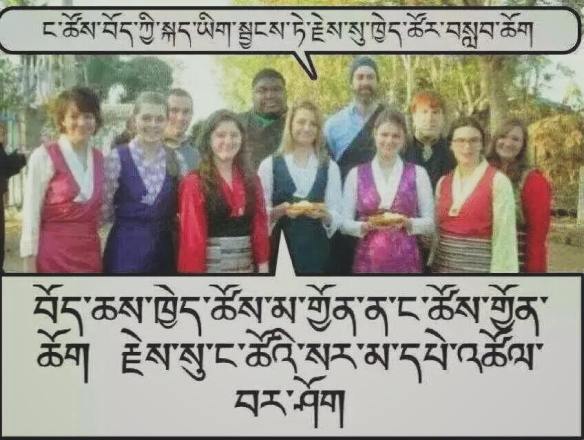
I came across this Tibetan meme on Facebook a few months ago. In true meme style, pithy as it is, it manages to encapsulate and gesture towards a great deal. The image shows an assortment of beaming non-Tibetan foreigners wearing traditional Tibetan dress. The top speech bubble says:

“We will learn spoken and written Tibetan and then we will teach it to you” Continue reading

Secrets of the Scoby: Tibetan Taoist Gummiberry Juice and Boulder’s Buddha’s Brew

gummiberry juice

I was recently reminded of an old entry from the annals of Shangri-La La Land: the apparently Tibetan fermented drink known as ‘Jun’. Jun is a relative of the classic fermented health-drink Kombucha. Whereas Kombucha is born from the alchemy of adding a kombucha culture or ‘scoby’ to black tea and sugar, Jun is made from Jun cultures mixed with green tea and honey. According to popular legend, besides being more obscure and more magical than Kombucha, Jun also hails from Tibet.

On August 4th, 2010, Emma Blue penned an article for The Elephant Journal which she, mincing no words, called ‘Jun: Nobody Wants us to Know About it’. The Elephant Journal claims to be committed to a more thoughtful, ‘non-New Agey’ brand of spirituality, but you could be forgiven for not quite believing this after reading Blue’s article. Continue reading

De-calcifying your Pineal Gland, and other New Age Literalisms

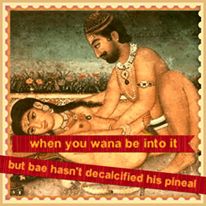
“It’s not you…I just don’t think our pineal glands are in the same place right now.”#NewAgeDatingProblems

A while back, I was kinda bored and for reasons I still don’t fully understand, I made this meme. I thought it came out quite well.

decalcifying your pineal gland.jpg

I was just going to post this meme here, but then it got me thinking. Jokes aside, I find the idea of doing something like ‘de-calcifying your pineal gland’ quite fascinating. The concept is one of a panoply of New Age lifestyle/purificatory options, which rely at least in part on a veneer of scienc-i-ness for their legitimacy. Continue reading

Economies of Curiosity: The Dalai Lama’s email inbox, the Foreign Researcher in Mcleod Ganj and Artaud Syndrome

artaud.jpg

(Antonin Artaud, gazing upon the summit of interiority)

So, McLeod Ganj, India where I am living, ‘Little Lhasa’, or the Tibetan capital in exile, is a funny kind of place. It’s really only a very small town, but its few streets and rural mountain town feel belies its cosmopolitanism. It is a junction point for a virtually unceasing stream of Tibetan and foreign visitors, for news and information from all over the globe. Besides formal support from the Tibetan government in exile, and informal flows of money from friends and family – everything from transnational remittances, informal/illegal trade, community saving unions, personal support structures centered around people from the same home regions in Tibet and exile, from common Tibetan exile or Indian school graduating groups, or shared monastic colleges – many Tibetans rely on tourist dollars to survive.

I have often said that this town exists for better or worse in the midst of overlapping economies of curiosity. Romantic stereotypes and Tibetans’ global reputation precedes them. One silver lining about this curiosity or global gaze is that it can at least be turned into a source of continued survival and livelihood for exile Tibetans, who let it not be forgotten, remain by and large stateless refugees living deeply precarious lives.

Continue reading