Demon Directories: On Listing and Living with Tibetan Worldly Spirits

blue thebrang.jpg

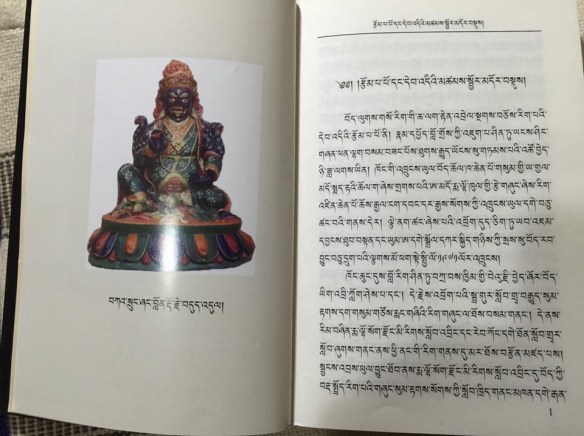
(An image of a blue the’u rang or tebrang spirit from a Tibetan manuscript. Scanned images from this manuscript of many Tibetan worldly spirits described in the post that follows can be found here at himalayanart.org but unfortunately the name and date of the source-text is not given. If anyone knows these details, please do let me know!)

I came across the following condensed directory of worldly spirits, gods, demons and other non-human Tibetan persons that go bump in the night in a book of essays which deal with the history and controversies surrounding the Tibetan protector-spirit Dolgyal, which I briefly discussed here. The book, whose short title is ‘The Impurity-Dispelling Mirror – An Investigation into the Origination and Controversy of Dolgyal’ was compiled by the Office of the Central Executive Committee of Dhomay (Amdo) Province in exile. The Committee spent some four odd years conducting research into the contentious spirit’s origins and nature and has penned a series of excellent essays explaining the role of spirit-protectors in Tibetan Buddhism and the development of the controversial sectarian issues associated with this spirit in particular. The essays in the book provide much needed context for a very complex issue, part of which revolves around divided opinions on the theological status of the spirit in question. Supporters of the spirit claim that it is a legitimate protector that is upholding its vows and deserving of propitiation; whereas His Holiness the Dalai Lama and numerous other authorities consider the being to be a harmful and demonic presence, a difficult to control hyper-zealous (and hyper-sectarian) force of violence and evil that should be avoided altogether. Continue reading

“You Can’t Watch Pornos in the Monastery”: Tibetan Tantra, Imagined Pleasure, and the Virtuality of Desire

look smile.jpg

(Non-Tibetan Buddhist monks, ‘just watching’)

In my previous post on the life of 18th century monk turned non-celibate sexual-yogi Lelung Jedrung Zhepai Dorje, I noted how historically, debates in Tibet about the practice of tantric Buddhism have often revolved around whether or not practitioners should implement instructions and embody imagery included in the Highest Yoga Tantras ‘in the flesh’ or in more figurative or symbolic ways ‘in the imagination’. In the post, I proposed that some Western neo-tantric practitioners had perhaps projected overly rigid distinctions of ‘symbolic/actual’ onto indigenous tantric phenomena. I pointed out how in native Tibetan contexts, the lines between ‘actual’ and ‘imaginary’ in tantric practice could be quite blurry. Continue reading

Tantric Sex Partners, Actual and ‘Imagined’: Tibetan Karmamudra, and the Life and Times of Lelung Jedrung Zhepai Dorje

lelung shepe dorje

(The Great Fifth Lelung Jedrung Rinpoche, Zhepai Dorje)

Recently, Tibetan scholar, traditional physician and yogi Dr Nyida Chenaktsang told me about (and gave me permission to read) a short text by the 18th century Tibetan yogi and visionary saint or ‘treasure revealer’, Lelung Jedrung Zhepai Dorje (sle lung rje drung bzhad pa’i rdo rje, 1697-1740). This saint, whose name means something like ‘the Jedrung reincanation, the laughing/proclaiming tantric thunderbolt, or non-dual reality from the Lelung region’, is also known by the personal names Trinlay Wangpo and Lobsang Trinlay. He was born in Ölga/Ölkha, a region in Lhoka in South-Western Tibet, and was recognized as the Fifth Jedrung Rinpoche – that is to say, as the reincarnation of Drubchen Namkha Gyaltsen (1326-1401), the celebrated master who was one of Je Tsongkhapa (1357-1419), the founder of the Gelukpa lineage’s, principal gurus. Yet, despite being the re-embodiment of a celibate master – of one who played mentor to boot to a figure strongly associated with the monastic regulation and circumscription of tantra in Tibet, AND despite the fact that Lelung Zhepai Dorje had himself received monk’s ordination from the Sixth Dalai Lama at the age of seven, the text that Dr Nyida brought to my attention has nothing to do with either vows of celibacy or monasticism. Continue reading

Signs of Sinicization: Katia Buffetrille on Road Signs and Cultural Erasure in Tibet

buffetrille.jpg

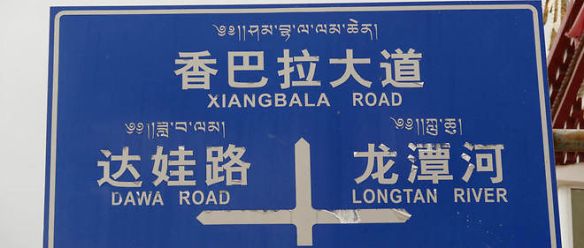
The following is a quick translation into English from French that I made of what seems like an excerpt of a longer interview that Le Point.fr did with anthropologist and Tibetologist Katia Buffetrille. Although it is short, it covers important ground, so I thought non-readers of French might appreciate a version in English. The focus of the interview is the topic of Han Chinese Sincization of Tibet and Tibetans. In a very nice and concise way Katia, describes the little everyday ways – particularly in relation to naming – that Tibetan cultural and lived, embodied realities are erased and suppressed to make way for the steam-rolling priorities of Chinese settler-occupiers. Continue reading

‘His Weight in Gold’: Women of Power in Game of Thrones and Tibetan Buddhism (*SPOILERS!)

melisandre

FOR THE INTERNET IS DARK AND FULL OF SPOILERS! GAME OF THRONES AND TIBETAN BUDDDHIST SPOILERS AHEAD FOR THOSE WHO HAVE NOT WATCHED THE MOST RECENT EPISODE OF THE SERIES OR HAVE NOT ACHIEVED ENLIGHTENMENT!

Last week’s episode of Game of Thrones, the second in this current season, saw fans’ questions about whether we’d be seeing more of a moving version of the Lord Commander of the Night’s Watch Jon Snow put to rest. Continue reading

Tibetan ‘Yogi-Doctors’ Today: Professor Gojo Wangdu’s Preface to Dr Nida’s new book on Mantra Healing

image1 (7)

The following is a translation of Professor Gojo Wangdu’s preface to Dr Nida Chenagtsang’s new Tibetan-language volume on the ‘Interdependent/Auspicious Science of Mantra Healing’. In his preface, the Professor supplies a brief overview of Dr Nida’s upbringing, education, and achievements. He describes the important contributions that Dr Nida has made to re-invigorating Tibetan traditional medicine, like his efforts to preserve and revive lapsed oral lineage practices such as the ‘stick-therapy’ methods that were taught by Padampa Sangye and others centuries ago. The Professor makes a strong case for why Tibetan doctors today should practice as the founding lineage masters of Tibetan traditional medicine did, as ‘yogi or ngakpa doctors’, that is, as practitioners who seamlessly integrate mantra healing rituals, yogic practice, and medicine. He also responds to questions readers might have about the issue of secrecy, and of the pre-requisites – the transmissions and training – required to put mantra healing into practice to benefit beings. While the Professor follows the traditional Tibetan style of modestly talking-down his own achievements, he is a highly respected and learned scholar, and his endorsement of Dr Nida’s book speaks to its value.

Continue reading

My Mother was a Rock-ogress Yeti Monster: True Tales of Dharma, Demons, and Darwin

srin mo.png

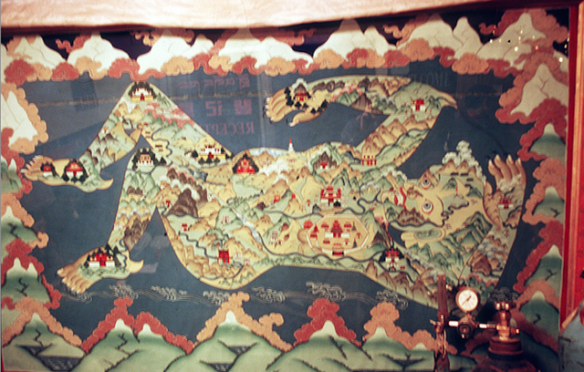
Despite the ridiculous title, I get the feeling this next Savage Minds essay was a little less widely read. This may have something to do with the fact that the technicalities of Tibetan exile secularism and school curricula have less of a wide appeal than some of the other subjects I’ve covered. Whatever the case, I think that this particular Tibetan origin myth Continue reading

Everything is fake in China: Treasure-revealers, False Prophets, and the Miracle of Community Belief

fake terton post

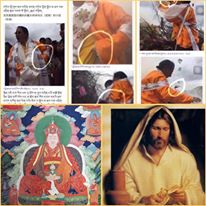
(Not sure why this picture is so small, but hopefully at the top you can see some of the photos of the allegedly fake Golok terton Drolma Thar, on the bottom left, Pema Lingpa, and on the bottom right a pensive Jesus Christ)

Tertön གཏེར་སྟོན་ or ‘treasure revealers’ are visionary prophets or saints in Tibetan Buddhist tradition. They are understood to be reincarnations of the original disciples of Padmasambhava or Guru Rinpoche, the Indian tantric master or ‘Second Buddha’ who established Buddhism in Tibet. Before he dissolved his 8th century physical form, Guru Rinpoche is said to have hidden various ‘treasures’ or terma གཏེར་མ་ all over Tibet and the Himalayas, with the intention that these treasures would be discovered by appointed persons at a later date. Guru Rinpoche left various treasures for safekeeping with guardian spirits in the sky, under the earth, in rocks and caves, and in the mind-streams of his closest disciples. Centuries after his time and into the present, certain individuals have claimed to have had powerful visionary experiences and past-life memories which have convinced them and others that they are reincarnations of Guru Rinpoche’s elect. Attending to these visions, insights, and memories, these individuals have been able to follow the clues to unearth treasures left specially for them across space and time by Guru Rinpoche and his partner the great female Buddha and queen Yeshe Tsogyal. Continue reading

Retiring the Gods? Tibetan Democracy in Exile and Alternative Modernities

retiring the gods post

(I originally made the following post on my Facebook page on April 7th. I reproduce it here, along with some clarifications and further reflections at the end. This picture collage shows the Nechung kuten in trance at the top, the Tsering Chenga goddesses possessing their medium on the bottom left, and Security and Welfare minister Mr Ngodup Drongchung is on the right, during an interview with Tibetan exile media immediately following his resignation)

Tibetan social media and exile society have been alive of late with commentary about the recent pronouncements and actions made by some of the Tibetan state oracles here in India. The state oracles, who are known in Tibetan as ཆོས་སྐྱོང ༼chökyong༽ or བསྟན་སྲུང་ ༼tensoong༽, i.e. ‘dharma-protectors’, are powerful and ferocious spirits – supernatural bouncers or ‘fixers’ – who are oath-bound to serve the Dalai Lama, the Tibetan government and the Tibetan people by providing prophetic advice on religious issues and affairs of state. Continue reading

Justin Bieber, Heroic Man-buns and the Relative Meaning (and Meaninglessness) of Dreadlocks

Dreadlocks post

Debates about hairstyles, fashion, identity and culture have been in the news in the last few days. After posting pictures of his new blond dreadlocks, pop star Justin Bieber was roundly criticized for cultural appropriation – for capitalizing on a cultural aesthetic that in the US is historically associated with black histories, identities, and struggles. Commentators noted that while people/celebrities of colour in the US have been routinely criminalized or villianized for sporting a hairstyle connected to their history and experiences as minorities, when Bieber as a white person casually took on this style as his own it came with none of the meaning, and context, and also none of the backlash. Continue reading