“You Can’t Watch Pornos in the Monastery”: Tibetan Tantra, Imagined Pleasure, and the Virtuality of Desire

look smile.jpg

(Non-Tibetan Buddhist monks, ‘just watching’)

In my previous post on the life of 18th century monk turned non-celibate sexual-yogi Lelung Jedrung Zhepai Dorje, I noted how historically, debates in Tibet about the practice of tantric Buddhism have often revolved around whether or not practitioners should implement instructions and embody imagery included in the Highest Yoga Tantras ‘in the flesh’ or in more figurative or symbolic ways ‘in the imagination’. In the post, I proposed that some Western neo-tantric practitioners had perhaps projected overly rigid distinctions of ‘symbolic/actual’ onto indigenous tantric phenomena. I pointed out how in native Tibetan contexts, the lines between ‘actual’ and ‘imaginary’ in tantric practice could be quite blurry. Continue reading

Tantric Sex Partners, Actual and ‘Imagined’: Tibetan Karmamudra, and the Life and Times of Lelung Jedrung Zhepai Dorje

lelung shepe dorje

(The Great Fifth Lelung Jedrung Rinpoche, Zhepai Dorje)

Recently, Tibetan scholar, traditional physician and yogi Dr Nyida Chenaktsang told me about (and gave me permission to read) a short text by the 18th century Tibetan yogi and visionary saint or ‘treasure revealer’, Lelung Jedrung Zhepai Dorje (sle lung rje drung bzhad pa’i rdo rje, 1697-1740). This saint, whose name means something like ‘the Jedrung reincanation, the laughing/proclaiming tantric thunderbolt, or non-dual reality from the Lelung region’, is also known by the personal names Trinlay Wangpo and Lobsang Trinlay. He was born in Ölga/Ölkha, a region in Lhoka in South-Western Tibet, and was recognized as the Fifth Jedrung Rinpoche – that is to say, as the reincarnation of Drubchen Namkha Gyaltsen (1326-1401), the celebrated master who was one of Je Tsongkhapa (1357-1419), the founder of the Gelukpa lineage’s, principal gurus. Yet, despite being the re-embodiment of a celibate master – of one who played mentor to boot to a figure strongly associated with the monastic regulation and circumscription of tantra in Tibet, AND despite the fact that Lelung Zhepai Dorje had himself received monk’s ordination from the Sixth Dalai Lama at the age of seven, the text that Dr Nyida brought to my attention has nothing to do with either vows of celibacy or monasticism. Continue reading

De-calcifying your Pineal Gland, and other New Age Literalisms

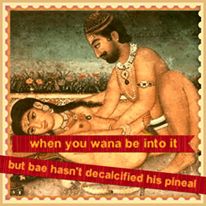
“It’s not you…I just don’t think our pineal glands are in the same place right now.”#NewAgeDatingProblems

A while back, I was kinda bored and for reasons I still don’t fully understand, I made this meme. I thought it came out quite well.

decalcifying your pineal gland.jpg

I was just going to post this meme here, but then it got me thinking. Jokes aside, I find the idea of doing something like ‘de-calcifying your pineal gland’ quite fascinating. The concept is one of a panoply of New Age lifestyle/purificatory options, which rely at least in part on a veneer of scienc-i-ness for their legitimacy. Continue reading

Secrets of the Sex Magic Space Lamas Revealed! Tibetan Buddhist Aliens and Religious Syncretism

tibetan aliens

This was probably my favourite of the four October essays to write, probably because it involved so many things that I love to think and talk about, but was also something I never, ever imagined I’d be writing for an anthropological audience, or maybe at all.

Years ago I was warned by a lovely acting HoD in an anthropology department to be careful of pursuing the study of esotericism Continue reading

My Mother was a Rock-ogress Yeti Monster: True Tales of Dharma, Demons, and Darwin

srin mo.png

Despite the ridiculous title, I get the feeling this next Savage Minds essay was a little less widely read. This may have something to do with the fact that the technicalities of Tibetan exile secularism and school curricula have less of a wide appeal than some of the other subjects I’ve covered. Whatever the case, I think that this particular Tibetan origin myth Continue reading

Tantra and Transparency, or Cultural Contradictions and Today’s Tibetan Buddhist Wizard

white-and-red-robes.jpg

Here’s my second piece for Savage Minds, and the first of the four-part guest-blogger series I did during October last year.

This essay offers a brief overview of my current dissertation research project on ngakpa and ngakpa lineages in exile and outside of Tibet. I tried to make this piece a useful summary of some of the dimensions of ngakpa/ma histories, orientations, practices, and lineages that I thought were of interest, especially for an anthropological audience perhaps less familiar with Tibetan societies and Vajrayana. Continue reading

Angry White Buddhists and the Dalai Lama: Appropriation and Politics in the Globalization of Tibetan Buddhism

voldemort.jpg

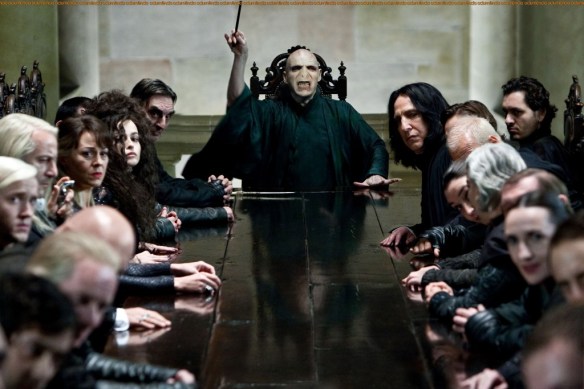
Since I’m just now launching this blog, I thought I would re-post links to my earlier Savage Minds blog essays for readers, with some additional comments.

This is the first piece I put out on the Savage Minds blog, and deals with the controversial Western Buddhist organization, the New Kadampa Tradition (NKT). This was a modest piece on my part. Continue reading

Retiring the Gods? Tibetan Democracy in Exile and Alternative Modernities

retiring the gods post

(I originally made the following post on my Facebook page on April 7th. I reproduce it here, along with some clarifications and further reflections at the end. This picture collage shows the Nechung kuten in trance at the top, the Tsering Chenga goddesses possessing their medium on the bottom left, and Security and Welfare minister Mr Ngodup Drongchung is on the right, during an interview with Tibetan exile media immediately following his resignation)

Tibetan social media and exile society have been alive of late with commentary about the recent pronouncements and actions made by some of the Tibetan state oracles here in India. The state oracles, who are known in Tibetan as ཆོས་སྐྱོང ༼chökyong༽ or བསྟན་སྲུང་ ༼tensoong༽, i.e. ‘dharma-protectors’, are powerful and ferocious spirits – supernatural bouncers or ‘fixers’ – who are oath-bound to serve the Dalai Lama, the Tibetan government and the Tibetan people by providing prophetic advice on religious issues and affairs of state. Continue reading

Tibetan Monks in Exile: Not as Tibetan as they Used to Be

pemachinnjor

(Pema Chinnjor, the current kalon of the Chorig Lekhung, or minister of the Religion and Culture Department of the Central Tibetan Administration in exile)

Below is a translation I made of part of a recent article by Dondup Tashi that appeared on the Tibetan news site Tibettimes.net on the 25th of March 2016, which deals with concerns about the fact that the majority of students in the reconstituted Tibetan monasteries in exile are now not in fact ethnic Tibetans, but are Buddhists of Himalayan descent. While in recent decades sarjorpas, or new arrivals from Tibet (i.e. Tibetans typically born and raised in occupied Tibet, who have come to live in Tibetan exile communities more recently), have made up the primary demographic in the exile monasteries, things have now changed. Continue reading

So, You Want to be a Tantric Wizard, Huh?

so you want to be a tantric wizard


Part of my current PhD research focuses on the overlaps – and divergences – between ideas about what practicing tantra means in ‘traditional’ or ‘indigenous’ Asian contexts and in what can be called ‘neo’ or ‘New Age’ tantric settings.

Recently, I’ve been coming across a great number of (white) people who describe themselves as ‘Tantrikas’ and ‘Dakinis’, traditional terms for somebody following the path of (an often but not always non-celibate) tantric practitioner and vow-holder. The (often, but not always) white people who use these terms most liberally frequently seem to be operating well outside of the boundaries of traditional Indian or Tibetan tantra, that is, the native religious system of someone like His Holiness the Dalai Lama. As an anthropologist, I’m not interested in categorically dismissing or merely debunking these white self-avowed tantric masters and goddesses Continue reading