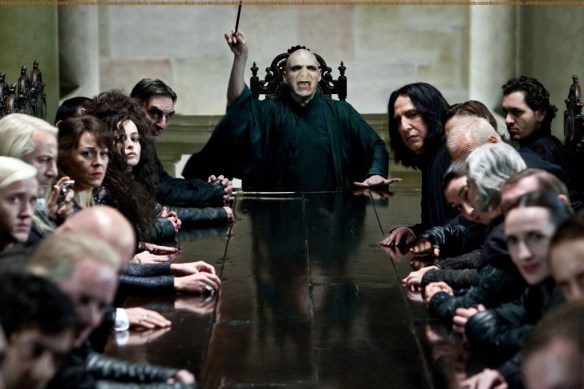
Angry White Buddhists and the Dalai Lama: Appropriation and Politics in the Globalization of Tibetan Buddhism

voldemort.jpg

Since I’m just now launching this blog, I thought I would re-post links to my earlier Savage Minds blog essays for readers, with some additional comments.

This is the first piece I put out on the Savage Minds blog, and deals with the controversial Western Buddhist organization, the New Kadampa Tradition (NKT). This was a modest piece on my part. Continue reading →

Retiring the Gods? Tibetan Democracy in Exile and Alternative Modernities

retiring the gods post

(I originally made the following post on my Facebook page on April 7th. I reproduce it here, along with some clarifications and further reflections at the end. This picture collage shows the Nechung kuten in trance at the top, the Tsering Chenga goddesses possessing their medium on the bottom left, and Security and Welfare minister Mr Ngodup Drongchung is on the right, during an interview with Tibetan exile media immediately following his resignation)

Tibetan social media and exile society have been alive of late with commentary about the recent pronouncements and actions made by some of the Tibetan state oracles here in India. The state oracles, who are known in Tibetan as ཆོས་སྐྱོང ༼chökyong༽ or བསྟན་སྲུང་ ༼tensoong༽, i.e. ‘dharma-protectors’, are powerful and ferocious spirits – supernatural bouncers or ‘fixers’ – who are oath-bound to serve the Dalai Lama, the Tibetan government and the Tibetan people by providing prophetic advice on religious issues and affairs of state. Continue reading →

Tibetan Monks in Exile: Not as Tibetan as they Used to Be

pemachinnjor

(Pema Chinnjor, the current kalon of the Chorig Lekhung, or minister of the Religion and Culture Department of the Central Tibetan Administration in exile)

Below is a translation I made of part of a recent article by Dondup Tashi that appeared on the Tibetan news site Tibettimes.net on the 25th of March 2016, which deals with concerns about the fact that the majority of students in the reconstituted Tibetan monasteries in exile are now not in fact ethnic Tibetans, but are Buddhists of Himalayan descent. While in recent decades sarjorpas, or new arrivals from Tibet (i.e. Tibetans typically born and raised in occupied Tibet, who have come to live in Tibetan exile communities more recently), have made up the primary demographic in the exile monasteries, things have now changed. Continue reading →

So, You Want to be a Tantric Wizard, Huh?

so you want to be a tantric wizard


Part of my current PhD research focuses on the overlaps – and divergences – between ideas about what practicing tantra means in ‘traditional’ or ‘indigenous’ Asian contexts and in what can be called ‘neo’ or ‘New Age’ tantric settings.

Recently, I’ve been coming across a great number of (white) people who describe themselves as ‘Tantrikas’ and ‘Dakinis’, traditional terms for somebody following the path of (an often but not always non-celibate) tantric practitioner and vow-holder. The (often, but not always) white people who use these terms most liberally frequently seem to be operating well outside of the boundaries of traditional Indian or Tibetan tantra, that is, the native religious system of someone like His Holiness the Dalai Lama. As an anthropologist, I’m not interested in categorically dismissing or merely debunking these white self-avowed tantric masters and goddesses Continue reading →

Science Explaining or Science-splaining? Neurologists take on Sleep Paralysis, OOBEs, and Demon Dominatrices

(Images detailing different forms of sleep paralysis with spiritual causes from the website http://www.spiritualresearchfoundation.org)

A while back Vice published this piece reflecting on Rodney Ascher’s documentary cum horror film about people’s experiences of sleep paralysis. Over the course of my life I’ve experienced sleep paralysis/terrifying ‘waking’ night visitations several times. I think the link between so-called sleeping disorders and phenomena like out-of-body-experience, spirit visitation and alien abduction is compelling, and the idea of learning to relate to the experience and its attendant beings differently is interesting and sounds very sensible to me. That said, I’m wary of reductive explanations – after all I’ve experienced out-of-body and menacing spirit encounters just as often if not more so without any associated sleep paralysis. Continue reading →

Teaching Christianity to Tibetan Buddhists, as a Non-Christian

Today, I used Hozier’s song ‘Take me to Church’ as part of an English listening exercise with some Tibetan students. I chose the song strategically: it is loaded with Christian and sexual themes but also reframes these in surprising, perhaps even blasphemous ways. I figured that the song could provide a good lesson in how important cultural background can be for language comprehension and offer a nice parallel with things the students were more familiar with as Tibetan Buddhists: in this case, the much celebrated if somewhat scandalous poetry of Tsangyang Gyatso, the sixth Dalai Lama, who in the early 18th century bucking the bonds of his royal, monastic education, returned his vows of celibacy and wrote erotic poems laden with tantric Buddhist religious imagery.

Continue reading →