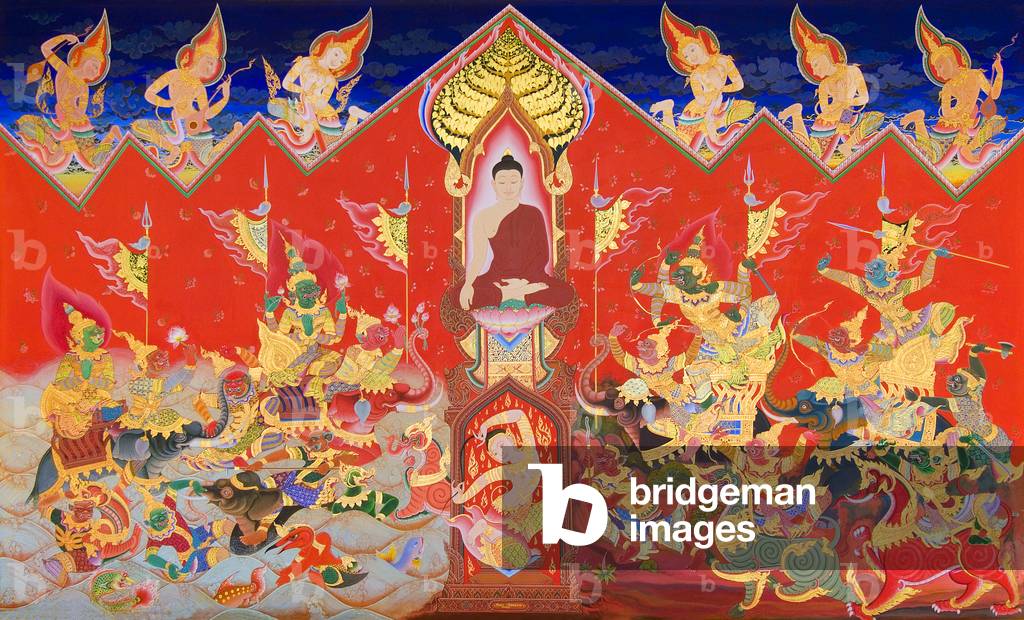
A Devil to be Humbled, not Destroyed: Patrül Rinpoche’s Text on Diagnosing and Avoiding Maras, Part IV

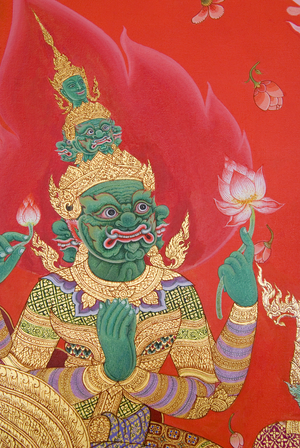
A detail from a mural depicting the Buddha conquering Mara, by Thai artist Pang Chinasai, apparently located at the Aruna Ratanagiri or Harnham Buddhist Monastery, Northumberland, United Kingdom. Here a demon in Mara’s army offers the Buddha a flower, reverently. See here for more details about the painting and here and here for more information about this beautiful Theravadan monastery on the border of England and Scotland.

We arrive now at the fourth and final Part of this series on Patrül Rinpoche’s nineteenth century reworking of a twelfth century text by Kadampa master Chegompa, which explains how Buddhist practitioners can identify and respond to the influence of Mara or maras in their spiritual practice and lives (see here, here, and here for Parts I, II, and III respectively). In this concluding section of the text, Chegompa outlines the methods that Buddhist practitioners can use to treat and prevent mara-obstacles (as in previous posts, I have alternated between translating dü བདུད་ as singular ‘Mara’ with a capital M and as lower case m ‘mara’ in the singular or ‘maras’ in the plural. I’ve also translated the term neljor, nenjor རྣལ་འབྱོར་ as ‘yogic practitioner/s’ or ‘yogis and yoginis’ even thought this term is not explicitly feminized in Chegompa’s text. See Part I for a brief introduction to the Buddhist concept of Mara/maras).

The good news about Chegompa’s recommendations for treating and preventing mara-obstacles is that they are already fundamental elements of Buddhist spiritual practice. Some of the most interesting aspects of this closing section are also the reflections Chegompa offers on the fact that maras themselves are not the problem. What ultimately matters is how practitioners of tantric yoga orient themselves to ‘demonic’ adversaries and obstacles more broadly. As before, let’s dive into the text and I’ll share some observations at the end.
Continue reading →

No More Metaphors: Milarepa’s Teaching to a Ngakpa about the Magic of True Siddhas

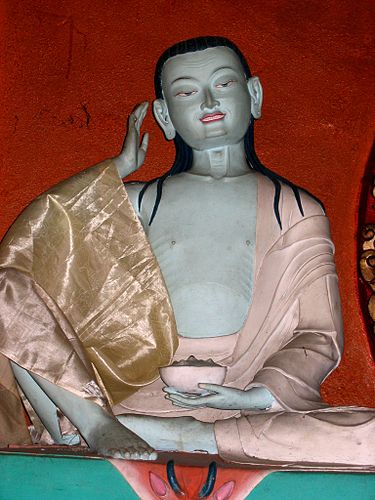
A statue of Milarepa, in his characteristic green colour, from Helambu, Nepal, and Wikipedia.

I was recently reading through Tsangnyön Heruka’s 15th century (1488 to be exact) biography of the celebrated 11th century Tibetan yogi and cultural hero Milarepa. Tsangnyön Heruka – the ‘crazy tantric yogi from Tsang’ (1452 – 1507) – reorganized and codified Milarepa’s biography from various sources, and separated this out from Milarepa’s མགུར་འབུམ་ gurbum or compendium of spiritual teaching songs. Gur is a Buddhist/tantric textual genre for which Milarepa is most famous, and refers to songs or poems which accomplished spiritual adepts are said to compose on the spot to convey in musical and poetic form key spiritual truths for audiences.

While perusing Tsangnyön Heruka’s collection of Milarepa’s songs I came across a narrative which he calls སྔགས་པའི་ཞུས་ལན་གྱི་སྐོར་ ‘Concerning Questions-and-Answers with a Ngakpa’. Readers here will probably know that my doctoral research as a cultural anthropologist was focused on Tibetan Buddhist ngakpa, or non-celibate, non-monastic tantric householders and sorcerers. I find Milarepa’s exchange with this unnamed ngakpa quite beautiful and interesting, so I thought I would share my own translation of it here. Garma C.C. Chang translated this song into English in the 60s in his ‘The Hundred Thousand Songs of Milarepa’ (Vol. 2). I’ve reproduced his translation at the end of this post. While it has many lovely qualities, I feel that it doesn’t quite capture the thrust of some of Milarepa’s responses, which I’d like draw out more here. The gist of the short narrative is that an unnamed ngakpa from དབུས་ཕྱོགས་ Üchok, Wüchok, the region of Central Tibet, comes one day to have an audience with Milarepa. Milarepa’s yogi disciple Seban Repa asks this ngakpa what type of གྲུབ་ཐོབ་ druptop or siddhas there are where he’s from. Siddhas – literally ‘spiritually accomplished ones’, people with spiritual attainments – are yogis who have achieved various spiritual powers, ranging from mastery of psychic and healing abilities, magical powers, to meditative attainment and complete Buddhahood. Seban Repa’s opening salvo is effectively, ‘How powerful/realized are your yogis and sorcerers back home, yogi-sorcerer?’ The visiting ngakpa explains that the siddhas in his region are of such calibre that they are served or waited upon by non-human beings. It is at this point that Milarepa chimes in with a provocation:

Continue reading →