
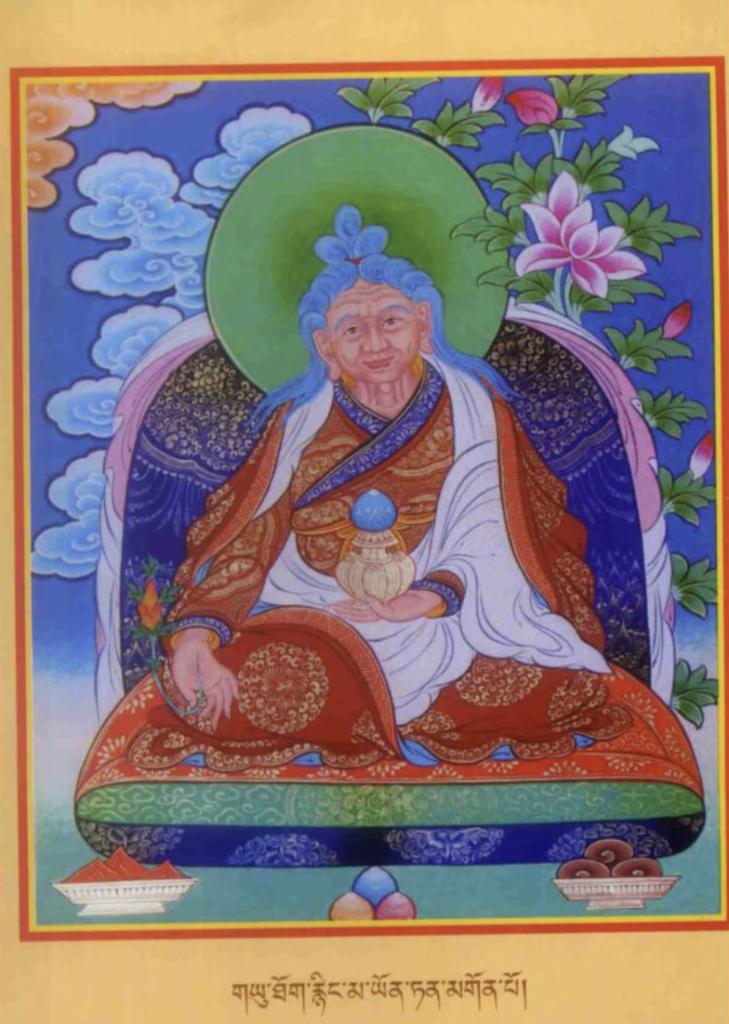
Recently, a student from Brazil in our ongoing one-year deep-dive course on the Ngöndro or Foundation practices of the Yuthok Nyingthig tantric Buddhist teachings, which is happening right now through Sowa Rigpa Institute, asked me if I could provide a little more information about an important female disciple of Yuthok the Elder, who I mentioned in passing during in a class for the course. The main reference we have relating to this disciple is in Yuthok the Elder’s namtar or biography. Since this reference is really quite interesting, I thought I would make a short post about it here so others could appreciate it.
As I touched on in a previous post about the origins and meaning of the family name Yuthok, there are two Yuthoks/Yutoks, གཡུ་ཐོག་, in Tibetan tradition, a Yuthok the Elder and a Yuthok the Younger. Both of these important figures bear the personal name Yönten Gönpo, which translates to something like ‘Lord-Protector of Spiritual Qualities’. Yuthok the Elder is said to have lived in the eighth century, but the most extensive biography we currently have for him was commissioned and composed in the seventeenth century (this biography as well as a shorter companion biography of Yuthok the Younger was compiled by Menrampa Lopzang Chödrak 1638 – 1710, based on materials from a descendant of the Yuthok lineage called Jowo Lhündrup Tashi). Yuthok the Elder’s biography, whose full title is A Treasury of Resplendent Jewels: The Sealed Biography of Venerable Yuthok Yönten Gönpo the Elder, is full of many fascinating moments, many of which involve interesting interactions between Yuthok and various remarkable figures, human and otherwise. The female student of medicine and Dharma mentioned in the biography is named Dami Mentsün, མདའ་མི་དམན་བཙུན་. Yuthok the Elder, who is said to have been one hundred and twenty-five when he died, was something of a late bloomer, only getting married and having children in his nineties. His encounter with Dami Mentsün seems to take place sometime in Yuthok’s mid-to-late nineties, during an exstensive set of pilgrimages Yuthok went on with a sizeable entourage of students. As part of these travels, Yuthok visitied various parts of Tibet and went to sacred sites in India, China, and Uddiyana. It is during Yuthok’s tour of a part of Southern Tibet called Chayul, བྱ་ཡུལ་ (‘Land of Birds’ or possibly ‘Vultures’, located within the boundaries of colonial China’s Lhünzê County), that the great yogi-doctor meets with Dami Mentsün.
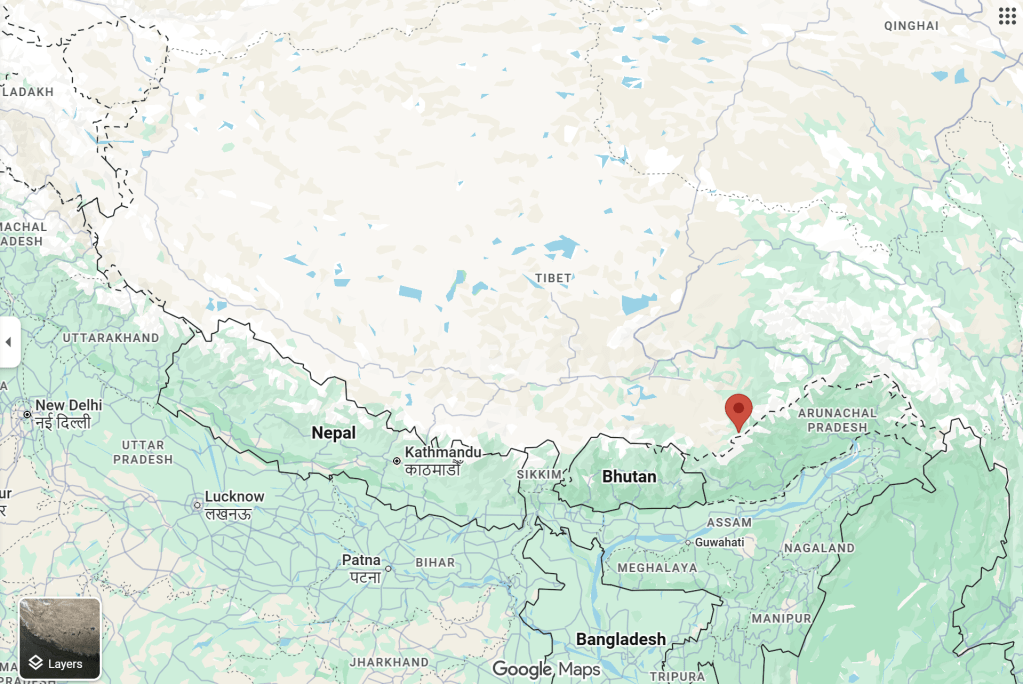
The passage from Yuthok’s biography that details the encounter runs as follows:
དེ་ནས་སྐྱེས་མཆོག་ཡོན་ཏན་མགོན་པོ་དཔོན་སླིབ་རྣམས་བྱ་ཡུལ་དུ་ཕེབས་པས། བུད་མེད་སྔགས་མོ་ཆ་ལུགས་ཅན་ཞུག་བྱུང་ནས་མཛོ་དཀར་པོ་ཞིག་ལ་སྦོབ་རྩེ་གཉིས་བཀལ་ནས་གཡུ་ཐོག་ཆེན་པོའི་དྲུང་དུ་བྱུང་ནས། བདག་བྱ་ཡུལ་གྱི་མདའ་མི་དམན་བཙུན་བྱ་བ་ལགས་ཏེ། ཕ་ལོ་ལྔ་ལོན་ནས་གཞན་དུ་གཤེགས། བདག་སྨན་པ་ཕའི་ལས་བྱས་ཏེ་གསོ་དཔྱད་ཀྱི་སྒོར་ཞུགས་པ་ལགས་པས། མཁས་གྲུབ་ཁྱད་ཀྱིས་དཔལ་ལྡན་རྒྱུད་བཞིའི་འགལ་སྤོང་ཞིག་ཞུ་ལགས་ཟེར་བས། གཡུ་ཐོག་ཆེན་པོའི་ཞལ་ནས། སྤྱིར་བུད་མེད་འདི་སྐྱེ་བ་དམན་པས་སྨན་བསོད་ཆུང་བ་ཙམ་ཡོད་སྣང་།སྙིང་རྗེ་བརྩེ་གདུང་ཤེས་རབ་བརྩུན་འགྲུས་རྣམས་གང་ལས་ཆེ་བ་ཡོད་འདུག་པས་སྐྱེས་པ་མ་བསྟེན་ཅིག། རྩད་རྒྱུ་ཀྱི་སྐབས་སུ་ཨ་རུ་ར་ལ་རོ་དྲུག་ཏུ་གསུང་པ་དང་།བཤད་རྒྱུད་དུ་ལན་ཚྭ་མ་གཏོགས་རོ་ལྔ་ལྡན་ཞེས་པའི་དོན་ནི།དངོས་ཤུགས་ཀྱི་ཁྱད་པར་ཡིན་ཏེ།བདུད་རྩི་སྙིང་པོ་ལས།རྩ་རྩེ་གཉིས་ལ་ཁ་ཞིང་ཚ།མངར་བ་དབུས་ལ་བསྐ་བ་རུས། ། སྐྱུར་བ་ཕྱི་ཤུན་དག་ལས་འབྱུང་།ལན་ཚྭ་དེ་དག་ཤུགས་ལས་འབྱུང་། །ཞེས་པ་དང༌། ལན་ཚྭའི་རོ་དེ་གང་ལས་བྱུང་སྙམ་ན། ས་ར་དབུ་ཐའི་རྒྱུད་ལས། མངར་ཁ་བསྐ་སྐྱུར་གང་རུང་དང༌། །རོ་ནི་ཚ་བ་བསྡེབས་པ་ལས། །ལན་ཚྭའི་རོ་ནི་འབྱུང་བར་འགྱུར། །ཞེས་གསུངས་སོ། །གསུངས་པས་མོ་དད་པ་ལྷག་པར་སྐྱེས་སོ། །དེ་ནས་མོ་ན་རེ། མཐར་ཐུག་གི་ཉམས་ལེན་གང་ལ་བྱས་ན་ལེགས་ཟེར་བ་ལ། གཡུ་ཐོག་ཆེན་པོས་གསུངས་པ། སྨན་བླ་དྲང་སྲོང་ལྷ་མོ་འཚོ་བྱེད་རིག་འཛིན་བརྒྱུད་པ་དང་བཅས་པ་བདུད་རྩི་སྨན་འཕྲེང་ལྟར་གསོལ་བ་ཐོབ། ནང་རེ་བཞིན་བདུད་རྩི་སྨན་སྒྲུབ་ཀྱི་དབང་རང་གིས་རང་ལ་བསྐུར་ལ་རང་གཞན་གྱི་རང་རྒྱུད་མ་སྨིན་པ་སྦྱིན་པར་གྱིས། དབང་བསྐུར་ལུགས་རང་གཞན་གཉིས་ཆར་ལ་དངོས་སམ་ཡིད་གང་རུང་གིས་བསྐུར་བས་ཆོག དེ་དག་གི་སྔོན་འགྲོར་དམར་ཁྲིད་ཪལ་སྐོར་ལྔ་པའི་སེམས་ངོ་སྤྲོད། ལེ་ལོ་དང་འདོད་སྲེད་ཆུང་བར་གྱིས། ཕན་སེམས་དང་གཏོང་ཕོད་ཆེ་བར་མཛོད་གསུངས་སོ། དེ་ནས་མཁས་པ་ཆེན་པོ་གཡུ་ཐོག་པ་དཔོན་སློབ་རྣམས་དྭགས་པོར་བྱོན་པས།
“Then the Great Master Yönten Gönpo went to Chayul with his entourage of students. A woman with the hair and dress of a ngakmo – a female tantric householder – appeared, with a white dzo (yak-cow hybrid) loaded with two big bamboo storage baskets. Coming into Great Yuthok’s presence she said, “My name is Dami Mentsün of Chayul. My father passed away when I was five years old and I have worked as a doctor and have entered into the medical field as he did. Great scholar-practitioner, I would like to ask you to clarify a seeming contradiction in the Glorious Four Medical Tantras.” Yuthok replied as folllows:
“Although, broadly speaking, it appears that women have somewhat less merit in medicine, that they are less fortunate than men due to the lower or lesser rebirth (kyewa menpa) of being born female, your compassion, love, intelligence, and dedication are clearly greater than any others’, so you shouldn’t rely on a man as a partner.
In terms of the issue of how in the Root Tantra (i.e. the first of the Four Medical Tantras or Gyü Zhi), it is taught that arura possesses all six tastes and in the Explanatory Tantra (the second volume) it is said that arura possesses all the five tastes other than salty, this is a distinction of explicit versus implicit explication. The Düdtsi Nyingpo text states that ‘both the root and tip of arura are bitter and spicy, the middle part is sweet, the hard pit is astringent and the outer skin of the fruit is sour, and saltiness emerges from all of these implicitly, indirectly.’ If you’re wondering where the salty taste comes from, in the Sara wuta Tantra it states that ‘When a bitter, astringent, or sour taste is combined with a spicy one, a salty taste will arise.’ Hearing Yuthok explain this, Dami Mentsün’s faith in him increased even more.
She then asked him: “What is the best ultimate practice to do?” Yuthok answered: “Pray to and invoke Medicine Buddha, the medical sages, medical goddesses and the entire lineage of Vidyadhara-physicians as described in the Düdtsi Mentreng medicine empowerment practices. Every morning, bestow the düdtsi mendrup ki wang (i.e. the tantric empowerment that transforms medicines into immortal nectar), onto yourself and then give the empowered medicines to yourself and to others, whose mind-streams have not yet ripened. You can bestow the empowerment on both yourself and others either physically, in actuality, or through your imagination and visualization. As the ngöndro or preliminary foundation practices for such medicine empowerments, point out the nature of mind as described in the mar tri, i.e. the direct essential instructions, of the Relkor Nga. Have as little laziness and craving and as much altruism and generosity as possible.”
Next, the great scholar Yuthok and all his students arrived in Dakpo…”
There are a lot of interesting elements in this short passage. First off, it is nice to see an explicit reference to a ngakmo, a female tantric householder or female non-celibate non-monastic tantric ritual specialist – also known as ngakma སྔགས་མ་ – given how masculine the role or ‘job’ of tantric householders typically is. As I wrote about in Chapter Two of my PhD dissertation, while there have always been Tibetan women with similar training, skills, and functions as male ngakpa, whether they were born into hereditary ngakpa lineages or not, these female specialists are often described using other terms than ngakmo and the term ngakmo is relatively uncommon in historical sources – so much so that some other scholars of ngakpa traditions like Nicolas Sihlé and Tiina Hyytiäinen, for example, have suggested that that ngakmo/ngakma are a primarily modern phenonemon, a result of stronger pushes in recent decades for increased participation of women in householder tantrikas’ collective religious practices inside Tibet and elsewhere around the world. Here we see a portrait of a Tibetan woman who is both a ngakmo and a highly-trained amchi or Tibetan doctor in her own standing, one familiar enough with the authoritative texts of the medical tradition to quiz the very figure responsible for some of them on inconsistencies in their finer details.
It is also noteworthy that Dami Mentsün’s father was a doctor and that she inherited this line of work from him. Today, in mentsikhang སྨན་རྩིས་ཁང་ – schools of Tibetan medicine and astrology – both inside Tibet and in India, Nepal, and other countries where Sowa Rigpa or Tibetan medicine is practiced – female medical students sometimes outnumber male ones. This is a rather new development, however. Historically, medical education and medical practice were considerably male-dominated in Tibet. Medical colleges were also often affiliated with or located near well-funded monasteries, making lay female participation difficult. Limited opportunities for enrollment in medical schools did not mean that lay women and nuns did not study medicine, however. Women learned medical practices and studied medical texts with male relatives or teachers who were doctors and became recognized doctors in their own right in previous centuries, notwithstanding obstacles to involvement in centralized institutions (see the excellent article by Theresia Hofer about the struggles prominent woman amchi of the twentieth century faced in studying, practicing, and teaching medicine, for example).
In his interaction with Dami Mentsün Yuthok the Elder answers two seemingly unasked – or at least not explicitly asked – questions, namely, ‘Can women study and practice medicine to the same extent as men and do they need to rely on a man to do so?’ The author of the biography seems to assume that these questions would be on the mind of the reader, and we can appreciate why when we look at how Yuthok breaks down the issue and responds to Dami Mentsün. The precise way Yuthok articulates the issue is interesting, so let’s deconstruct it carefully:
སྤྱིར་བུད་མེད་འདི་སྐྱེ་བ་དམན་པས་སྨན་བསོད་ཆུང་བ་ཙམ་ཡོད་སྣང་།
Chir (generally) + bümé (female, femaleness, woman) + di (this, the) + kyewa (rebirth, incarnation) + menpa (lower, lesser) +-s (due to) + men (medicine) + sö(nam) (merit, positive force or virtue, good luck, good karma) + chungwa (less) + tsam (x …amount, approximately, just about, roughly) + yö (they have, there exists, there is) + nang(wa) (it seems, it appears)
སྙིང་རྗེ་བརྩེ་གདུང་ཤེས་རབ་བརྩུན་འགྲུས་རྣམས་གང་ལས་ཆེ་བ་ཡོད་འདུག་པས་
Nyingjé (comapssion) + tsedung (love, strong tenderness or affection) + sherap (intelligence, wisdom) + tsündrü (diligence, effort, dedication) + nam (pluralizing suffix, all of these) + gang lé chewa (is greater than any, greater than whatever) + yö (there is, have) + dukpa (there visibly empirically experientially is, exists) + -s (due to this)
སྐྱེས་པ་མ་བསྟེན་ཅིག།
Kyepa (a man, a male person) + ma (negation, do not) + ten(pa) (to rely on, resort to, serve, wait on, associate with, make use of) + chik (imperative suffice, don’t!)
Here, Yuthok acknowledges that in general, it would appear or seem that (nang) being born female, i.e. the state of femaleness (bümé di), entails having less good fortune, positive energy, or merit for medicine. What does Yuthok mean here exactly? Why would it seem evident at first sight that women have less merit for medicine? This general axiom makes some sense in light of Tibetan language more broadly. The etymology of the word for woman or female, bümé, is somewhat uncertain, but it can be read as meaning ‘the one without the protruberance’. The Fifth Dalai Lama’s regent or desi, the doctor, yogi, and politician Sanggyé Gyatso (1653 – 1705) offers a possible etymological explanation of the term in his medical history or khokbuk ཁོག་འབུགས་ called Drangsong Gyepé Gatön དྲང་སྲོང་དགྱེས་པའི་དགའ་སྟོན་, ‘A Banquet to Gladden the Medical Sages’. He relates the term to events understood to have taken place in the first golden eon or age, during the time when human beings still had subtle bodies made of light which flew through space and were as yet sexless and un-differentiated. As he explains:
བསྐལ་པ་དང་པོའི་དུས་ཕོ་མོའི་དབང་པོའི་སྒོ་དོད་པར་ཉེ་བའི་སྐབས་ཝ་བ་ལྟ་བུའི་དབྱིབས་འབུར་པོ་རེ་ཡོད་པ་རེ་ཞིག་ན་ལ་ལ་ནི་སྐྱེས་ཏེ། ཕོ་མཚན་དུ་གྱུར་པས་སྐྱེས་པ། ལ་ལ་ནི་བུད་ནས་མེད་པའི་བུག་པ་ཅན་དུ་གྱུར་པས་བུད་མེད་དུ་གྲགས། ཞེས་གསུངས་པ་ལྟར་རོ། །
“During the First Eon, when the openings of the male and female sexual organs were about to push out to the surface, at a certain moment a protruding shape, like a goitre, grew or arose (kyé) for some beings. This became the potsen, the ‘male attribute or mark – i.e. the penis – and these beings were thus kyepa, i.e. males (literally, the ones for which it ‘grew’ or ‘had grown/arisen’). For some other beings, the shape pushed all the way out and they came to have hole or cavity – because of this they were known as bümé, i.e. females (literally, ‘pushed out and lacking’).”
The common term bümé, thus defines women in terms of a male standard. As Janet Gyatso has pointed out in her book on Tibetan medical history Being Human In a Buddhist World, it essentially defines women as those who do not possess penises. Yuthok the Elder uses this everyday term for female in his reply, along with another everyday word for woman or wife, kyemen སྐྱེ་དམན་. This term is a contraction of kyewa menpa, སྐྱེ་བ་དམན་པ་, meaning ‘lesser or lower rebirth or incarnation’. This term relates to a certain Mahayana Buddhist notion that being born a woman is a lower rebirth to a male incarnation. This claim has been justified, interpreted, and contested in a number of ways – if nothing else, it certainly highlights the way that until quite recently religious training and opportunities have been skewed towards male monastics. Despite claims that it is necessary to have a male body to become a Buddha, there are various female Bodhisattvas and in Vajrayana, women are understood to be at the very least entirely equal to men, if not spiritually superior to them.
Whatever the case, the two Yuthoks’ medical tradition has its own approach to understanding why women might be in some way kyewa menpa. In the opening portion of the Seventy-fourth chapter of the third Oral Instructions Tantra or Mengngak Gyü of the Four Medical Tantras on ‘General Treatments for the Principle Kinds of Gynaecological Disorders’, the Medicine Buddha’s heart-emanation explains that a female human rebirth has less merit because the female body has more organs than the male body and therefore is subject to more diseases. Although the twelfth century Four Medical Tantras describe three medical sexes – male, female, intersex – the discussion focuses here on just male and female bodies:
ཀྱེ་དྲང་སྲོང་ཆེན་པོ་ཉོན་ཅིག མོ་ནད་གསོ་བའི་སྐབས་ལ་བསླབ་པ་ནི། །དུག་གསུམ་འབྱུང་བ་བཞི་ལས་གྲུབ་པའི་ལུས། །སྔོན་ལས་འདོད་ཆགས་དབང་གིས་ཕོ་མོར་སྣང༌། །བསོད་ནམས་དམན་པས་ཟ་མ་མོ་ལུས་ཐོབ། །ནུ་མ་མངལ་དང་ཟླ་མཚན་ཁྱད་པར་ལྷག །ལུས་ཟུངས་ཕྱི་མ་ཁུ་བ་དཀར་དམར་གཉིས། །ཟླ་མཚན་དམར་པོ་བཅུ་གཉིས་ལོན་ནས་འཛག །མངལ་ནང་ཁུ་བ་འཛིན་ཞིང་ཤ་ལུས་སྐྱེད། །དཀར་པོ་ནུ་མ་ལ་རྒྱས་གསོས་སུ་འགྱུར། །དེ་ལ་སྔོན་ལས་ཟས་སྤྱོད་གདོན་རྐྱེན་གྱིས། །མངལ་ནད་ལྔ་དང་རྩ་ནད་བཅུ་དྲུག་དང༌། །སྐྲན་ནད་དགུ་དང་སྲིན་བུའི་ནད་རིགས་གཉིས། །མོ་ནད་གཙོ་བོ་སུམ་ཅུ་རྩ་གཉིས་དང༌། །ཕལ་པའི་ནད་བརྒྱད་བཞི་བཅུ་ཐམ་པར་འགྱུར། །སྐྱེ་བ་དམན་ཕྱིར་བུད་མེད་ལུས་ལ་ལྷག །དེ་ཡང་སྤྱི་དང་བྱེ་བྲག་ཕལ་པ་གསུམ། །
“Listen, o Great Sage! In the study of the field of gynaecological medicine, the human body, which is formed from the duk sum (the three mental poisons of desire, animosity, confusion) and the jungwa zhi (the four originating elements, wind, fire, water, earth), manifests as a male or female form due to the influence of past karma and desire-attachment. One obtains a female body due to having less sönam or merit. This body has extra, distinctive features: breasts, a uterus, and menstruation. The khuwa, or reproductive essence, is the last (most refined) of the lüzung or vital bodily constituents and has both a red and a white aspect. The (impure or waste product portion of the) red aspect is secreted as the red menstrual blood from about the age of twelve. (The pure portion of it) is held inside the uterus and produces the flesh of the fetus. The white aspect essence of the khuwa accumulates in the breasts and turns into (breast milk) to nourish (the baby once it is born). Thus, through the secondary factors of past karma, diet, lifestyle, and harmful spirit influence, five types of uterine disorder (loong, tripa, beken, and blood-humor related and combined types), ten specific categories of trak tsap (acute menstrual blood and hormone related disorders), six specific categories of loong tsap (chronic blood-and-loong disorders), nine types of uterine growths or tumors, two types of sin, parasite or micro-organism related gynaecological disorders, making a total of thirty-two principle gynaecological disorders, and eight types of common disorders (connected with pregnancy) occur in total. Because it is a kyewa menpa, a ‘lesser’ or ‘lower’ rebirth, a bümé lü, a female body, has more disorders (than a male one).”
Yuthok the Elder’s comment doesn’t quite clarify why exactly a woman’s supposedly lesser incarnation results in less merit to study and practice medicine, but we can extrapolate here that it might have something to do with social conditions which could make it more difficult for women to pursue medical professionalization – the expectation that women be homemakers, rear children, and so on (see link to Hofer’s article above for some discussion about how these issues have played out for woman doctors more recently). What is noteworthy is that Yuthok goes on to affirm that, despite the general notion that women have less merit for studying and practicing medicine, Dami Mentsün herself needn’t feel that she in any way lacks in capacity. The exact way he phrases this is interesting and somewhat ambiguous. Yuthok says that he can see, sense, tell (dukpa) that there exists (yö) all the positive qualities he mentions – i.e. compassion, love, intelligence, and dedication or diligence – in greater supply than any (gang lé chewa). He does not explicitly say, ‘You, Dami Mentsün have these qualities’ or specifically who it is that these qualities are in greater supply compared to. From the context, we can infer that Yuthok is addressing Dami Mentsün, however: although it seems that women generally have less merit in medicine, it’s obvious that this ngakmo, this particular woman, is not lacking at all, has far greater positive qualities than any other (gang lé, i.e. presumably any other woman). Women may be less privileged or fortunate than men in a patriarchal world, but this is not enough to stop Dami Mentsün from continuing in medicine.
Indeed, her qualities are so exemplary that Yuthok concludes by exhorting her not to ‘rely on’ a man. The Tibetan word tenpa, བསྟེན་པ་ has many meanings. It can mean to serve, honor, wait on, rely on, or associate with as a student or companion – to physically associate with a teacher and learn from them to gain access to knowledge and qualities the teacher possesses and the student does not. Tenpa can also mean to cultivate or rely on a particular practice in the context of meditation, or to make use of a treatment or medication in the context of medicine. The word can also have a sexual connotation – kyepa/bümé tenpa, literally, to ‘rely on or associate with a man/woman’ means to have sexual intercourse with a man or a woman, whether as part of everyday life, sexual yoga practice, or as a medical treatment. When Yuthok tells Dami Mentsün not to ‘rely on a man!’ we can thus read him as saying she does not need to be in a social or sexual relationship with a man to continue to study and practice medicine, to access knowledge or virtues she does not herself possess.
Given the above meanings, it is also possible to read Yuthok as saying that Dami Mentsün should remain unmarried, which is an interesting suggestion considering that she first appears in the narrative in the dress of a tantric householder, a status typically associated with being married and having a family. We know that she lost her doctor father young and is now studying and practicing medicine without his support and patronage. Is Yuthok implying then that she is capable enough on her own that she need not find a husband, need not marry another doctor, or even be a householder at all to continue advancing as a medical professional? This is how doctor and lama Rechung Rinpoche interprets this exchange in his translation of parts of Yuthok the Elder’s biography in his book Tibetan Medicine, first published in 1973. He not only reads kyepa ma ten chik as ‘do not get married’ but adds in some extra details not found in the original Tibetan to clarify why it is that women have less merit for medicine:
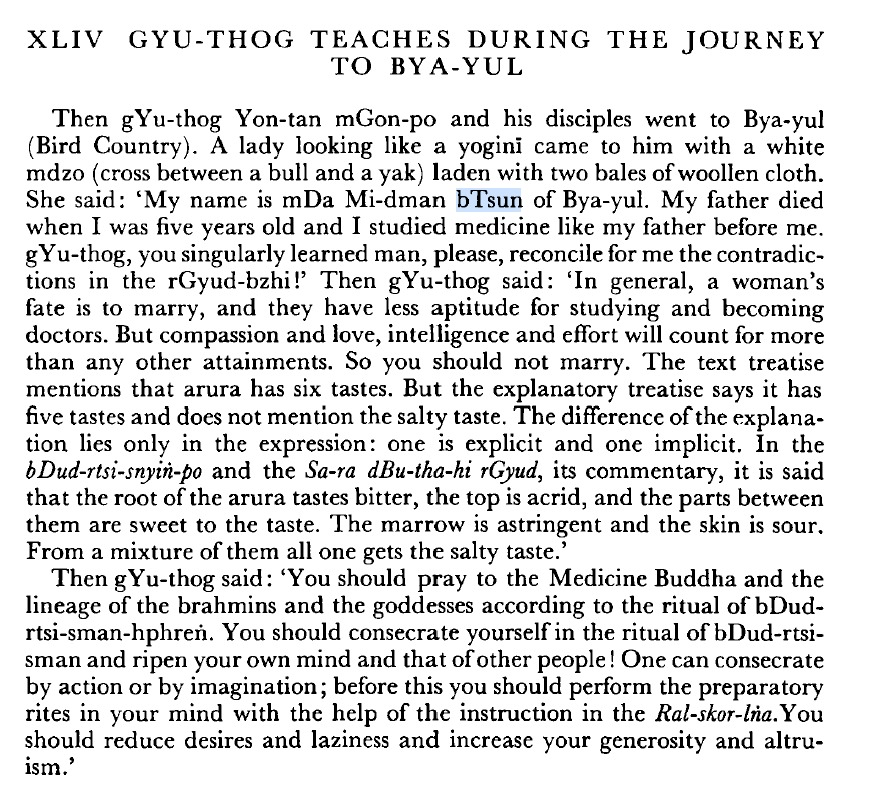
Rechung Rinpoche adds in the point about how it is women’s ‘fate to marry’ and then goes on to say that they do in fact have less aptitude for studying medicine and becoming doctors. This paraphrasing and extrapolating from Yuthok’s words, conveys a much more negative picture of women’s capacity than the original words arguably imply. Rechung Rinpoche may be reading the double, more colloquial meaning of kyewa menpé སྐྱེ་བ་དམན་པས in the line སྤྱིར་བུད་མེད་འདི་སྐྱེ་བ་དམན་པས་སྨན་བསོད་ཆུང་བ་ཙམ་ཡོད་ སྣང་། as ‘wife’, so that the translation becomes, ‘In general, it appears that women have somewhat less merit in medicine because womanhood means the lower rebirth of being a wife’. Saying that women have less opportunities and capacity to study medicine because of traditional expectations that they get married, raise children and manage homes, is quite different of course from saying that they are fated to marry and also somehow have less aptitude for studying or becoming doctors. The way Rechung Rinpoche translates Yuthok’s next line is also a bit vague – he reads the gang lé che wa གང་ལས་ཆེ་བ་ part as ‘will count more than any attainments’, rather than reading this as Yuthok ascribing great compassion, love, intelligence, and diligence to Dami Mentsün herself directly.
The rest of the encounter between Yuthok and Dami Mentsün is also thought-provoking. Yuthok responds to the ngakmo‘s question about a seeming contradiction in the Four Medical Tantra’s description of the taste profiles of the highly-valued arura (Terminalia chebula) fruit without her having to explicitly ask the question. This might be yet another display of Yuthok the Elder’s enlightened clairvoyance, so that Dami Mentsün’s increased faith at Yuthok’s impressive answer might come not just from how clear, confident, and helpful it was, but also from the extraordinary means by which it was delivered. It’s possible that the biographer merely chose to structure the exchange this way, to not write out the yogini-doctor’s question, to keep things concise and avoid repetition. Whatever the case, the interaction demonstrates that the yogini-doctor is literate and versed in key authoritative medical texts to the point that she can ask highly specific questions about their details. We are left to wonder if it was Dami Mentsün’s father taught her to read before he passed away when she was five. In any case, literacy for lay women in eighth – or seventeenth century – Tibet was certainly not unheard of, but as Jangngöpa Tseyang notes in a short article, it almost entirely took the form of private rather than institutional education. As Tibetan Studies scholar Sarah H. Jacoby has noted as well more recently in an article about the twentieth-century non-monastic, non-celibate tantric householder and treasure-revealer Sera Khandro’s incredible literary output, “women in Tibet had a much lower literacy rate than men did, varying in relation to their social and monastic status. Educational opportunities for nuns in Tibet did not compare to those for monks, where nuns’ education existed at all. And what Tibetan women did manage to write was much less likely to receive enough patronage to make it into print.” Dami Mentsün’s literacy and expertise is thus significant, even if we cannot necessarily confirm as of yet that there was a yogini-doctor by that name in eighth century Tibet.
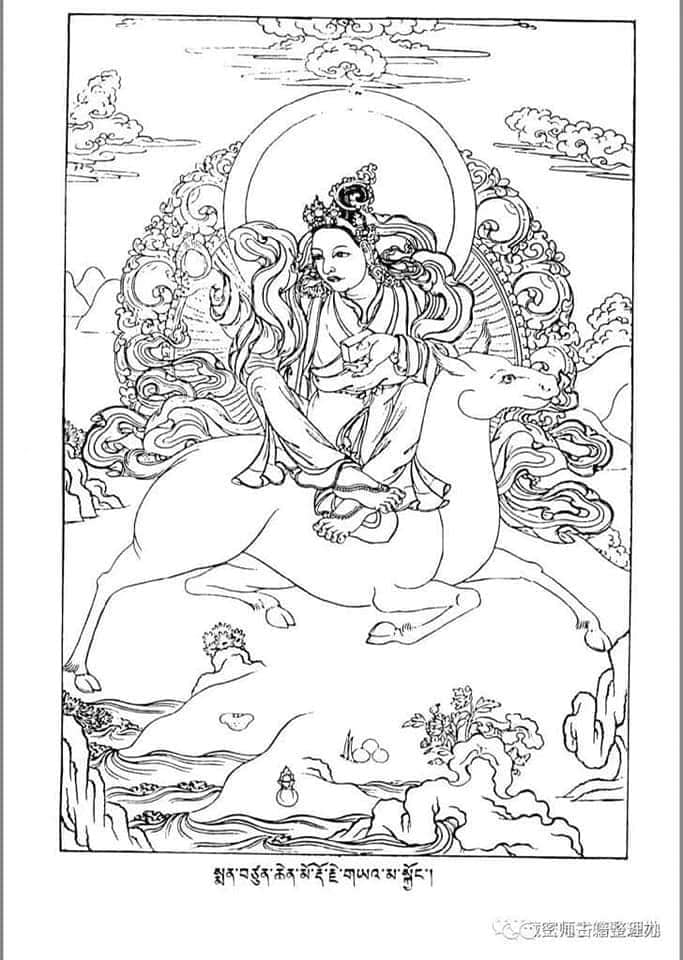
The above episode is unfortunately the only reference to Dami Mentsün in Yuthok the Elder’s biography and though her appearance is brief, she makes an impression, as can be seen by regular passing references to her in various modern Tibetan medical dictionaries and commentaries. Dami Mentsün’s name also captures something of the ambiguity around female excellence in tantra and medicine: The word da མདའ་ means an ‘arrow’ but it can also mean the lower part of a valley, whereas mi མི་ means person. The second part of her name is spelled differently in different materials, sometimes appearing as སྨན་བཙུན་ (sman btsun) and sometimes as དམན་བཙུན་ (dman btsun). Both sman and dman are pronounced men, but have different meanings. Sman means ‘medicine’, ‘medical’, or is a contraction of menmo (sman mo). Menmo is an ancient, likely pre-Buddhist Tibetan word which refers to a kind of feminine guardian nature spirit, a type of goddess rather like a nymph in ancient Greek cosmologies. Menmo govern lakes, rivers, mountains, and trees. While the term is often translated as ‘medical maiden’ or ‘medical goddess’ the syllable sman may relate to an older concept or variant spelling not directly related to medicine. The second spelling of men (dman), meaning ‘lesser, lower, inferior’, is the same term we saw earlier in kyemen, woman or wife. Today the word kyemen is typically spelled སྐྱེ་དམན་, which reads literally as ‘lesser rebirth’, but the variant spelling སྐྱེ་སྨན་ offers the alternative, more positive reading of ‘medicine of birth’ or ‘goddess of birth’. Tsün (btsun) can be read as short for tsünma – i.e. ‘venerable, reverend lady’, that is, a nun – or tsünmo, ‘venerable lady’ as in a queen. Mentsün, in combination, with initial spelling sman, is a technical term used to describe a venerable menmo spirit, a revered nature goddess. This term appears in titles like mentsün ché nga, སྨན་བཙུན་མཆེད་ལྔ་, the so-called ‘Five Venerable Menmo Sisters’. These are a family and mandala of powerful protective menmo goddesses invoked in Tibet. You can see an image of one of these five Goddess sisters, Dorjé Yama Kyong (‘The Vajra Protector of the Slate Mountains’), below (courtesy of the Naldjor Facebook page):
The yogini-doctor’s name thus serves to divinize her, to equate her to a powerful goddess of nature worthy of respect. While occasional variant spellings of her name as dman btsun may be incidental, they inevitably hint at the other meanings and readings explored above, with dman suggesting the ‘lower’ in lower rebirth and btsun also being the title for a nun, a celibate woman not wedded to a man. Dami Mentsün’s name thus encapsulates two divergent interpetations of woman practitioners, as embodiments of divine creative power on the one hand and as somehow disadvantaged in relation to their male counterparts on the other.
Yuthok the Elder goes on to give Dami Mentsün some wonderful advice about how to use the tantric consecration and sharing of medicines as a personal empowerment practice as well as a method for benefitting others (something we can still do today, whether we are monastics or lay people, or whatever our gender). I am not exactly sure which Dzogchen pointing out instructions Yuthok may be referring to – if anyone has an idea about what the Relkor Nga or five cycles of ‘Sword’ (Sword of Rigpa?) teachings are, let me know! – but there is something very elegant and practical about the advice Yuthok provides here.
I haven’t been able to find any more information about Dami Mentsün beyond this encounter, so we are left to wonder what became of her. I am not so concerned here with the question of Dami Mentsün’s historicity. Whether we can prove she existed or not, at the very least, for the seventeenth century composers of Yuthok’s namtar she and the capacity of women doctors she represents was important enough to include, an important enough part of Yuthok the Elder’s legacy and teaching history to mention. Did she end up living as a ngakma/ngakmo without a husband , devoting her life to medical and spiritual practice, as ‘neither a laywoman, nor a nun’, as Sera Khandro likewise described herself centuries later? Did she have one or more spiritual consorts but no ‘husband? Or did she live as a celibate, unmarried laywoman, like a nun, but not quite a nun, like the great Dzogchen adept Mingyur Peldrön (1699 – 1769), daughter of the treasure revealer Terdak Lingpa, who refused proposals to enter into tantric consort partnerships and recognized that she’d be better of not relying on a man? Did Dami Mentsün take nun’s vows? Did she end up having children? If she did, did they train in medicine as well, did she take on female disciples and train them too? We may never learn more about Dami Mentsün’s fate, but her brief hagiographical appearance is nonetheless thought-provoking. Her presence in Yuthok the Elder’s biography continues to impact Tibetan doctors today and remains relevant as practitioners continue to ponder gendered dimensions of medicine historically and in their own work as healers.

