“Doctor, there’s a Demon in my Drink!” Tibetan Grimoires and the Tibetan Medical Tradition


guru rinpoche beer spell tibetan grimoires

Padmasambhava (pictured above), the mythic tantric saint who ensured the flourishing of Buddhism in Tibet in the 8th century was both a fully realized being and a consummate sorcerer. He is credited with having tamed the unruly indigenous demons of Tibet and having helped establish the first Buddhist monastery on Tibetan soil. As Tibet’s ‘Second Buddha’ his cultural importance to Tibetans is hard to over-emphasize. This Lotus-Born Precious guru is the quintessential model for the non-celibate tantric practitioner or ngakpa. As a realized Buddha he is the practitioner’s own basic, pure and perfect nature, as a historical and cosmological figure he represents the model practitioner of the path of tantric Buddhism, the Secret Mantra Vehicle. In his dress, comportment, practices, activities, teachings, motivation, and view he embodies everything that the best tantric practitioner should be.

It is thus no surprise that Padmasambhava’s legendary activities should feature strongly in Tibetan magic. Compared to their counterparts in Western esotericism, Tibetan medico-magical practices, and Tibetan grimoires (ngak ki beubum, སྔགས་ཀྱི་བེའུ་བུམ) have received relatively little scholarly attention. This paucity of scholarly interest is perhaps exacerbated by the fact that the more spiritual dimensions of Sowa Rigpa, or Traditional Tibetan Medicine (TTM) have been formally excised from state-sponsored Sowa Rigpa curricula in contemporary China. Continue reading →

Depersonalization Disorder and Living Corpses: Psychiatry, Religion, and Alienation

milarepa emaciated

(The 11th century yogi Milarepa, in his retreat cave.  He appears here  in his iconic emaciated, green-tinged form that was brought about by subsisting on a diet of nettle soup)

I tend to read pop science pieces on neurological/psychiatric conditions with interest, as I’m sure most cultural and medical anthropologists do. I’m versed in neither neuro-anthropology nor neuro-theology but I do often find myself wondering about the broader social, historical, economic, and political landscapes through, in, and in spite of which specific bio-medical conditions emerge. It’s probably far too reductive and glib to characterize the cases below as merely examples of a contemporary willingness to ‘neurologize’ sicknesses of society. Still, while I’m not about to advocate for a hard-line social constructivist take on these kinds of ‘bizarre’ neurological conditions, I do think it can be interesting to reflect on contemporary psychiatric disorders and discourse in parallel to, and against religious vocabularies. Continue reading →

A Monkey Year to Beliebe in

beebz monkey

ལོ་གསར་བཀྲ་ཤིས་བདེ་ལེགས། Tomorrow is the Tibetan new year or Losar. It is the year of the male fire monkey. In honour of this fact, here is a picture of various kinds of Orchis simia, or monkey orchids, alongside a picture of Justin Bieber and his erstwhile pet Capuchin monkey named Mally which in 2013 he abandoned at customs in Munich because he could not produce vaccination papers or proof of legal purchase for the creature. JBiebz said he would come back with the necessary documents and retrieve his pet but he never did. Continue reading →

So, You Want to be a Tantric Wizard, Huh?

so you want to be a tantric wizard


Part of my current PhD research focuses on the overlaps – and divergences – between ideas about what practicing tantra means in ‘traditional’ or ‘indigenous’ Asian contexts and in what can be called ‘neo’ or ‘New Age’ tantric settings.

Recently, I’ve been coming across a great number of (white) people who describe themselves as ‘Tantrikas’ and ‘Dakinis’, traditional terms for somebody following the path of (an often but not always non-celibate) tantric practitioner and vow-holder. The (often, but not always) white people who use these terms most liberally frequently seem to be operating well outside of the boundaries of traditional Indian or Tibetan tantra, that is, the native religious system of someone like His Holiness the Dalai Lama. As an anthropologist, I’m not interested in categorically dismissing or merely debunking these white self-avowed tantric masters and goddesses Continue reading →

The Great Illusion Snake Katy Perry

katy perry illusion snake

The idea that our misapprehension of reality is like a person who sees a piece of rope and mistakes it for a snake crops up throughout Indian and Tibetan contexts. Here’s 20th century Tibetan master Dilgo Khyentse Rinpoche, for example: Continue reading →

Science Explaining or Science-splaining? Neurologists take on Sleep Paralysis, OOBEs, and Demon Dominatrices

(Images detailing different forms of sleep paralysis with spiritual causes from the website http://www.spiritualresearchfoundation.org)

A while back Vice published this piece reflecting on Rodney Ascher’s documentary cum horror film about people’s experiences of sleep paralysis. Over the course of my life I’ve experienced sleep paralysis/terrifying ‘waking’ night visitations several times. I think the link between so-called sleeping disorders and phenomena like out-of-body-experience, spirit visitation and alien abduction is compelling, and the idea of learning to relate to the experience and its attendant beings differently is interesting and sounds very sensible to me. That said, I’m wary of reductive explanations – after all I’ve experienced out-of-body and menacing spirit encounters just as often if not more so without any associated sleep paralysis. Continue reading →

A Modern Tibetan Refuge Formula

internet refuge

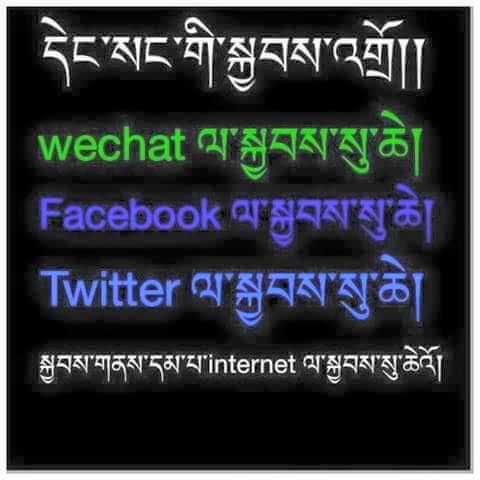
I was sent this parody of the Tibetan Buddhist ‘refuge formula’, as seen on Tibetan social media, by a young Tibetan monk friend in McLeod Ganj. There’s potential commentary here on how much Tibetans depend today on social media and virtual connectivity to keep their sense of community together in diaspora. Continue reading →

Buddhist Bromance and Homoerotic Hermits: Queer Sociality as an Obstacle to Spiritual Attainment

jewel neck

I was recently looking through the Jataka Tales, that sizable collection of fables about the previous incarnations of the Buddha and his close disciples, when I came across one story, called ‘Jewel-Throat’, which you could call a queer, Buddhist version of ‘The Little Mermaid’. In this story about the relationship between a naga or snake-spirit king and two ascetic brothers, homoeroticism and homosexual love appear incidentally as obstacles to ascetic attainment. The story’s vivid account of homosexual spirit-love with reptile-people raises a number of points. Continue reading →

A Tibetan Ghost Story: How Three Chod-pas Tamed a Yakshini

chodpa

The following is a rough translation of a spooky Tibetan story that was shared on the popular Tibetan-medium site Khabdha. It tells the tale of three ngakpa – non-monastic, non-celibate tantric yogi sorcercers – who engage in the special exorcistic meditation of  Chöd, and end up encountering a very dangerous demoness (more specifically, a yakshini or alluring female nature spirit, associated with the granting of power, riches, and sickness). I hope you will read it and be careful the next time you are practicing yoga in the wilderness!

Besides being quite chilling and engaging, the story is also noteworthy for other reasons. It reminds us for one, how Tibetan Buddhist yoga is a lot more human thigh-bone trumpet and visions of demons than Lulu Lemon, coconut water and gym memberships, and points to the awe and fear with which the Tibetan practice of Chöd – particularly in its solitary, and itinerant iterations – continues to be held. As part of the Chöd (gcod) or ‘severance/cutting’ offering rite practitioners visit terrifying, haunted locations, where, through complex ritual choreographies of visualization, liturgy-singing, dancing, and drumming, they work with the energy of their fear of annihilation by meditatively disengaging from their body, severing their investment in a constructed self, and offering their ‘corpse’ up to be eaten by beneficent as well as  hungry, suffering demonic beings, which they have summoned. As I mention in another post about the practice, gcod not only pacifies these demons – themselves ultimately displays of Mind and a product of self-grasping like all phenomena – but also powerfully severs the practitioner’s attachment to their self-importance and allows them to develop profound compassion, generosity and fearlessness.

The story below is noteworthy, however, for how it reminds us that just because spirits are empty, illusory displays from the vantage-pointless vantage-point of ultimate non-dual reality, that does not mean that they do not appear to be real at the conventional level, and do not act in the world of apparent phenomena (after all, your and my own sense of self is likewise an ultimately empty, illusory display but many people still take your and my actions in the world pretty seriously). Chöd (and the story below!) is thus interesting for how, on one level, it is a teaching about the ultimate non-reality of demons, of all those terrifying projections that haunt us, but on another, serves to demonstrate just how potent and devastating, how perilous, those demons can be. On a separate note, with its descriptions of the three brothers’ divvying up of familial and religious duties, the story that follows also provides some small insight into ngakpas’ time-management strategies, and the everyday familial, socio-economic dimensions of Tibetan yogic practice.

Here follows the translation:

A story of how three Chöd  practitioners tamed a Yakshini [i.e. a female ‘harm-giver’ or local land spirit (gnod sbyin mo)] – By Tenpé Nyima Continue reading →

Teaching Christianity to Tibetan Buddhists, as a Non-Christian

Today, I used Hozier’s song ‘Take me to Church’ as part of an English listening exercise with some Tibetan students. I chose the song strategically: it is loaded with Christian and sexual themes but also reframes these in surprising, perhaps even blasphemous ways. I figured that the song could provide a good lesson in how important cultural background can be for language comprehension and offer a nice parallel with things the students were more familiar with as Tibetan Buddhists: in this case, the much celebrated if somewhat scandalous poetry of Tsangyang Gyatso, the sixth Dalai Lama, who in the early 18th century bucking the bonds of his royal, monastic education, returned his vows of celibacy and wrote erotic poems laden with tantric Buddhist religious imagery.

Continue reading →