Shut up and Recite! Naropa’s Pith Instruction on Mantra Practice

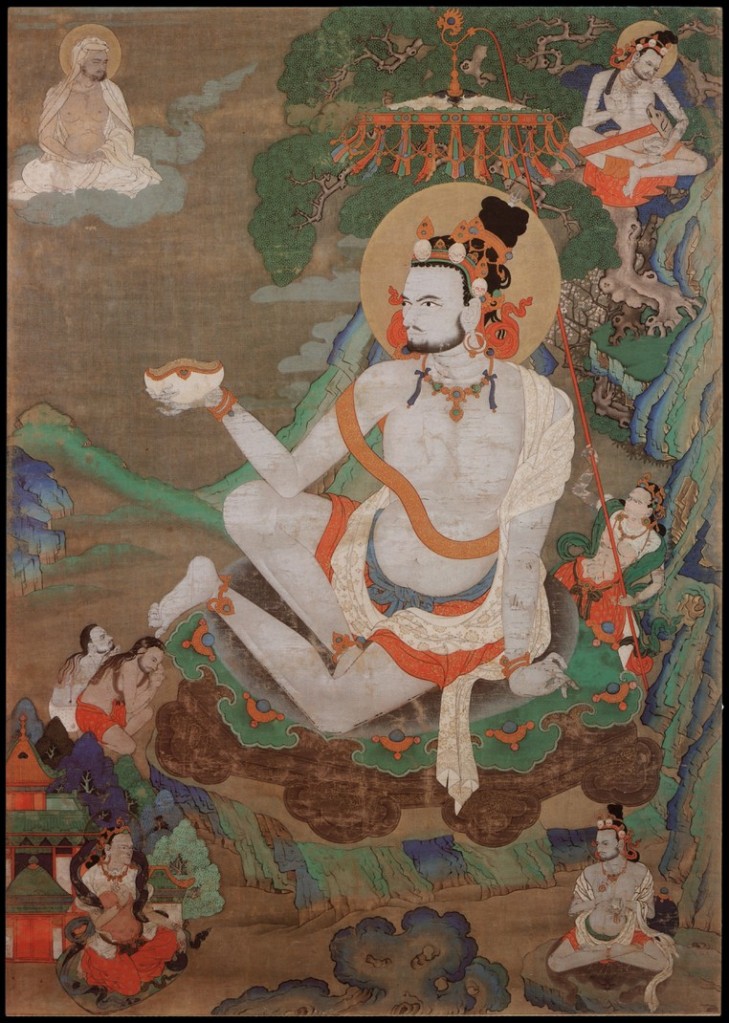
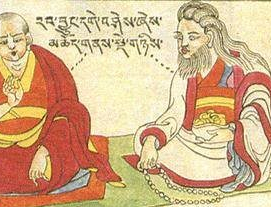
The Great Siddha Naropa, who is famously associated with Six ‘Dharmas’ or Completion Stage yogic disciplines.

Yesterday, the Naldjor Facebook page, a wonderful resource for texts and images related to Tibetan Tantric Buddhism and Yoga, shared a short text composed by Naropa, the famous Bengali Mahasiddha or ‘greatly accomplished’ Tantric saint who lived and taught in the 11th century (Naropa was famously put through great trails by his Guru Tilopa after he left his life as a monastic professor behind. For a brief summary of his life, see the Princeton Dictionary of Buddhism’s entry for him shared on Tsadra’s Buddha Nature Project page, which is incidentally where I also got the above image from. The text in question has to do with mantra recitation and it is a mengngak མན་ངག་ or upadesha in Sanskrit – that is, a text of ‘pith, oral instructions’. Mengngak are usually related to meditation, medicine, or ritual practice and in this text Naropa gives a list of twenty-one do’s and don’ts regarding mantra practice for practitioners who want to cultivate ngak ki nüpa, སྔགས་ཀྱི་ནུས་པ་, i.e. ‘mantric efficacy’ or ‘power’. The Naldjor page administrator requested that English translations of the text be shared, so I thought I would offer one here. Naropa’s text was also one of the many sources Dr Nida Chenagtsang drew on when writing his Tibetan-language book on mantra healing and some of Naropa’s instructions appear in Dr Nida’s own ‘do’s and dont’s’ chapter from the book (see here for my rough translation). Dr Nida also often refers to points from Naropa’s text in his classes, so I thought it would be useful to share a full translation, along with some brief commentary. I will give the full text and translation below, followed by a few explanations about terminology and translation choices. I have put asterisks alongside the points which have variant renderings or interpretations.

Continue reading

‘The Man with the Turquoise Roof’: Spirits as Patients and how the Father of Tibetan Medicine got his Name

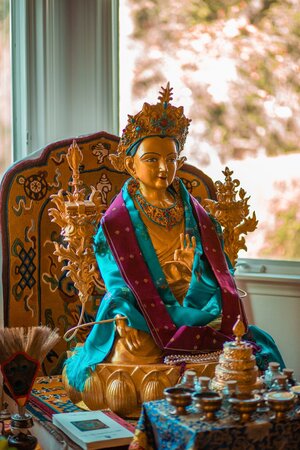
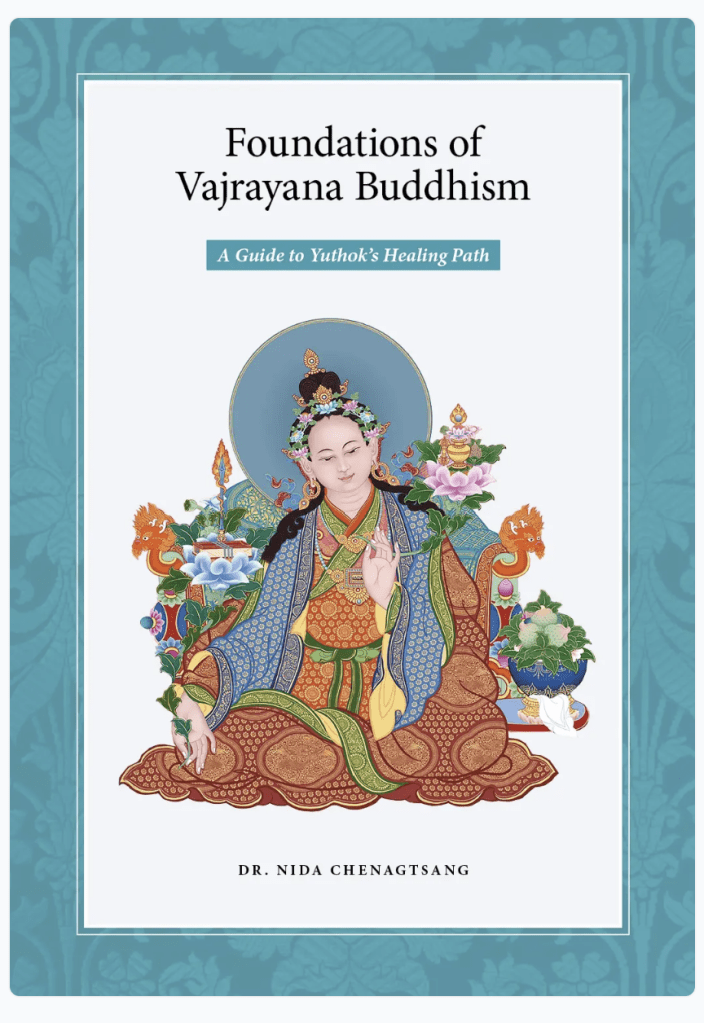
The statue of Yuthok the Younger at Yuthok Ling temple at Pure Land Farms, Topanga.

The Tibetan physician and tantric yogi Yuthok Yönten Gönpo is one of the most important figures in the history of Tibetan medicine or Sowa Rigpa, ‘The Science of Healing’ (Yuthok is pronounced a bit like the English words ‘you’ tock’. The th represents aspiration rather than a dipthong, so you should use a breathy tah sound as in the English word ‘top’, rather than a th sound like in ‘thought’ or ‘these’!). Born in or around 1126 in Western Tibet, Yuthok is one of Sowa Rigpa’s chief systematizers. He is widely regarded as the author of the Gyü Zhi or ‘Four Medical Tantras’, the four-volume Tibetan-language medical textbook which still holds pride of place in Tibetan medical curricula today. Yuthok’s influence on the history of Tibetan medicine is pervasive, so pervasive that there are two of him. Two key figures in Sowa Rigpa history share the name Yuthok Yönten Gönpo. The eleventh century Yuthok pictured above is referred to as Yuthok Sarma or ‘Yuthok the Younger’. Yuthok Nyingma or ‘Yuthok the Elder’, on the other hand, refers to a different hereditary doctor from the eighth century, who is said to be the biological ancestor of Yuthok the Younger. Yuthok the Younger is also understood to be Yuthok the Elder’s reincarnation. There is a close connection between these two figures and their life-stories often blur considerably. Both Yuthok the Younger and Elder are celebrated for their accomplishments in medicine and meditation. Both are remembered as having been consummate ngak-men or ‘tantric yogi-doctors’: individuals equally trained in medical science and tantric yoga and ritual. The biographies of both Yuthoks are hagiographies – in both his younger and older incarnation, Yuthok appears as both a highly-skilled physician and as a highly realized siddha, a tantric saint or adept capable of reading minds and performing miracles. Both Yuthoks are said to have achieved the ‘Rainbow Body’, to have dissolved into light upon their death.

Continue reading

No More Metaphors: Milarepa’s Teaching to a Ngakpa about the Magic of True Siddhas

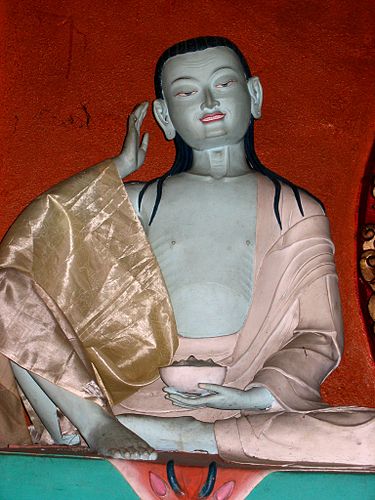
A statue of Milarepa, in his characteristic green colour, from Helambu, Nepal, and Wikipedia.

I was recently reading through Tsangnyön Heruka’s 15th century (1488 to be exact) biography of the celebrated 11th century Tibetan yogi and cultural hero Milarepa. Tsangnyön Heruka – the ‘crazy tantric yogi from Tsang’ (1452 – 1507) – reorganized and codified Milarepa’s biography from various sources, and separated this out from Milarepa’s མགུར་འབུམ་ gurbum or compendium of spiritual teaching songs. Gur is a Buddhist/tantric textual genre for which Milarepa is most famous, and refers to songs or poems which accomplished spiritual adepts are said to compose on the spot to convey in musical and poetic form key spiritual truths for audiences.

While perusing Tsangnyön Heruka’s collection of Milarepa’s songs I came across a narrative which he calls སྔགས་པའི་ཞུས་ལན་གྱི་སྐོར་ ‘Concerning Questions-and-Answers with a Ngakpa’. Readers here will probably know that my doctoral research as a cultural anthropologist was focused on Tibetan Buddhist ngakpa, or non-celibate, non-monastic tantric householders and sorcerers. I find Milarepa’s exchange with this unnamed ngakpa quite beautiful and interesting, so I thought I would share my own translation of it here. Garma C.C. Chang translated this song into English in the 60s in his ‘The Hundred Thousand Songs of Milarepa’ (Vol. 2). I’ve reproduced his translation at the end of this post. While it has many lovely qualities, I feel that it doesn’t quite capture the thrust of some of Milarepa’s responses, which I’d like draw out more here. The gist of the short narrative is that an unnamed ngakpa from དབུས་ཕྱོགས་ Üchok, Wüchok, the region of Central Tibet, comes one day to have an audience with Milarepa. Milarepa’s yogi disciple Seban Repa asks this ngakpa what type of གྲུབ་ཐོབ་ druptop or siddhas there are where he’s from. Siddhas – literally ‘spiritually accomplished ones’, people with spiritual attainments – are yogis who have achieved various spiritual powers, ranging from mastery of psychic and healing abilities, magical powers, to meditative attainment and complete Buddhahood. Seban Repa’s opening salvo is effectively, ‘How powerful/realized are your yogis and sorcerers back home, yogi-sorcerer?’ The visiting ngakpa explains that the siddhas in his region are of such calibre that they are served or waited upon by non-human beings. It is at this point that Milarepa chimes in with a provocation:

Continue reading

On Interactions with Spirits in Tibetan Buddhism: New Interview on the Guru Viking Podcast

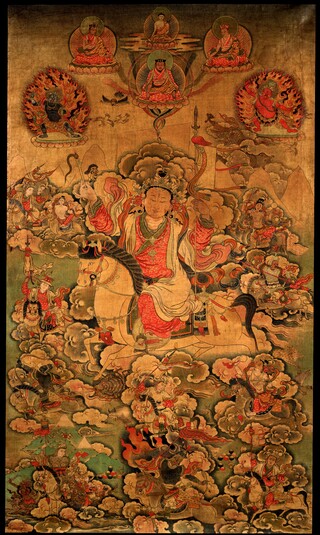
A 19th century Tibetan tangka or religious painting depicting Nyenchen Tanglha, an important Tibetan territorial protector deity associated with the sacred mountain range of the same name

A quick note to say I have a new interview up on the Guru Viking Podcast, hosted by Steve James. This one is supposed to be the first of three chats focusing on human-spirit interactions and relationships in different esoteric or magical traditions. Here’s some links, and a list of topics we touched on, as prepared by Steve for the time stamps. Let me know what you think!

Continue reading

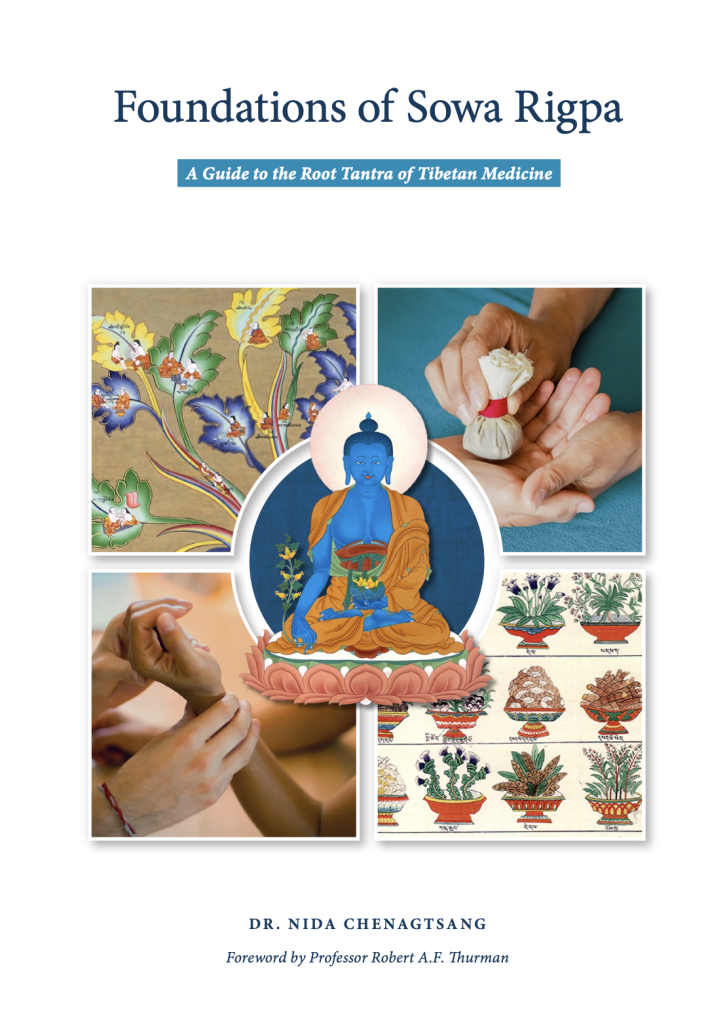
Foundations of Sowa Rigpa: Dr Nida’s New Book on the Root Tantra of Tibetan Medicine

It’s been a very long time since I last posted, in part because I’ve been working for a good while on a Sky Press publication which is now finally available for purchase, so consider this an announcement! The book in question is called ‘Foundations of Sowa Rigpa’: A Guide to the Root Tantra of Tibetan Medicine’ and it offers a wonderful distillation of Dr Nida’s twenty-five odd years of teaching Tibetan medicine to students from all over the world. The book presents Dr Nida’s extensive commentary on the six chaptersof the first and most foundational ‘Tantra’ (volume or treatise) of the Tibetan medical textbook known as the Gyü Zhi (‘The Four Medical Tantras’). Compiled in the twelfth century CE, this four-volume manual still forms the better part of Sowa Rigpa curricula around the world today. ‘Foundations of Sowa Rigpa’ offers over 600 pages of original commentary, translations, charts and diagrams, and other resources for students. I served as editor and translator for the book, working closely with Dr Nida to condense together hours of oral transcripts and various translations into text that could serve as a companion volume to the Root Tantra and introduction to Sowa Rigpa more generally. In preparing the book, Dr Nida, my colleagues at Sky Press and I aimed to create something that would be useful and accessible to both casual readers and current or future students of Sowa Rigpa. Our goal was to produce a textbook that could support non-Tibetan students in their study of Sowa Rigpa and Tibetan language on the one hand, and provide resources and inspiration for Tibetan and Himalayan Sowa Rigpa students and practitioners who work in cross-cultural contexts and engage with English-speaking students, colleagues, and patients on the other. We hope that the book will help students to understand and internalize the core principles of Tibetan medicine, that it will help them to understand how the individual volumes and sections of the Gyü Zhi relate to one another and to Tibetan and global healing traditions more broadly, and that, above all, it will inspire in readers a profound appreciation and reverence for Sowa Rigpa, and help them to live healthier and happier lives and benefit others as well.

One of the most striking and unique features of this book and Dr Nida’s teaching is the strong emphasis he places on making Sowa Rigpa relevant to individual patients’ and healers’ lives. I’m delighted that we can finally share the book with the world and I am certain it will be of interest and benefit to a wide range of readers. You can see the front and back covers, read the contents list, view a few sample pages, read the Introduction, and read a little about Dr Nida here, on the Sky Press website.

Both the physical and e-book versions of the text will be available for purchase from Monday, February 12th 2024 (Orders made between now and Monday will receive a pre-order discount as well!). Purchase of the e-book includes access to an online mini-course hosted through the Sowa Rigpa Institute as well, which includes printable versions of key diagrams in the book as well as several extra audio-visual resources.

Steve James of the Guru Viking podcast just did a great interview with Dr Nida about the book as well, which is a great listen:


Losar Tashi Delek and much love to you all, and please watch this space for more regular posts in the new Wood Dragon year! I have a bunch of unfinished blog post drafts to share with you on all kinds of topics and I remain deeply grateful for your continued interest and support.


Second Guru Viking Interview on Ngakpa: Definitions, Vows, and Tantric ‘Magic’

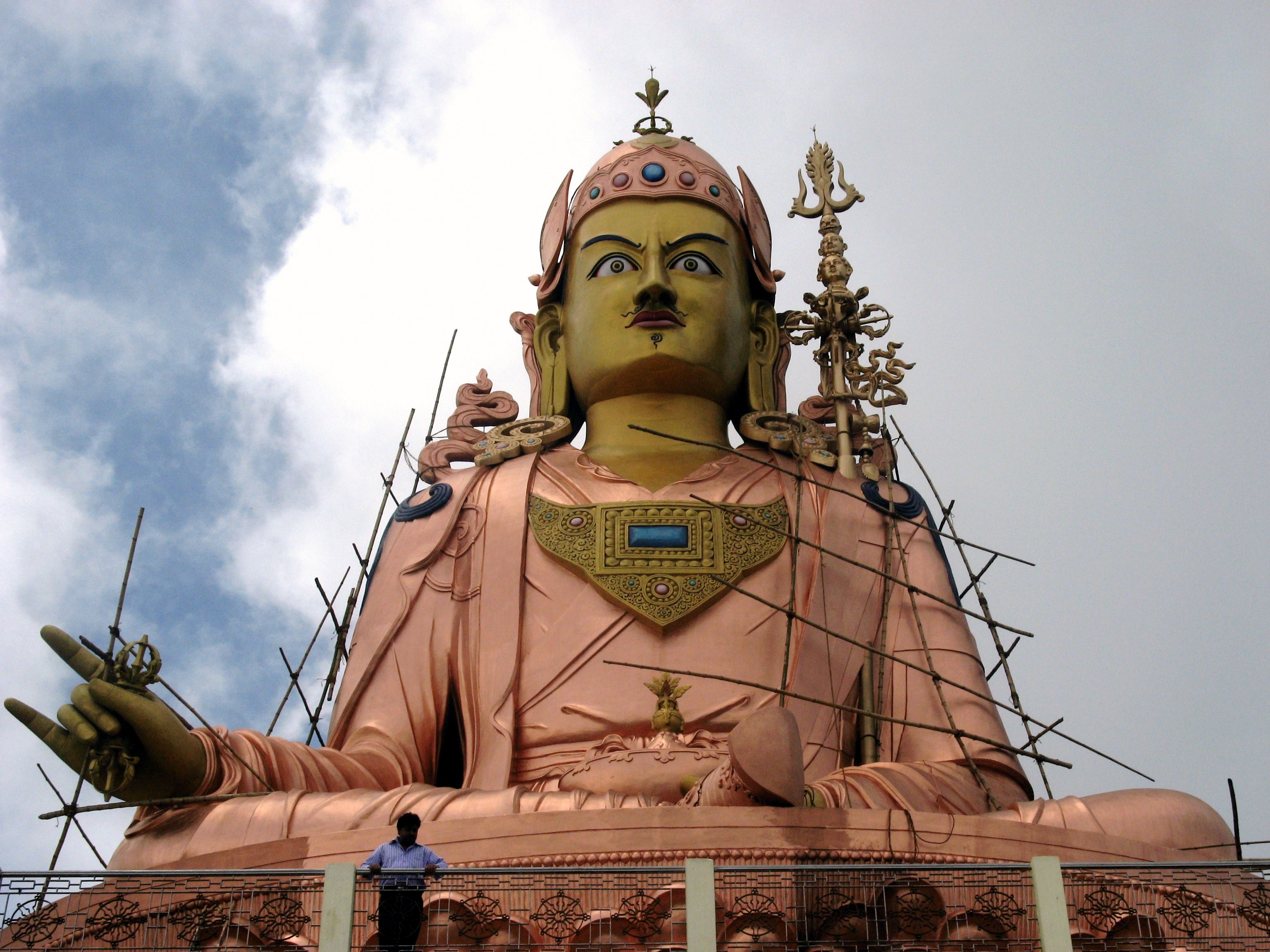
File:Guru padmasambhava statue.jpg - Wikimedia Commons

(A photo from the building of the statue of Guru Rinpoche, the ‘original ngakpa’, on Samdruptse hill in Namchi, Sikkim. The statue is 135 feet tall and is said to be the largest statue of Guru Rinpoche currently in existence. More here)

Just a quick post to let everyone know that my second interview with Steve James of the ‘Guru Viking’ podcast is now up. In this one I talked (as usual, a lot), about definitions of ngakpa (sngags pa, སྔགས་པ), or Tibetan Buddhist tantric yogi householders, and their social roles. We also skimmed the surface of the broad lake of the topic of samaya or tantric vows, ngakpas’ hair, clothing and comportment, and the siddhi, or the spiritual acommplishments or powers that are thought to come from their dedicated practice of tantric yogic disciplines.

Here’s Steve’s breakdown of the episode, along with the YouTube video, and a link to the various places the interview can be found:
Continue reading

Interview on the Guru Viking Podcast

Guru Viking interview image

Hi there –

Just a quick post to let readers know that an interview I recently did for Steve James’ ‘Guru Viking’ Podcast has now gone live. This is the first of a series of interviews that Steve is hoping to put out where he quizzes me about my life, interests, and research, so it offers a broader overview of how I became an anthropologist focused on the study of Tibet and esotericism. Have a listen, if you feel so moved!

Here’s Steve’s introductory blurb for the interview, along with his time-stamped summary of the contents of what turned out to be a great chat. Would never have thought I’d see ‘Childhood Vision of Jesus’ indexed next to my face, but this world and every mind is indeed full of wonders that never cease.
Continue reading

White Robes, Matted Hair: My PhD Thesis on Tibetan Tantric Householders Now Available for Download

A detail from the medical thangka paintings commissioned by the Fifth Dalai Lama’s Regent, tantric yogi-doctor Desi Sangye Gyatso (1653 – 1705), as accompanying illustrations for the teachings in the Gyushi (rgyud bzhi) or ‘Four Medical Tantras’, the core textbook of exoteric Tibetan medicine. The detail depicts representative examples of the “two communities of Buddhist renouncers and virtuous spiritual guides who are [valid] objects for offerings/reverence”, that is, the community of ‘shaved-headed, saffron robed monastic renouncers’ and the ‘community of long-haired, white robe-wearing tantric yogi/nis or householder renouncers’ known as ngakpa/ma.

Great news, friends!

My full PhD dissertation in cultural anthropology, titled ‘White Robes, Matted Hair: Tibetan Tantric Householders, Moral Sexuality, and the Ambiguities of Esoteric Buddhist Expertise in Exile’ is now available open-access to download via ProQuest. It’s over 500 double-spaced pages and has more typos than I’d like, but it earned me a doctorate.

Here’s the thesis abstract and link for those who’d like to download and read it. I hope that whatever small insight and merit might be in its pages may spread and bring benefit!


“White Robes, Matted Hair: Tibetan Tantric Householders, Moral Sexuality, and the Ambiguities of Esoteric Buddhist Expertise in Exile

by Joffe, Ben Philip, Ph.D., University of Colorado at Boulder, 2019, 542; 27663085

Abstract (Summary)

This dissertation offers an ethnographic study of ngakpa/ma (sngags pa/ma, m.f.)–Tibetan Buddhist non-monastic, non-celibate tantric yogis and yoginis–living in the Tibetan diaspora. Like monks and nuns, ngakpa/ma are professionally religious, yet unlike their monastic counterparts they can marry, have families, and pursue worldly work. Living in ‘the village’ like ordinary laypeople but also spending much of their time in retreat or working as ritual specialists for hire, ngakpa/ma occupy a shifting, third space between monastic renunciation and worldly attachments. Based on roughly five years of fieldwork research conducted in Tibetan and Tibetan Buddhist communities in India, Nepal, Northeastern Tibet, and the United States, this thesis explores how ngakpa/mas’ historically decentralized, morally ambiguous esoteric expertise has become implicated in various projects of cultural preservation and reform for exile Tibetans, even as it has come to circulate and have meaning well beyond the purview of ethnic Tibetan communities and interests. Chapters One to Five offer an overview of how ngakpa/ma and ngakpa/ma orientations have been pinned down (or have failed to be pinned down) in exile, via language; gendered divisions of labor; in physical space and permanent institutions; through hair, clothing, and embodied comportment; and as part of new family and career trajectories. Chapters Six to Nine examine how contentious esoteric tantric yogic practices, associated with sexuality and Tibetan medicine in particular, are being popularized and reframed in exile in new ways and for new audiences as part of increasingly transnational networks of exchange. In these chapters, I underscore the polysemous quality of tantric practices, and reflect on my own collaborations with a Tibetan ngakpa-doctor to translate and share information on Tibetan tantric yogic practices more widely. In conclusion, I assess trends and quandaries that have dominated the academic study of secrecy and esoteric religions and highlight the implications and value of an ethnographic approach to researching tantric traditions.”

https://pqdtopen.proquest.com/doc/2335180529.html?FMT=ABS

Mirroring the Master: Making Magic in a Nineteenth Century Tibetan Book of Spells

Recently, a Facebook friend of mine shared an article from the popular anthropology blog Sapiens in the Folk Necromancy Facebook group that I co-moderate. This article, true to its title, sought to argue that AI (Artificial Intelligence) was similar to ‘magic’, at least in certain respects, and as understood by anthropologists at any rate. I approved my friend’s post to share with the group despite finding the article quite irritating. Being irritated about what people generally consider to be the minor or obscure details of things is arguably the bread-and-butter of academia, but I submit that I had a solid reason to be annoyed. Many of my disciplinary peers positively DELIGHT in writing ‘X thing is actually like Magic’ type hot-takes. I get why, of course. Our discipline has grappled more with the comparative study of what people often call ‘magic’, ‘science’, and ‘religion’ as ways of acting, knowing, and being in the world than probably any other. Considering how foundational witchcraft and magic are to the history and identity of our field, I guess every anthropologist is supposed to be able to at least trot out something about these topics. It’s our wheelhouse! The thing is – and here’s what bugs me – the anthropologists I typically see forwarding ‘X is really magic!’ arguments are almost never actually researchers of magical practices or of ritual specialists. They are almost always ethnographers who study ‘X’, whatever X may be. Continue reading

Dr Nida Chenagtsang’s Research into Reviving Yookchö or Tibetan Stick Therapy

After more than a year’s hiatus (hello, PhD dissertation), I thought I would revive my posting here with a translation of an essay by Tibetan physican and tantric yogi Dr Nida Chenagtsang about a different kind of revival.

The following essay, published in a 1999 edited collection of some of Dr Nida’s articles on Tibetan medicine, describes Dr Nida’s efforts to resuscitate and promote a traditional Tibetan healing practice known as Yookchö/Yukcho(e) (dbyug bcos), or ‘Stick Therapy’. Stick Therapy, also sometimes called ‘vajra-stick/rod’ (rdo rje dbyug) practice, involves tapping repeatedly and in a steady rhythm on particular treatment points on a patient’s or one’s own body with a specially prepared pliable stick with a  bundle or knob on one end in order to treat specific ailments. Stick Therapy is one of several traditional Tibetan healing practices which were originally (or simultaneously) developed by tantric Buddhist yogi/nis for use on their own bodies for the purposes of self-healing in the context of meditation retreat, which were then apparently taken up and developed as more exoteric medical therapies for use on the bodies of uninitiated patients.

Continue reading