
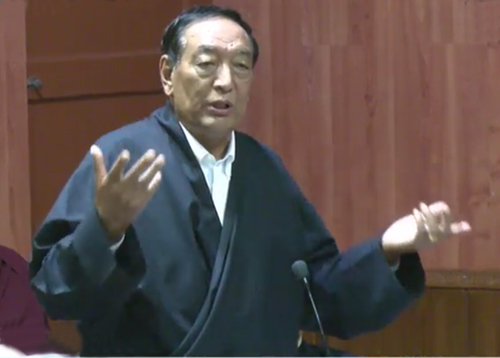
(Pema Chinnjor, the current kalon of the Chorig Lekhung, or minister of the Religion and Culture Department of the Central Tibetan Administration in exile)
Below is a translation I made of part of a recent article by Dondup Tashi that appeared on the Tibetan news site Tibettimes.net on the 25th of March 2016, which deals with concerns about the fact that the majority of students in the reconstituted Tibetan monasteries in exile are now not in fact ethnic Tibetans, but are Buddhists of Himalayan descent. While in recent decades sarjorpas, or new arrivals from Tibet (i.e. Tibetans typically born and raised in occupied Tibet, who have come to live in Tibetan exile communities more recently), have made up the primary demographic in the exile monasteries, things have now changed. Continue reading







 A Perfumed Skull