Alien Gurus and The Mother of the Soul: On the Etymology of the Tibetan Word Lama and Why More Occultists Should Learn to read Tibetan

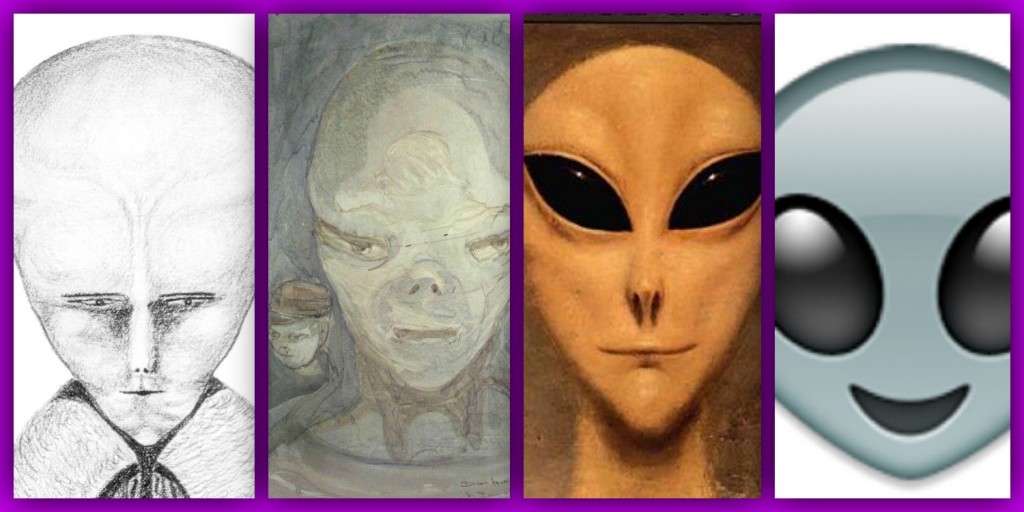
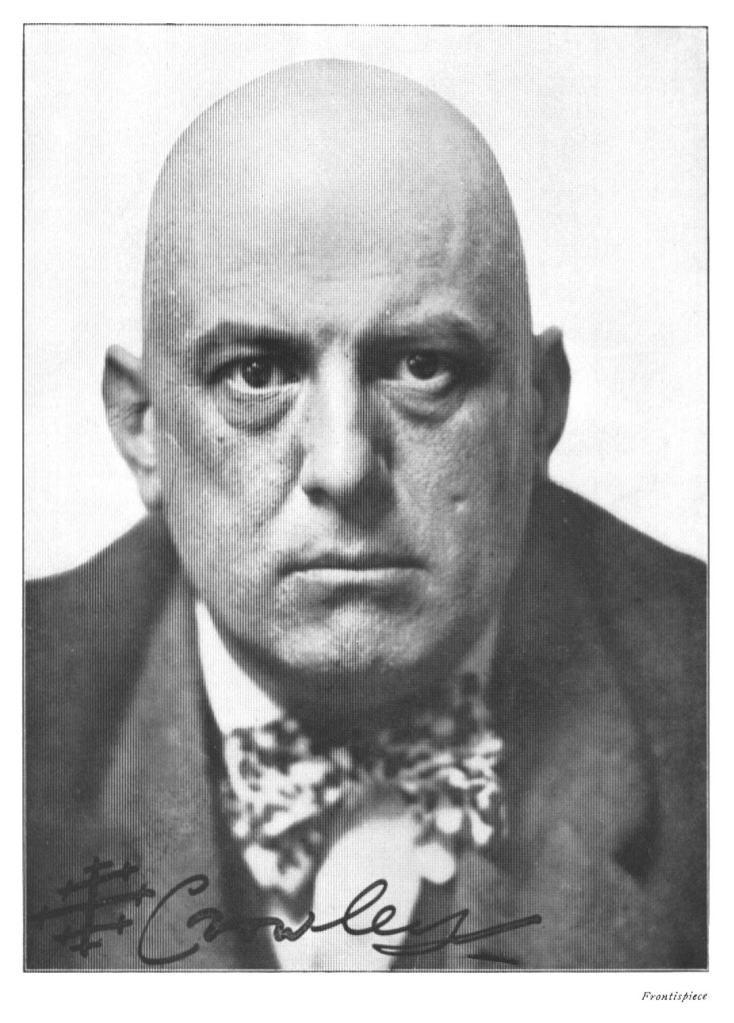
I’ve written about LAM, the according-to-some extraterrestrial entity which English ritual magician Aleister Crowley is supposed to have contacted, in an earlier article about ‘Tibetan aliens’ which I shared on this blog before. The term LAM is synonymous with a specific drawing which Crowley produced, and which some occultists say is a portrait of a specific spiritual/alien entity. Now, occultists have many different opinions about who or what LAM is or was, about whether this picture is even a picture of an entity at all, and about the extent to which whatever entity or spiritual principle the image may represent is important or interesting. Some claim the image of LAM is Crowley’s spiritual self-portrait, others that it is a picture of Crowley’s Guru or Holy Guardian Angel. Some say it a portrait of Lao Tzu or another Taoist sage, of a disincarnate Tibetan lama, or the likeness of some other sort of priest or sorcerer. Others argue it is a stylized representation of penis-in-vagina (ritual?) intercourse, while yet others claim that it is one of the earliest representations of the now stereotypical ‘grey alien’ extraterrestrial (this last position seems to have gone especially viral online in the late 90s and 2000s).

Continue reading

Tibetan Master Meets Theosophical Mahatmas: Gendun Choepel’s Reflections on Blavatsky and Theosophy

gendun choepel

(Celebrated ex-monk Tibetan intellectual Gendun Choepel)

I was recently reading through Donald Lopez’s excellent book “The Madman’s Middle Way’ on the contributions of controversial and brilliant early twentieth century Tibetan intellectual Gendun Choepel (1903-1951), and I came across something I had missed before, namely, Gendun Choepel’s reflections in Tibetan on the popularity of Helena Petrovna Blavatsky (1831-1891) and the nature of her new religious movement Theosophy, as found in his ‘Serki Thangma’ or ‘Field/Surface of Gold’. This travelogue (which has been fully translated into English by Lopez and Thupten Jinpa) constitutes an extensive autobiographical account of the ex-monk’s wanderings in the 1930s and 40s throughout India and then Ceylon/now Sri Lanka. It is chock-full of fascinating insights about British empire, comparative religion, gender, and science as seen through the eyes and experience of an extremely gifted and innovative Tibetan scholar, poet, and artist.   Continue reading

Anthropology, Esotericism, and ‘Fringe’ Buddhism: Interview on the Imperfect Buddha Podcast

devil-woodcut

A month or two ago I did an interview with Matthew O’Connell for his ‘Imperfect Buddha’ podcast, where I talked about doing research on Western esotericism as an anthropologist and scholar-practitioner, and about some of the more ‘fringe’ dimensions of global Tibetan Buddhism today. I ended up talking a lot about myself and not that much about the specific details of my research, and Matthew barely got a word in edgeways, but it is what it is. Many of the posts and articles on this blog get a mention. I no doubt said a lot of things that would benefit from further qualification and which I would probably take issue with if I heard myself saying them now. The thought of listening to my voice drone on for that long curdles my juices and fills me with acute horror though, so I’m can’t be sure – you’ll just have to listen to the interview yourselves and tell me how it makes you feel instead.

Shout out to Matt for arranging things, and thinking I was interesting enough to have on the show. Let me know what you think!

https://posttraditionalbuddhism.com/2016/07/27/8-0-imperfect-buddha-podcast-ben-joffe-on-the-paranormal-tibetan-buddhism-the-ngakpa/


Tibet, the Role Playing Game: Table-top Anthropologies and Competing Knowledge Jurisdictions

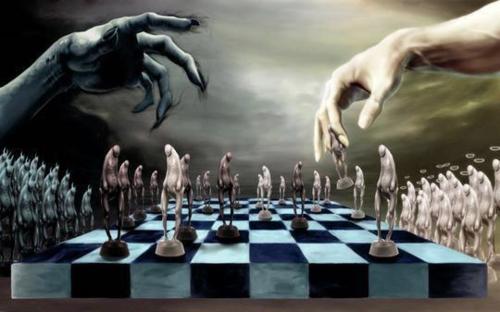
god-chess1.jpg

When I was a kid growing up in pre- and post-Apartheid South Africa it wasn’t easy to study occultism.

To be sure, South Africa is a country filled with professional and semi-professional sorcerers, but it is also a nation whose white supremacist government for a long time directly funded a special ‘Occult-Related Crimes Unit’ attached to the national police force. This unit, which was founded in 1992 and which was supposedly officially disbanded/absorbed in 2006 (but which is in fact still operating in various capacities)  was guided for the most part by the expertise and priorities of white, Afrikaner Christian investigators. Working under the auspices of the state, pastors with police training, criminology degrees and a measure of knowledge about local black South African ‘customs and traditions’ investigated South Africa’s dark and criminal occult underbelly. While the existence of witch-lynching and so-called ‘muthi killings’ – ritual murders conducted to ostensibly secure human parts for sale in criminal magical economies and use in rituals – served as the primary justification for state-spending on the Unit, the majority of the Unit’s time appears to have been spent on locating and routing out ‘cells’ of adult and teenage Satanists, and assisting especially young South Africans who had been afflicted by demons and other Satanic forces. Continue reading

Secrets of the Sex Magic Space Lamas Revealed! Tibetan Buddhist Aliens and Religious Syncretism

tibetan aliens

This was probably my favourite of the four October essays to write, probably because it involved so many things that I love to think and talk about, but was also something I never, ever imagined I’d be writing for an anthropological audience, or maybe at all.

Years ago I was warned by a lovely acting HoD in an anthropology department to be careful of pursuing the study of esotericism Continue reading