
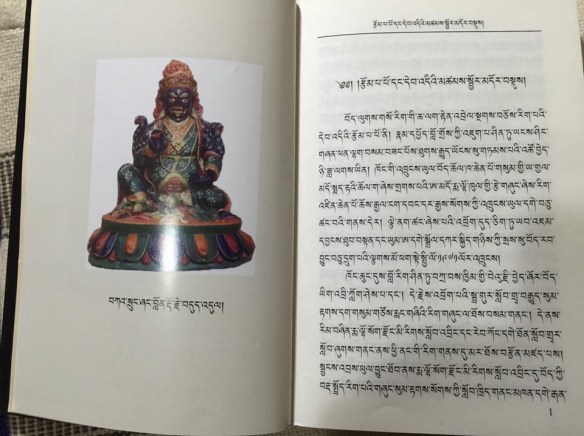
The following is a translation of Professor Gojo Wangdu’s preface to Dr Nida Chenagtsang’s new Tibetan-language volume on the ‘Interdependent/Auspicious Science of Mantra Healing’. In his preface, the Professor supplies a brief overview of Dr Nida’s upbringing, education, and achievements. He describes the important contributions that Dr Nida has made to re-invigorating Tibetan traditional medicine, like his efforts to preserve and revive lapsed oral lineage practices such as the ‘stick-therapy’ methods that were taught by Padampa Sangye and others centuries ago. The Professor makes a strong case for why Tibetan doctors today should practice as the founding lineage masters of Tibetan traditional medicine did, as ‘yogi or ngakpa doctors’, that is, as practitioners who seamlessly integrate mantra healing rituals, yogic practice, and medicine. He also responds to questions readers might have about the issue of secrecy, and of the pre-requisites – the transmissions and training – required to put mantra healing into practice to benefit beings. While the Professor follows the traditional Tibetan style of modestly talking-down his own achievements, he is a highly respected and learned scholar, and his endorsement of Dr Nida’s book speaks to its value.


 A Perfumed Skull