Shut up and Recite! Naropa’s Pith Instruction on Mantra Practice

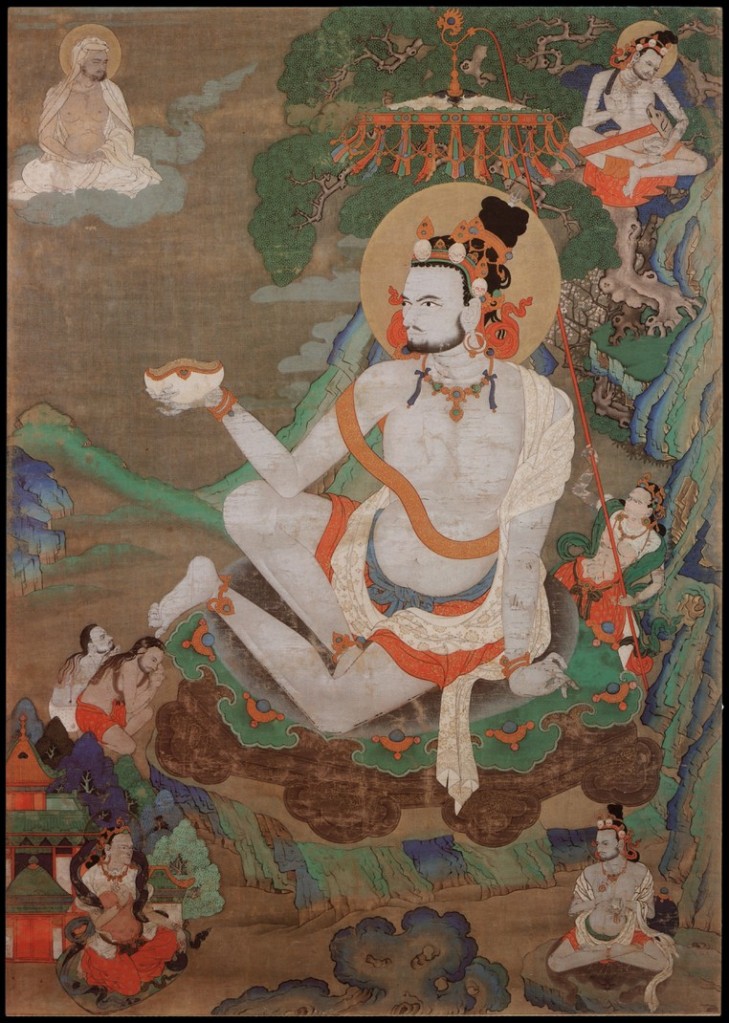
The Great Siddha Naropa, who is famously associated with Six ‘Dharmas’ or Completion Stage yogic disciplines.

Yesterday, the Naldjor Facebook page, a wonderful resource for texts and images related to Tibetan Tantric Buddhism and Yoga, shared a short text composed by Naropa, the famous Bengali Mahasiddha or ‘greatly accomplished’ Tantric saint who lived and taught in the 11th century (Naropa was famously put through great trails by his Guru Tilopa after he left his life as a monastic professor behind. For a brief summary of his life, see the Princeton Dictionary of Buddhism’s entry for him shared on Tsadra’s Buddha Nature Project page, which is incidentally where I also got the above image from. The text in question has to do with mantra recitation and it is a mengngak མན་ངག་ or upadesha in Sanskrit – that is, a text of ‘pith, oral instructions’. Mengngak are usually related to meditation, medicine, or ritual practice and in this text Naropa gives a list of twenty-one do’s and don’ts regarding mantra practice for practitioners who want to cultivate ngak ki nüpa, སྔགས་ཀྱི་ནུས་པ་, i.e. ‘mantric efficacy’ or ‘power’. The Naldjor page administrator requested that English translations of the text be shared, so I thought I would offer one here. Naropa’s text was also one of the many sources Dr Nida Chenagtsang drew on when writing his Tibetan-language book on mantra healing and some of Naropa’s instructions appear in Dr Nida’s own ‘do’s and dont’s’ chapter from the book (see here for my rough translation). Dr Nida also often refers to points from Naropa’s text in his classes, so I thought it would be useful to share a full translation, along with some brief commentary. I will give the full text and translation below, followed by a few explanations about terminology and translation choices. I have put asterisks alongside the points which have variant renderings or interpretations.
Continue reading

No More Metaphors: Milarepa’s Teaching to a Ngakpa about the Magic of True Siddhas

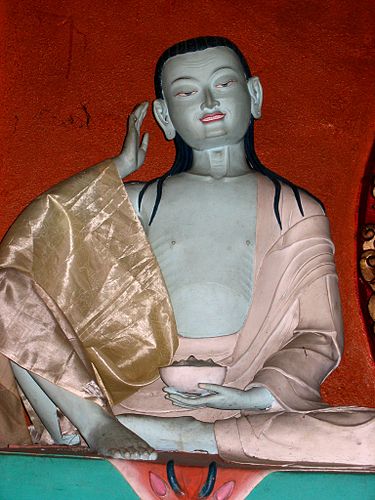
A statue of Milarepa, in his characteristic green colour, from Helambu, Nepal, and Wikipedia.

I was recently reading through Tsangnyön Heruka’s 15th century (1488 to be exact) biography of the celebrated 11th century Tibetan yogi and cultural hero Milarepa. Tsangnyön Heruka – the ‘crazy tantric yogi from Tsang’ (1452 – 1507) – reorganized and codified Milarepa’s biography from various sources, and separated this out from Milarepa’s མགུར་འབུམ་ gurbum or compendium of spiritual teaching songs. Gur is a Buddhist/tantric textual genre for which Milarepa is most famous, and refers to songs or poems which accomplished spiritual adepts are said to compose on the spot to convey in musical and poetic form key spiritual truths for audiences.

While perusing Tsangnyön Heruka’s collection of Milarepa’s songs I came across a narrative which he calls སྔགས་པའི་ཞུས་ལན་གྱི་སྐོར་ ‘Concerning Questions-and-Answers with a Ngakpa’. Readers here will probably know that my doctoral research as a cultural anthropologist was focused on Tibetan Buddhist ngakpa, or non-celibate, non-monastic tantric householders and sorcerers. I find Milarepa’s exchange with this unnamed ngakpa quite beautiful and interesting, so I thought I would share my own translation of it here. Garma C.C. Chang translated this song into English in the 60s in his ‘The Hundred Thousand Songs of Milarepa’ (Vol. 2). I’ve reproduced his translation at the end of this post. While it has many lovely qualities, I feel that it doesn’t quite capture the thrust of some of Milarepa’s responses, which I’d like draw out more here. The gist of the short narrative is that an unnamed ngakpa from དབུས་ཕྱོགས་ Üchok, Wüchok, the region of Central Tibet, comes one day to have an audience with Milarepa. Milarepa’s yogi disciple Seban Repa asks this ngakpa what type of གྲུབ་ཐོབ་ druptop or siddhas there are where he’s from. Siddhas – literally ‘spiritually accomplished ones’, people with spiritual attainments – are yogis who have achieved various spiritual powers, ranging from mastery of psychic and healing abilities, magical powers, to meditative attainment and complete Buddhahood. Seban Repa’s opening salvo is effectively, ‘How powerful/realized are your yogis and sorcerers back home, yogi-sorcerer?’ The visiting ngakpa explains that the siddhas in his region are of such calibre that they are served or waited upon by non-human beings. It is at this point that Milarepa chimes in with a provocation:

Continue reading

On Interactions with Spirits in Tibetan Buddhism: New Interview on the Guru Viking Podcast

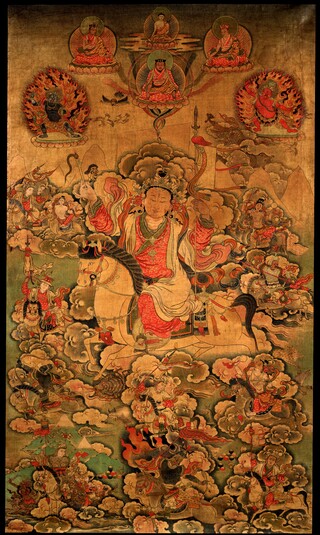
A 19th century Tibetan tangka or religious painting depicting Nyenchen Tanglha, an important Tibetan territorial protector deity associated with the sacred mountain range of the same name

A quick note to say I have a new interview up on the Guru Viking Podcast, hosted by Steve James. This one is supposed to be the first of three chats focusing on human-spirit interactions and relationships in different esoteric or magical traditions. Here’s some links, and a list of topics we touched on, as prepared by Steve for the time stamps. Let me know what you think!

Continue reading

Upcoming Course on the Ngöndro or Preliminary Practices of the Yuthok Nyingthig

Hi, friends! A small announcement to let you know that from this coming Tuesday (May 11th 2021), I will be guiding a ten-week long word-by-word study group relating to the ngöndro or preliminary practices of the Yuthok Nyingthig tradition of Tibetan Buddhism, the unique set of Highest Yoga Tantra teachings from Tibet especially connected with Tibetan medicine and the Medicine Buddha. In each class, we will investigate the rich meanings, wider contexts, and nuances of each word of the various prayers involved in these practices, to enrich our understanding and practice of these beautiful and transformative meditative, devotional procedures.

Continue reading

Meditation Made Easy: Announcing Dr Nida Chenagtsang’s New Book ‘The Weapon of Light’

weapon of light cover

A week or few ago, Sky Press’s newest publication, The Weapon of Light: Introduction to Ati Yoga Meditation by Tibetan traditional doctor and tantric yogi Dr Nida Chenagtsang was released for sale. Since I helped with editing and translation for this book, you would think I would have thought to mention it on this blog, but distracted by other things as I was, I forgot to make an announcement. So, since ‘The Weapon of Light’ is actually quite a special little book, I thought I’d make a post about it now. Continue reading

New Book of Translated Commentaries on Yuthok’s Ati Yoga

Mirror_of_Light_SkyPress_Color_CoverOnly_6x9.indd

Some happy news. Recently, I produced some English translations of commentaries written in Tibetan by Dr Nida Chenagtsang on the special Ati Yoga (Dzogchen) instructions of the Yuthok Nyingthig, the cycle of comprehensive tantric Buddhist teachings associated with Tibetan medicine and connected with Yuthok, the father and chief systematizer of Tibetan medicine who is said to have achieved full liberation in one life and to have dissolved into rainbow light at his death. These translations have now been combined with supplementary material to create a new book, ‘Mirror of Light: A Commentary on Yuthok’s Ati Yoga’ which will be published by SKY Press on the 9th of November 2016.

Continue reading

The Great Illusion Snake Katy Perry

katy perry illusion snake

The idea that our misapprehension of reality is like a person who sees a piece of rope and mistakes it for a snake crops up throughout Indian and Tibetan contexts. Here’s 20th century Tibetan master Dilgo Khyentse Rinpoche, for example: Continue reading

The Meditation on the Two Brandos

brando

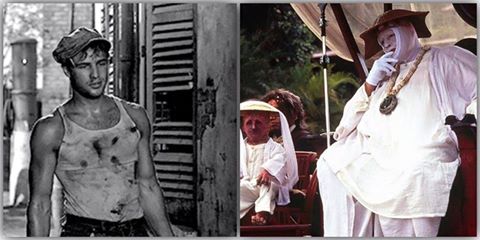
For many centuries and up until the present day, Buddhist ascetics have used contemplation of their body and its transformation into a rapidly disintegrating corpse as a sobering exercise – as a practice that reconfigures their relationship to their sense of self and deepens their appreciation of impermanence. In some cases, meditators have even visited charnel grounds and cremation sites where they have observed corpses directly to amplify their reflections. Not all of us have such opportunities. Continue reading

Buddhist Bromance and Homoerotic Hermits: Queer Sociality as an Obstacle to Spiritual Attainment

jewel neck

I was recently looking through the Jataka Tales, that sizable collection of fables about the previous incarnations of the Buddha and his close disciples, when I came across one story, called ‘Jewel-Throat’, which you could call a queer, Buddhist version of ‘The Little Mermaid’. In this story about the relationship between a naga or snake-spirit king and two ascetic brothers, homoeroticism and homosexual love appear incidentally as obstacles to ascetic attainment. The story’s vivid account of homosexual spirit-love with reptile-people raises a number of points. Continue reading

A Tibetan Ghost Story: How Three Chod-pas Tamed a Yakshini

chodpa

The following is a rough translation of a spooky Tibetan story that was shared on the popular Tibetan-medium site Khabdha. It tells the tale of three ngakpa – non-monastic, non-celibate tantric yogi sorcercers – who engage in the special exorcistic meditation of  Chöd, and end up encountering a very dangerous demoness (more specifically, a yakshini or alluring female nature spirit, associated with the granting of power, riches, and sickness). I hope you will read it and be careful the next time you are practicing yoga in the wilderness!

Besides being quite chilling and engaging, the story is also noteworthy for other reasons. It reminds us for one, how Tibetan Buddhist yoga is a lot more human thigh-bone trumpet and visions of demons than Lulu Lemon, coconut water and gym memberships, and points to the awe and fear with which the Tibetan practice of Chöd – particularly in its solitary, and itinerant iterations – continues to be held. As part of the Chöd (gcod) or ‘severance/cutting’ offering rite practitioners visit terrifying, haunted locations, where, through complex ritual choreographies of visualization, liturgy-singing, dancing, and drumming, they work with the energy of their fear of annihilation by meditatively disengaging from their body, severing their investment in a constructed self, and offering their ‘corpse’ up to be eaten by beneficent as well as  hungry, suffering demonic beings, which they have summoned. As I mention in another post about the practicegcod not only pacifies these demons – themselves ultimately displays of Mind and a product of self-grasping like all phenomena – but also powerfully severs the practitioner’s attachment to their self-importance and allows them to develop profound compassion, generosity and fearlessness.

The story below is noteworthy, however, for how it reminds us that just because spirits are empty, illusory displays from the vantage-pointless vantage-point of ultimate non-dual reality, that does not mean that they do not appear to be real at the conventional level, and do not act in the world of apparent phenomena (after all, your and my own sense of self is likewise an ultimately empty, illusory display but many people still take your and my actions in the world pretty seriously). Chöd (and the story below!) is thus interesting for how, on one level, it is a teaching about the ultimate non-reality of demons, of all those terrifying projections that haunt us, but on another, serves to demonstrate just how potent and devastating, how perilous, those demons can be. On a separate note, with its descriptions of the three brothers’ divvying up of familial and religious duties, the story that follows also provides some small insight into ngakpas’ time-management strategies, and the everyday familial, socio-economic dimensions of Tibetan yogic practice.

Here follows the translation:

A story of how three Chöd  practitioners tamed a Yakshini [i.e. a female ‘harm-giver’ or local land spirit (gnod sbyin mo)] – By Tenpé Nyima Continue reading