The Social Life of Magic: Memories of Hoodoo in Detroit


In occult ‘scenes’ you find a lot of people identifying as magicians. Of course, this makes sense: if you do magical rituals, especially if you do them professionally for clients, then why not call yourself the rusty, graveyard dirt-smeared spade that you are?

Still, discussions about self-identifying as a contemporary practitioner of magic and the supposed implications of this, can potentially distract from the fact that magic isn’t just something people say they do or are, it’s something that merely exists as part of the everyday rhythms of many people’s lives, and that’s ok. In a beautiful piece, Kenya Coviak reminisces about growing up in Detroit and reflects on the ways that Hoodoo was literally a part of the scenery, furniture, and foundations of her daily life.

Continue reading

Everything is fake in China: Treasure-revealers, False Prophets, and the Miracle of Community Belief

fake terton post

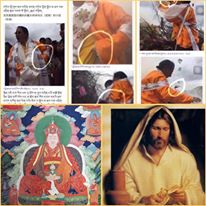
(Not sure why this picture is so small, but hopefully at the top you can see some of the photos of the allegedly fake Golok terton Drolma Thar, on the bottom left, Pema Lingpa, and on the bottom right a pensive Jesus Christ)

Tertön གཏེར་སྟོན་ or ‘treasure revealers’ are visionary prophets or saints in Tibetan Buddhist tradition. They are understood to be reincarnations of the original disciples of Padmasambhava or Guru Rinpoche, the Indian tantric master or ‘Second Buddha’ who established Buddhism in Tibet. Before he dissolved his 8th century physical form, Guru Rinpoche is said to have hidden various ‘treasures’ or terma གཏེར་མ་ all over Tibet and the Himalayas, with the intention that these treasures would be discovered by appointed persons at a later date. Guru Rinpoche left various treasures for safekeeping with guardian spirits in the sky, under the earth, in rocks and caves, and in the mind-streams of his closest disciples. Centuries after his time and into the present, certain individuals have claimed to have had powerful visionary experiences and past-life memories which have convinced them and others that they are reincarnations of Guru Rinpoche’s elect. Attending to these visions, insights, and memories, these individuals have been able to follow the clues to unearth treasures left specially for them across space and time by Guru Rinpoche and his partner the great female Buddha and queen Yeshe Tsogyal. Continue reading

Heroic Tibetan Man-buns on Ngakpa Update

David Chapman who runs the Ngakpa Update site asked to share my earlier post about Justin Bieber, dreadlocks and Tibetan tantric practitioners on his blog. The post includes a translated excerpt from an extensive Tibetan language essay by Dr Nida Chenagtsang, which offers comprehensive and clear details about Tibetan tantric specialists’ traditional styles of dress.

David collects a lot of really useful news and links connected to ngakpa practices and lineages on the page Continue reading

Retiring the Gods? Tibetan Democracy in Exile and Alternative Modernities

retiring the gods post

(I originally made the following post on my Facebook page on April 7th. I reproduce it here, along with some clarifications and further reflections at the end. This picture collage shows the Nechung kuten in trance at the top, the Tsering Chenga goddesses possessing their medium on the bottom left, and Security and Welfare minister Mr Ngodup Drongchung is on the right, during an interview with Tibetan exile media immediately following his resignation)

Tibetan social media and exile society have been alive of late with commentary about the recent pronouncements and actions made by some of the Tibetan state oracles here in India. The state oracles, who are known in Tibetan as ཆོས་སྐྱོང ༼chökyong༽ or བསྟན་སྲུང་ ༼tensoong༽, i.e. ‘dharma-protectors’, are powerful and ferocious spirits – supernatural bouncers or ‘fixers’ – who are oath-bound to serve the Dalai Lama, the Tibetan government and the Tibetan people by providing prophetic advice on religious issues and affairs of state. Continue reading

Learning Hierogylphics and Academic Mentors

learning hieroglyphics

I started asking myself the other morning if I could remember when I really felt like I was going to become an academic. I was a precocious child – I was passionate from a young age about reading and learning, about conducting my own research into specialized subjects that interested me. But I found myself thinking just now about when exactly the point of no return might have been.

I am the son of a (now semi-retired) professional academic. When I was growing up, I would often visit my Dad’s office in the English Department at the University of KwaZulu Natal in Durban, South Africa. My Dad worked for many decades as a professor there, and the university looms large in the city and my snap-shot memories of it. It is a tall, tan building that looks down somewhat imperiously onto the city from atop a small hill. Pushing up from the folds of land surrounding it, it exudes a quiet constancy. Yet despite its classic monastic-fortress on the hill feel, any firmness it might manage is ultimately lost to Durban’s humid haze, and the city’s trademark red sand has coated the building’s stonework altogether too thoroughly for it to maintain any illusion of celestial stateliness – ruddy-cheeked and dusty, the university’s brand of monasticism is less regal abbot, and more older, disheveled but dignified bachelor – tall, skinny and off to one side, a friend of the hosts at the mixer, pulling nervously at his collar. Continue reading

Justin Bieber, Heroic Man-buns and the Relative Meaning (and Meaninglessness) of Dreadlocks

Dreadlocks post

Debates about hairstyles, fashion, identity and culture have been in the news in the last few days. After posting pictures of his new blond dreadlocks, pop star Justin Bieber was roundly criticized for cultural appropriation – for capitalizing on a cultural aesthetic that in the US is historically associated with black histories, identities, and struggles. Commentators noted that while people/celebrities of colour in the US have been routinely criminalized or villianized for sporting a hairstyle connected to their history and experiences as minorities, when Bieber as a white person casually took on this style as his own it came with none of the meaning, and context, and also none of the backlash. Continue reading

Bee Careful what Ewe Wish Four: Monks behaving badly and Grammar-nazi Genies

dop dop post

Tibetan can be a confusing language – not least because it isn’t really one language at all. There’s still no standardized form of either written or spoken Tibetan, even if there have been attempts to produce them, and when it comes to the spoken language there are many, many registers and regional variations of both grammar, syntax, pronunciation and vocabulary. Tibetan language(s) is/are also notoriously filled with homophones and homonyms – like French, many Tibetan dialects have a lot of ‘silent’ or almost silent letters, and words that are spelled quite differently on paper may sound very similar to each other depending on one’s regional accent. The same word, either in its written or spoken incarnation, may have various meanings, depending on the context. The following story demonstrates just how dangerous language ambiguity can be. Continue reading

Reaching the Rainbow with your feet on the Ground: An Essay on the Importance and Special Characteristics of the Yuthok Nyingthik

yuthok nyingthik post

Like all other Buddhist traditions, Vajrayana or tantric Buddhism offers a way out of the terrifying and bewildering morass of human suffering and habitude that is shorthanded as Samsara (འཁོར་བ་ khorwa in Tibetan, or ‘wandering around and around’). What stands out about the tantric path of liberation from suffering, though, is that rather than insisting that we completely reject  or avoid the perceptions and experiences that can easily mire us in suffering, Vajrayana proposes that the quickest and most convenient way out is through.

In my anthropological research on ngakpa/ma, I have written about how Vajrayana provides a unique philosophical framework for thinking about (and experiencing) the relationship between different levels of reality, the ultimate and the relative, inner and outer, mundane and extraordinary, subtle and gross. A large part of what makes tantra interesting is the way in which it plays with, and attempts to resolve the contrasts between more or less subtle levels of perception and activity, between what anthropologist of Buddhism Melford Spiro long ago called ‘nirvanic, karmic, and apotropaic’ levels of Buddhist philosophy and practice (that is, the goal of ultimate liberation, improved karma for better rebirth, and a focus on the conditions of this life here and now, respectively). While the ultimate or ‘extraordinary’ ‘super-power’ in Vajrayana is Buddhahood, tantric experts can (and should) develop all kinds of other abilities along the way so as to help beings. Ngakpa/ma are distinct for how they cultivate the highest view and attainments while apparently remaining firmly grounded in the midst of ‘worldly’ life and its everyday contingencies. Ngakpa/mas double up as both master-meditator yogis cultivating spiritual attainments in retreat at a remove from worldly obligations, and as fully-engaged householders who apply their expertise and the power of their attainments to the needs and problems of their own and others’ daily lives.

Continue reading

Mantra Healing is an Indispensable Branch of Tibetan Traditional Medicine

mantra healing indispensable

(An image of a tantric practitioner providing a life-enhancing empowerment to a patient, from the medical paintings commissioned by Desi Sangye Gyatso, 1653-1705, to accompany his commentaries of the root-tantras of the Tibetan medical tradition)

One of the first things that someone visiting Tibetan communities tends to encounter -whether they’re a foreign visitor or a transmigrating Tibetan baby – is mantras. These set-apart forms of speech, made up of specific patterns of sacred and largely untranslatable phrases and syllables, are performed with special kinds of cadence and affect which distinguish them from other sorts of utterance.

As their Sanskrit etymology suggests, mantras are ‘instruments of the mind’; holding awareness firm they help to generate various effects and qualities in the one who recites them. While many mantras are the specific sound-embodiment of deities and Buddha-beings, others are more action-based and ‘worldly’, and exist as powerful spells that in the hands of trained experts who have properly ‘activated’ them are supposed to be able to produce all kinds of results.

Many people today are familiar with Indo-Tibetan mantras but are perhaps less familiar with where exactly mantras come from. Below I have attached my very rough and inadequate translation of the first part of a three-part Tibetan blog-post which appeared on a website about Tibetan culture in 2013 (cf here). This essay which was written by Dr Nida Chenagtsang some years ago in Lhasa (and which someone called Rinchen shared independently on the website above) essay discusses the history of the use of mantras for healing (སྔགས་བཅོས་ཐབས་ ngakchö tuhp) in Tibet. Dr Nida stresses that notwithstanding Sowa Rigpa or Tibetan medicine’s investment in strongly ’empirical’ and ‘secular’ therapeutic methods, mantra healing is nonetheless an indispensable element of Tibetan medical history and practice. His piece also acknowledges that healing mantras are not unique to Buddhism, and thus shows how magic and ritual healing are areas of Tibetan cultural life which are uniquely hybrid and non-sectarian and which perhaps span beyond Buddhist hegemonies. In general, mantra healing points to a rich and complex field of history and practice, one that comprises both elite and everyday ‘folk’ actors and knowledge systems, which intertwine in fascinating ways.

Anyway, here’s the translation: Continue reading

Tibetan Monks in Exile: Not as Tibetan as they Used to Be

pemachinnjor

(Pema Chinnjor, the current kalon of the Chorig Lekhung, or minister of the Religion and Culture Department of the Central Tibetan Administration in exile)

Below is a translation I made of part of a recent article by Dondup Tashi that appeared on the Tibetan news site Tibettimes.net on the 25th of March 2016, which deals with concerns about the fact that the majority of students in the reconstituted Tibetan monasteries in exile are now not in fact ethnic Tibetans, but are Buddhists of Himalayan descent. While in recent decades sarjorpas, or new arrivals from Tibet (i.e. Tibetans typically born and raised in occupied Tibet, who have come to live in Tibetan exile communities more recently), have made up the primary demographic in the exile monasteries, things have now changed. Continue reading