Shut up and Recite! Naropa’s Pith Instruction on Mantra Practice

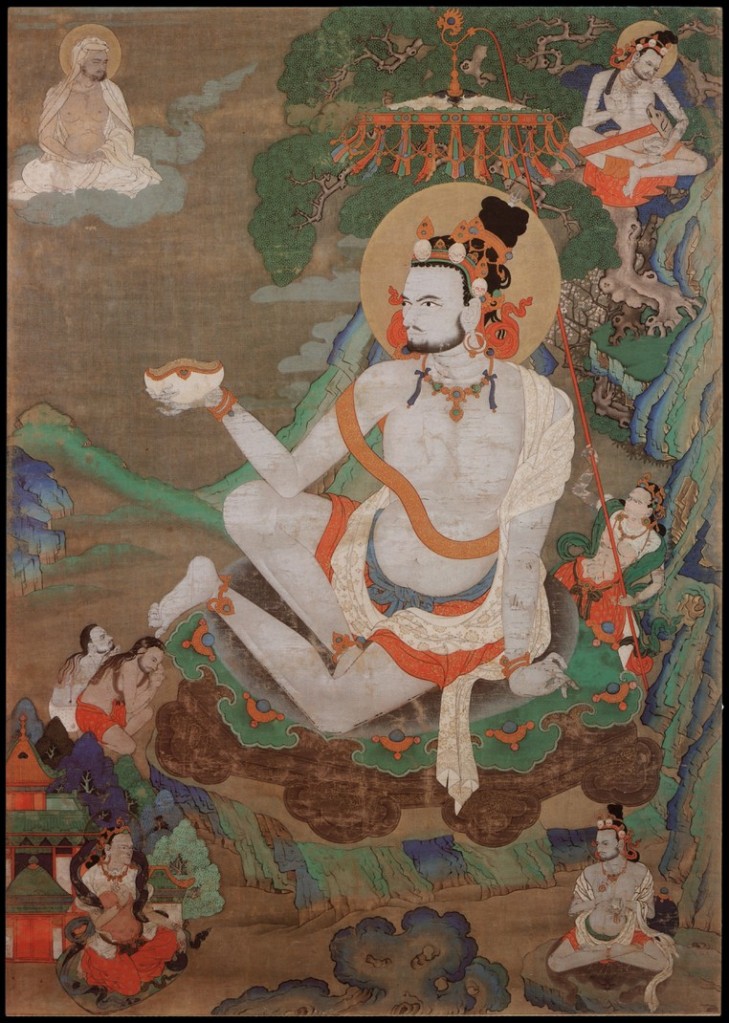
The Great Siddha Naropa, who is famously associated with Six ‘Dharmas’ or Completion Stage yogic disciplines.

Yesterday, the Naldjor Facebook page, a wonderful resource for texts and images related to Tibetan Tantric Buddhism and Yoga, shared a short text composed by Naropa, the famous Bengali Mahasiddha or ‘greatly accomplished’ Tantric saint who lived and taught in the 11th century (Naropa was famously put through great trails by his Guru Tilopa after he left his life as a monastic professor behind. For a brief summary of his life, see the Princeton Dictionary of Buddhism’s entry for him shared on Tsadra’s Buddha Nature Project page, which is incidentally where I also got the above image from. The text in question has to do with mantra recitation and it is a mengngak མན་ངག་ or upadesha in Sanskrit – that is, a text of ‘pith, oral instructions’. Mengngak are usually related to meditation, medicine, or ritual practice and in this text Naropa gives a list of twenty-one do’s and don’ts regarding mantra practice for practitioners who want to cultivate ngak ki nüpa, སྔགས་ཀྱི་ནུས་པ་, i.e. ‘mantric efficacy’ or ‘power’. The Naldjor page administrator requested that English translations of the text be shared, so I thought I would offer one here. Naropa’s text was also one of the many sources Dr Nida Chenagtsang drew on when writing his Tibetan-language book on mantra healing and some of Naropa’s instructions appear in Dr Nida’s own ‘do’s and dont’s’ chapter from the book (see here for my rough translation). Dr Nida also often refers to points from Naropa’s text in his classes, so I thought it would be useful to share a full translation, along with some brief commentary. I will give the full text and translation below, followed by a few explanations about terminology and translation choices. I have put asterisks alongside the points which have variant renderings or interpretations.
Continue reading

Guru Viking Interview on Sexual Yoga, Dakinis, and Queer Tantra

yeshe tsogyal

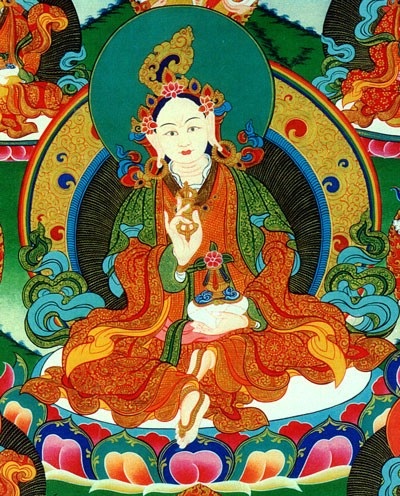
The great Khandro, Dakini or Yogini of Tibet, the princess who became a Buddha Yeshe Tsogyal

(This particular image of Yeshe Tsogyal is from a specific practice involving the Khandro that was revealed by the 17th century Tibetan treasure-revealer Tagsham Nuden Dorje who is said to have been a reincarnation of Yeshe Tsogyal’s sexual yoga partner Atsara Salé. The lineage for this practice is held by Namkha Drimed Rinpoche, see here for more information. See here as well for more on this blog regarding Yeshe Tsogyal’s life and exploits)

Hi, friends!

Here’s the information regarding a further podcast I recently did with Steve James of the Guru Viking podcast, as part of a series of interviews connected with my PhD dissertation on Tibetan tantric Buddhist non-monastic, non-celibate yogis and yoginis. In this interview, Steve quizzed me a little about some issues connected with gender and sexuality in Tibetan tantric Buddhism. I am hardly an expert in (or the best person to be mouthing off about!) the experiences of women in Vajrayana, but I hope that some of what we discussed here will be of use and interest.

Here’s Steve’s list of the topics we talked about along with the relevant links:

Continue reading

Interview on ‘A State of Mind’ Podcast about Dr Nida’s Book on Tibetan Sexual Yoga Practices

No photo description available.

Guru Yuthok manifesting as Vajradhara in union with Vajravarahi by Anna Artemyeva

Hi everyone. A quick post to inform you all that an interview I did with my friend professional counselor Julian Royce for his ‘A State of Mind’ podcast is now online to view and listen to. The interview mainly focused on my involvement with helping to put together Dr Nida Chenagtsang’s 2018 book on Tibetan tantric Buddhist sexual yoga practices, ‘Karmamudra: The Yoga of Bliss (Sexuality in Tibetan Medicine and Buddhism), so should be of interest both to people who have already read Dr Nida’s book and who are considering doing so! (you can read my full editor and translator’s foreword to the book here as well)

Here’s the YouTube video of the interview. As always, feel free to let me know what you think!

Continue reading

Tibetan Master Meets Theosophical Mahatmas: Gendun Choepel’s Reflections on Blavatsky and Theosophy

gendun choepel

(Celebrated ex-monk Tibetan intellectual Gendun Choepel)

I was recently reading through Donald Lopez’s excellent book “The Madman’s Middle Way’ on the contributions of controversial and brilliant early twentieth century Tibetan intellectual Gendun Choepel (1903-1951), and I came across something I had missed before, namely, Gendun Choepel’s reflections in Tibetan on the popularity of Helena Petrovna Blavatsky (1831-1891) and the nature of her new religious movement Theosophy, as found in his ‘Serki Thangma’ or ‘Field/Surface of Gold’. This travelogue (which has been fully translated into English by Lopez and Thupten Jinpa) constitutes an extensive autobiographical account of the ex-monk’s wanderings in the 1930s and 40s throughout India and then Ceylon/now Sri Lanka. It is chock-full of fascinating insights about British empire, comparative religion, gender, and science as seen through the eyes and experience of an extremely gifted and innovative Tibetan scholar, poet, and artist.   Continue reading