


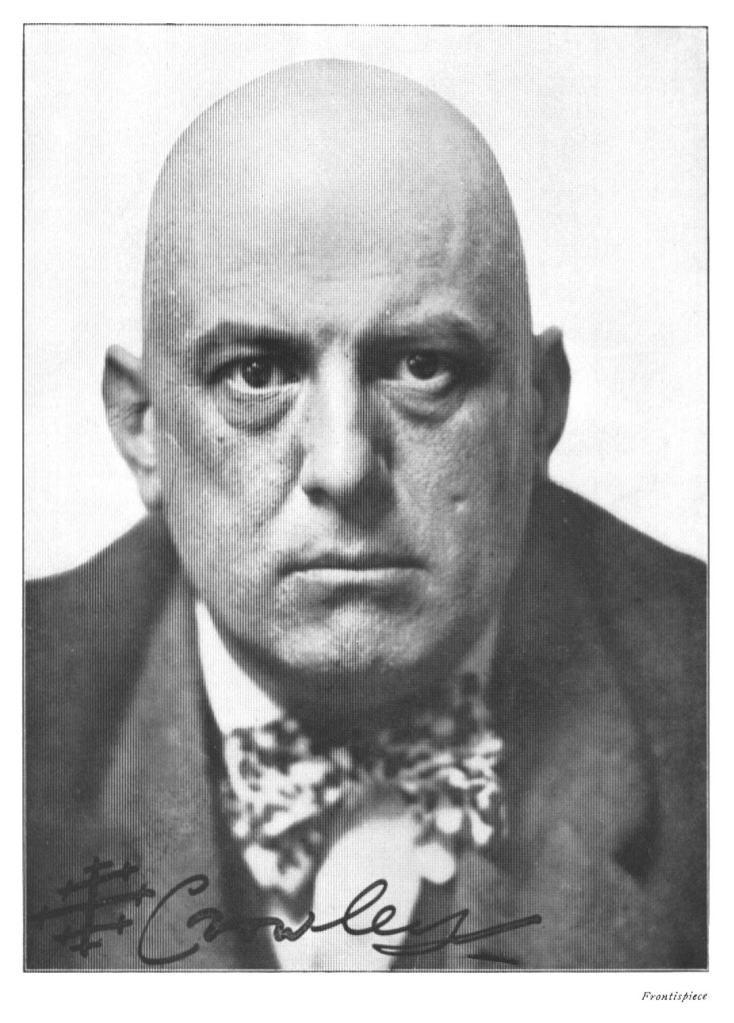
I’ve written about LAM, the according-to-some extraterrestrial entity which English ritual magician Aleister Crowley is supposed to have contacted, in an earlier article about ‘Tibetan aliens’ which I shared on this blog before. The term LAM is synonymous with a specific drawing which Crowley produced, and which some occultists say is a portrait of a specific spiritual/alien entity. Now, occultists have many different opinions about who or what LAM is or was, about whether this picture is even a picture of an entity at all, and about the extent to which whatever entity or spiritual principle the image may represent is important or interesting. Some claim the image of LAM is Crowley’s spiritual self-portrait, others that it is a picture of Crowley’s Guru or Holy Guardian Angel. Some say it a portrait of Lao Tzu or another Taoist sage, of a disincarnate Tibetan lama, or the likeness of some other sort of priest or sorcerer. Others argue it is a stylized representation of penis-in-vagina (ritual?) intercourse, while yet others claim that it is one of the earliest representations of the now stereotypical ‘grey alien’ extraterrestrial (this last position seems to have gone especially viral online in the late 90s and 2000s).

 A Perfumed Skull