
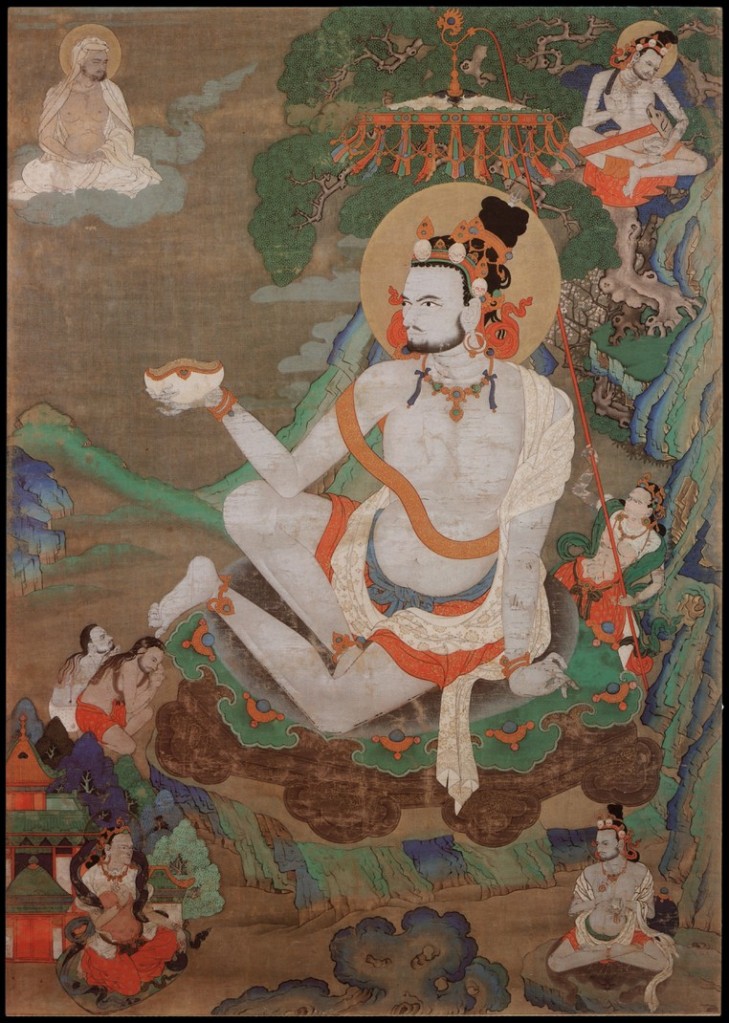
Yesterday, the Naldjor Facebook page, a wonderful resource for texts and images related to Tibetan Tantric Buddhism and Yoga, shared a short text composed by Naropa, the famous Bengali Mahasiddha or ‘greatly accomplished’ Tantric saint who lived and taught in the 11th century (Naropa was famously put through great trails by his Guru Tilopa after he left his life as a monastic professor behind. For a brief summary of his life, see the Princeton Dictionary of Buddhism’s entry for him shared on Tsadra’s Buddha Nature Project page, which is incidentally where I also got the above image from. The text in question has to do with mantra recitation and it is a mengngak མན་ངག་ or upadesha in Sanskrit – that is, a text of ‘pith, oral instructions’. Mengngak are usually related to meditation, medicine, or ritual practice and in this text Naropa gives a list of twenty-one do’s and don’ts regarding mantra practice for practitioners who want to cultivate ngak ki nüpa, སྔགས་ཀྱི་ནུས་པ་, i.e. ‘mantric efficacy’ or ‘power’. The Naldjor page administrator requested that English translations of the text be shared, so I thought I would offer one here. Naropa’s text was also one of the many sources Dr Nida Chenagtsang drew on when writing his Tibetan-language book on mantra healing and some of Naropa’s instructions appear in Dr Nida’s own ‘do’s and dont’s’ chapter from the book (see here for my rough translation). Dr Nida also often refers to points from Naropa’s text in his classes, so I thought it would be useful to share a full translation, along with some brief commentary. I will give the full text and translation below, followed by a few explanations about terminology and translation choices. I have put asterisks alongside the points which have variant renderings or interpretations.
༄༅། །རྒྱ་གར་སྐད་དུ། ཡོ་ག་མནྟྲོ་ཨུ་པ་དེ་ཤ །བོད་སྐད་དུ། རྣལ་འབྱོར་པས་སྔགས་བཟླ་བའི་མན་ངག །
རྡོ་རྗེ་འཛིན་ལ་ཕྱག་འཚལ་ལོ། ། གང་ཞིག་རྣལ་འབྱོར་པ་རྣམས་ཀྱིས། ། སྔགས་ཀྱི་ནུས་པ་བསྐྱེད་འདོད་པས། ། སྔགས་ཀྱི་སྤྱོད་ལམ་ཤེས་བྱ་སྟེ། །
རྣལ་འབྱོར་སྔགས་པས་སྔགས་བགྲང་ཚེ། ། དམ་ཚིག་ཉམས་པའི་མི་དག་དང༌། ། ནམ་ཡང་ཁ་འཕྲོ་མི་བསྲེ་ཞིང༌། ། སྡིག་པ་ཅན་གྱི་གོས་མི་གྱོན། ། ཁམས་མི་བདེ་བའི་སྐབས་སུ་ནི། ། ངལ་གསོ་ཁམས་བསང་ཆོས་ཉིད་བསྒོམ། ། དད་པ་མེད་དང་ལེ་ལོ་སྡང་། ། མི་མོས་ཉལ་སྔགས་བཟླ་བ་དང༌། ། བཟའ་བ་ཟ་ཞིང་སྔགས་ཟློས་སྤང༌། ། བཏུང་བ་འཐུང་ཞིང་སྔགས་ཟློས་སྤང་། ། ཁ་མ་བཤལ་བར་སྔགས་ཟློས་སྤང་། ། བསམ་པ་མེད་པར་སྔགས་ཟློས་སྤང་། ། ལྷ་མ་གསལ་བར་སྔགས་ཟློས་སྤང་། །གཉིད་ཀྱི་དབང་དུ་གྱུར་པ་སྤང་། ། གསལ་ཞིང་སྔགས་སྒྲ་ཆེ་བ་སྤང་། ། ཞི་བའི་དུས་སུ་དྲག་པོ་སྤང་། ། དྲག་པོའི་དུས་སུ་ཞི་བ་སྤང༌། ། དབང་གི་དུས་སུ་ཞི་བ་སྤང་། ། སྔགས་བཟླས་གཞན་དུ་སྤེལ་བ་སྤང་། ། སྒྲུབ་སྔགས་འཇོམས་ཤིང་བཟླ་བ་སྤང་། ། རླུང་ཁ་ཆེན་པོ་ཆུ་ཆེན་འགྲམ། །དྲག་སྔགས་ཟབ་མོ་མི་བཟླའོ། ། སྔགས་ཀྱི་ཡིག་འབྲུ་འཕྱར་བ་སྤང་། ། སྒྲ་དོན་ནད་ལ་སོགས་པ་ལ། ། ནུས་པ་ཡོངས་རྫོགས་དམིགས་པ་ཡང་། ། སྣོད་མིན་དག་ལ་སྤེལ་མི་བྱ། ། གསང་སྔགས་གྲོང་ཡུལ་དག་ཏུ་སྤང་། ། ཀྲི་ཡ་ལ་སོགས་སྔགས་རྣམས་དང་། ། འབྲས་བུ་དམན་པའི་སྔགས་ལ་སོགས། ། ཕ་མ་གཉིས་མེད་མ་གཏོགས་རྒྱུད། ། གཞན་ལ་ཤ་ཆང་བུད་མེད་དང༌། ། སྒོག་པ་སོགས་སྤང་གཙང་སྦྲ་བྱ། །
འཕྲལ་གྱི་ནུས་པ་འདོད་པ་ལ། ། སྨྲ་བཅད་གྲངས་དང་བཅས་པ་འདོན། ། བླ་མེད་དངོས་གྲུབ་འདོད་པ་ལ། ། གཞུང་བཞིན་རྟགས་རྫོགས་བར་དུ་འདོན། ། ཕྱག་རྒྱ་ཆེན་པོ་འདོད་པ་ལ། ། དེ་ཉིད་གསུམ་གསལ་ཡུན་དུ་འདོན། ། ནུས་པ་མྱུར་དུ་སྐྱེ་འདོད་པ། ། སྨྲ་བ་བཅད་པས་དངོས་གྲུབ་འཕེལ། ། ལོ་གཅིག་རང་གར་བཟླས་པ་བས། ། ཟླ་གཅིག་སྨྲ་བཅད་ནུས་པ་ཆེ། ། ཡུལ་དུ་ལོ་གཅིག་བསྒྲུབས་པ་བས། ། དབེན་པར་ཞག་གཅིག་བསྟེན་པ་ལེགས། །
སྒྲུབ་པ་སྔགས་ཀྱི་རྣལ་འབྱོར་པས། ། གདམས་པ་ཉེར་གཅིག་འདི་ལྡན་ན། ། ཚེ་འདིར་མཆོག་དང་ཐུན་མོང་འགྲུབ། ། སྔགས་བཟླ་བའི་མན་ངག་སློབ་དཔོན་ཆེན་པོ་ནཱ་རོ་པས་མཛད་པ་རྫོགས་སོ།། །།
In Sanskrit, Yogamantropadesha, in Tibetan, nenjorpé ngakdé mengngak, ‘A Pith Instruction on Yogis’ Mantra Recitation’.
Homage to Vajradhara!
Any yogi who wants to generate mantric power should understand the following about mantric conduct:
- When yogi mantrins (nenjor ngakpa) accumulate mantras they should not mix with impure people who have deteriorated their samaya, i.e. tantric commitments and should never mix their own food or drinks with leftovers from such people.
- Yogis should not wear sinful people’s clothes.
- When yogis feel unwell, they should rest and refresh themselves and meditate on the Dharmata, the ultimate Reality.
- Yogis should avoid reciting mantras without faith, with laziness, with anger and animosity, without devotion and investment, or when laying down to sleep.
- Yogis should avoid reciting mantras while eating food.
- Yogis should avoid reciting mantras while drinking beverages.
- Yogis should not recite mantras without first rinsing or cleaning their mouths.
- Yogis should avoid reciting mantras thoughtlessly.
- Yogis should not recite mantras without clearly visualizing the deity.
- Yogis should avoid reciting mantras while succumbing to sleepiness.
- Yogis should avoid reciting mantra syllables too clearly or loudly.
- Yogis should avoid wrathful or aggressive recitation when reciting peaceful, pacifying mantras.
- Yogis should avoid peaceful or calm recitation when doing aggressive, destructive mantras.
- Yogis should avoid peaceful recitation when doing controlling or magnetizing mantras.
- Yogis should avoid spreading mantra recitation practices elsewhere and mixing them with other practices.
- Yogis should avoid reciting mantras which overpower drup ngak or sadhana mantras.**
- Yogis should not recite profound aggressive mantras in proximity to great winds or large bodies of water.
- Yogis should avoid brandishing about written mantric syllables.**
- Yogis shouldn’t circulate the meaning of mantric syllables for sickness and so on and the visualizations used for bringing out mantras complete power among unworthy people.**
- Yogis should avoid (practicing or sharing) Secret Mantra practices in public places.
- For mantras connected with lesser results, Kriya Yoga mantras and so on, and for all tantras other than the Father, Mother, and Non-Dual (Highest Yoga Tantras), yogis should avoid meat, alcohol, (sex with) women, and garlic and other such (mantra weakening) foods and should maintain (bodily, ritual) purity.
Those who desire immediate, worldly mantric power shut up and recite mantras accumulatively. Those who want the highest siddhi, recite until signs are perfected, in accordance with textual instructions. Those who want (to realize) Mahamudra, recite and visualize the denyi sum, the Three Realities’ for a long time. Those who want to generate mantric power quickly, proliferate siddhis by being silent. One month of silent retreat generates greater mantric power than reciting however you like for one year. Practicing for just one night in isolation or seclusion is better than doing sadhana for one year at home.
If mantrin sadhaka yogis uphold these twenty-one pieces of advice they will accomplish the Supreme Siddhi of Buddhahood and the common siddhis in this very lifetime.
This completes the pith instruction on reciting mantras composed by the Great Acharya Naropa.
Some comments:
In Sanskrit, Yogamantropadesha, in Tibetan, nenjorpé ngakdé mengngak, ‘A Pith Instruction on Yogis’ Mantra Recitation’.
The text begins by giving its title in Sanskrit and then Tibetan, a conventional format which implies that the text was originally composed in Sanskrit and then translated into Tibetan. The style of the Tibetan has the feel of a text translated from Sanskrit rather than of one composed in Tibetan and Naropa was himself Indian, so I can only assume that a Sanskrit original exists or once existed. I know next to no Sanskrit, so I have rendered the Sanskrit title how it reads to me in Tibetan transliteration. Sanskritists, please let me know if there’s a better, more accurate way to write this. As mentioned above, mengngak as a genre suggests brief, essential instructions, practical insights and recommendations based on direct experience. While it is a textual genre, it also often has the connotation of being orally transmitted wisdom which has been recorded in writing.
Homage to Vajradhara!
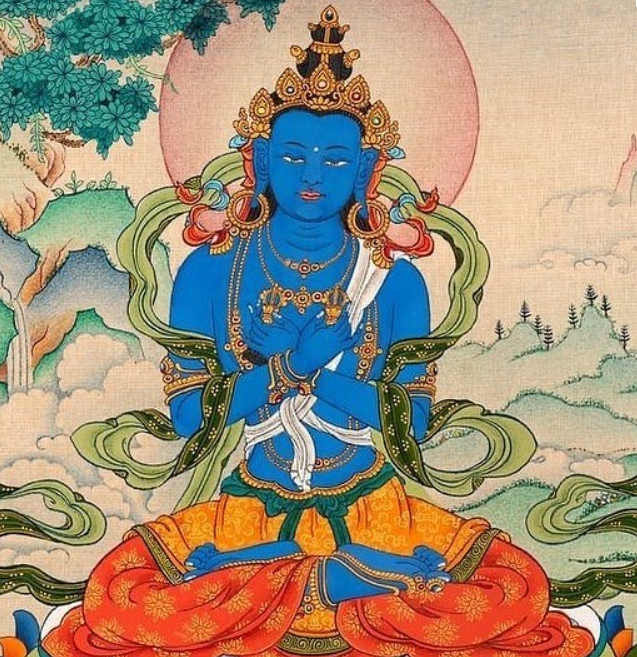
Naropa’s homage or opening prostration is to Vajradhara, the primordial, archetypal Tantric Guru, the source of all Tantric Buddhist teachings in the Sarma or New Translation schools of Tibetan Buddhism. Here’s a picture of him:
Any yogi who wants to generate mantric power should understand the following about mantric conduct:
The term used by Naropa is nenjorpa, naljorpa, yogi. It is a masculine term, the female, yogini, being nenjorma or naljorma, depending on accent and dialect. The whole text is addressed to a male audience, as is made explicit in the twenty-first point, where the reader is told to ‘avoid women’, with the meaning of ‘maintain celibacy’ (‘to rely on’, ‘partake of’ or ‘practice with women’ is a shorthand or euphemism in frequently androcentric, heteronormative tantric yogic contexts for ‘engage in tantric sex, have sexual intercourse’ for example). Although Naropa’s text is articulated from a male perspective, this is not to say that female or intersex practitioners did not engage in tantric or mantric practice – they did and do. I have retained the original perspective of the text in my translation for fidelity, but Naropa’s advice is relevant to practitioners of any sex or gender.
The term for ‘mantric power’ in Tibetan is ngak ki nüpa, སྔགས་ཀྱི་ནུས་པ་ . The word ngak can mean ‘Tantra’ – as in the practice or tradition of Tantra – as well as ‘mantra’, as in a recited and visualized esoteric formulae, groupings of sounds or letters used for ritual and meditative purposes. Given this double meaning, ngak ki nüpa could be translated as ‘tantric power’ or ‘mantric power’ depending on the context or one’s preference. The latter translation is more fitting to the context of this text, but it’s worth remembering that when Naropa talks about ‘mantric power’, he is talking about ritual power cultivated in the context of tantric Buddhist practice specifically. For the same reason, ngakpa in Tibetan – the type of ritual specialist I often gloss as ‘non-monastic, non-celibate tantric yogi’ or ‘tantric householder ritual specialist’ – can be back-translated into Sanskrit as both mantrin and tantrika. Ngakchang སྔགས་འཆང་ , a common synonym for ngakpa, retains this double meaning as well, i.e. a ‘holder’ – and by extension, wielder – of Tantra’ or a ‘holder and wielder of mantra(s)’. The Tibetan word nüpa means ‘power’, ‘potency’, ‘capacity’ or ‘efficacy’ (see here for a translation of a discussion by Dr Nida on how mantras can be understood to work or be effective). In medical contexts nüpa is used to talk about the potencies or effects of medicinal substances, but more generally, the word has strong associations with magical or ritual power. If somebody says that a lama or ngakpa ‘has a lot of nüpa‘, it specifically implies that that individual has actualized their spiritual or ritual practices, that when that person recites mantras and does visualizations and meditates, their practices ‘work’ as intended, they are effective, something transformative actually happens. This too is what Naropa means when he talks about generating mantric power or efficacy.
- When yogi mantrins (nenjor ngakpa) accumulate mantras they should not mix with impure people who have deteriorated their samaya, i.e. tantric commitments, and should never mix their own food or drinks with leftovers from such people. .
- Yogis should not wear sinful people’s clothes.
The first two points have to do with ritual contamination (it should be noted that the original text does not explicitly number Naropa’s twenty-one points although it refers this number. I have numbered each point in my translation for the sake of clarity and ease of reference).
Naropa explains that proximity with people who have lapsed in their damtsik or samaya – their tantric commitments or vows – can have a negative influence on one’s practice and can weaken one’s mantric power. Since mantric power is connected with one’s speech-energy, tongue, voice, and throat chakra, the worst thing one can do is consume foods or drinks which have been handled by such individuals and which been tainted by their breath or come into contact with their mouths, lips, or tongue to some degree. The term Naropa uses to explain this is khatro, which means ‘left-over food’. This term has a specific connotation in Tibetan and Himalayan contexts. It doesn’t refer to leftovers in the sense of ‘the lasagna that was left in the pyrex dish after everyone served themselves, which is now in the fridge in a tupperware and which was never been directly handled by anyone’. Khalag, a common Tibetan word for food literally means ‘mouth-hand’, in reference to the historically common practice of eating meals with one’s hands. Khatro refers specifically here to unfinished food in another person’s bowl, food which by implication has been directly touched by that person’s hands and mixed with small amounts of their saliva in the course of eating. Sharing food with others is a way of bonding, a mark of intimacy and conviviality. Tibetan parents and grandparents will often lovingly pre-masticate food to give to small children, for example, but this level of closeness with physically contaminated, ritually or morally polluted individuals is contraindicated for dedicated mantra practitioners, who need to maintain a relatively high level of spiritual hygiene (avoiding sharing food and other’s left-overs is also something mentioned in medical texts, as a preventative measure to lessen risk of spreading contagious disease). The term for physical, moral, or ritual pollution through contact with impure substances, locations, objects, or people is deep གྲིབ་ in Tibetan. Borrowing and wearing the clothes of ‘sinful’ – dikpachen – people, that is, people who have repeatedly committed negative actions like killing, lying, stealing etc., is another source of deep and can have a similarly damaging effect on one’s mantric power through physical contagion.
3. When yogis feel unwell, they should rest and refresh themselves and meditate on the Dharmata, the ultimate Reality.
The term I have translated as ‘feel unwell’ here is kham mi dewa. This is an interesting phrase in Tibetan. Kham has many different meanings but we can think of it as being an umbrella term for the strength or state of well-being of all of an individual’s mental and physical functions, all the constituent elements of a person’s psycho-physical being that work together to maintain a regular state of health. The phrase Kukham zang སྐུ་ཁམས་བཟང་། ‘Is your kham (honorific) good?’ is a common greeting in Tibetan, a way of acknowledging someone and asking if they’re well. We can understand kham mi dewa as referring to both physical, energetic, and mental unwellness, a general, inclusive term for saying run-down or under the weather. Here Naropa is saying that when yogis feel distracted or bogged down by malaise, they should pause their mantra practice and rest their mind and body, refresh or re-invigorate themselves and use the time to meditate on the Dharmata,the true empty nature of things. This Reality is the ultimate ‘refresher’, a truth beyond the ups-and-downs of conditioned samsaric existence.
4. Yogis should avoid reciting mantras without faith, with laziness, with anger and animosity, without devotion and investment, or when laying down to sleep.
5. Yogis should avoid reciting mantras while eating food.
6. Yogis should avoid reciting mantras while drinking beverages.
These next three prescriptions are all about making sure that one recites mantras with full concentration and emotional investment and enthusiasm. Mantras should not be recited or visualized half-heartedly, without conviction, or vigor. While mantras relating to sleeping and dreaming can certainly be recited in bed or before going to sleep, it is better to sit up in bed and recite them or to recite them while positioned in yogic sleeping poses than reciting them on one’s back or side merely because one is too tired to sit up and focus. As we saw above, if yogi(ni)s are too tired to focus on practice, it is better they rest and refresh themselves first than associate their practice with tiredness and distraction. Points five and six have a similar thrust. While mantras are often said over food and beverages while they’re being prepared or before eating or dispensing them, the idea here is that one shouldn’t try to multitask and eat or drink and recite mantras at the same time. It is not only just physically difficult to do both things at the same time, but it greatly weakens the force of the recitation and counts as a major distraction.
7. Yogis should not recite mantras without first rinsing or cleaning their mouths.
This one feels quite common-sensical. Rinsing one’s mouth out with clean water before reciting mantras is a literal and symbolic ‘palate cleanser’, an opportunity to wash away all worldly, ignorant and trifling speech, and all blockages or contaminated energies, all distracting associations, connections, and obstacles related to speech, a reset for your tongue and mouth. Today, this step could include brushing one’s teeth, flossing, scraping one’s tongue, and gargling with mouth wash, but thoroughly rinsing one’s mouth with clean water should be enough when done with the right focus and intention (riffing of of Naropa’s point here, dedicated mantra practitioners could also keep a separate set of mouth cleaning tools which have been empowered with mantras of purification and imbued with ritual substances. Having a special, set-aside mantra toothbrush with homemade, consecrated mouthwash and toothpaste seems like it could be a cool idea)
8. Yogis should avoid reciting mantras thoughtlessly.
The Tibetan here is sampa mepar, literally ‘without thinking’, without focusing one’s mind and attention. Mantra recitation and visualization are practices which require using and directing one’s conceptual mind and imaginative faculties.
9. Yogis should not recite mantras without clearly visualizing the deity.
This point relates to the previous one and is something which people unfamiliar with tantric yogic practice are often unaware of. It is very rare that mantra practice involves just saying a verbal formula over-and-over and nothing else. While some mantras have no associated visualizations, a lot of mantra practice is associated with highly elaborate imaginative focus on meditational deities. Depending on the level of practice one is doing one may have to visualize deities outside of one’s self and relate to them from that position, or, as is the case in more non-dualistic ‘Deity Yoga’, one may have to ‘self-generate’, i.e. imagine that one is the meditational deity and then make offerings and recite from that point of view. In Highest Yoga Tantra Deity Yoga, one has to cultivate the strong conviction that one’s body is the empty light Body of the yidam, one’s personal tantric meditational deity or Buddha, that one’s speech is its Mantra, that one’s mind is its Buddha-Mind, the Ultimate Reality itself. Doing this guarantees that when a mantra is recited it is not just the ordinary, fallible, samsaric ‘you’ which is reciting sounds towards some end or in the direction of some object. Rather, you become the mantra, the mantra is the deity’s sound-body, your speech is an inevitable vehicle for the expression of the deity’s qualities or nature. There is no ‘you’ saying the ‘mantra’, no ‘you’ and the ‘mantra’. Body, speech-energy, and mind are all entrained or aligned together, focused single-pointedly on the divine nature or qualities you are actualizing.
Regardless of whether you are doing non-dual self-generation or are reciting mantras in a more dualistic fashion to invoke a deity you think of as being separate to and outside of yourself, the efficacy of mantra recitation will depend on your recitation being closely associated with specific clearly maintained visualizations – imaginative contemplations which focus and activate awareness and direct and shape energy. Indeed, the Tibetan term for ‘mantra recitation’, ngak dé, is more properly translated as ‘mantra recitation-and-visualization’, since dé so often carries with it the sense of ‘recitation in tandem with visualization’ and may also be used in contexts where the practitioner is not reciting mantras audibly at all, but is intoning them silently and internally instead.
The word for ‘visualize’ here is selwa, which literally means ‘to make clear, to understand or conceive clearly’. Using the English word ‘visualize’ to translate this term is a little misleading. Although Tibetan Buddhist practices are chock-full of ‘visualization’ instructions, it’s worth pointing out that the Tibetan words which are usually translated into English as ‘visualize’ or ‘imagine’ don’t have any of the same strong visual associations these English terms do. When Anglophones hear ‘visualize’ and ‘imagine’ they can’t help but link these instructions to physical vision. In my experience, many students get the impression that ‘visualization’ means that they are supposed to create pictures in their head or field of vision in a particular way. Students rarely pause and actually investigate how other people experience or don’t experiences images in their minds or their field of vision in the first place. Instead, they often become frustrated and convince themselves that ‘they can’t visualize’ because they assume that they should be seeing or experiencing meditatively cultivated forms in a specific way, a way based entirely on assumption and which they may never have even actually articulated aloud to another person. Students end up fighting and chafing against their own expectations, rather than allowing the innate capacities of mind to unfold. It’s certainly true that some people are just more visually-oriented than others, that some people are able to create very clear, detailed pictures in their head or outer field of vision which they are able to interact with, whereas other people can’t do this at all. Likewise, some people regularly experience their thoughts and feelings via inner voices and dialogue, whereas other people experience no mental ‘talk’ at all and find it hard to even imagine what that would be like. ‘Inner vision’ is a spectrum, with some people being able to create cinematic, dynamic, highly detailed images and scenes in their head very easily on one end and others being totally aphantasic on the other (click here to take an online test to see if you fall into this latter category).
Where you happen to fall on this spectrum, however, may have very little do with whether or not you can successfully practice Tibetan Buddhist ‘visualization’. ‘Visualizing’ is not the same thing as physical seeing. Compelling research also exists which has shown that blind people have not only experienced OBEs (Out of Body Experiences) and NDEs (Near Death Experiences) but have demonstrated a type of highly lucid ‘vision’ during these states. As mentioned, all the Tibetan terms most commonly translated into English as ‘visualize’ or ‘imagine’ don’t have anything to do with physical seeing at all. One of the most common terms, sampa བསམ་པ means ‘conceive that, think that, think to yourself that, wish that, feel that’. So when a text says ‘imagine, visualize that there is a red four-petalled lotus in your throat’, what it’s actually saying is ‘think that there is a red, four-petalled lotus in that place’, feel that it’s there, create the notion or idea for yourself that it’s there, tell yourself that it’s there, wish that it were so. Then, we have the already mentioned selwa, ‘let your awareness illuminate, clearly understand that’ a lotus is there, or the term möpa མོས་པ་ ‘feel a strong inclination towards, have faith, strongly, ardently appreciate or trust’ that a lotus is there, and mikpa དམིགས་པ་ ‘focus your mind on, contemplate, concentrate on it as an object of contemplation’, and so on.
So, we can see that these terms have little to do with ordinary vision (or phrased differently, ordinary waking ‘seeing’ is not as dependent on mere ‘eye power’ as we often think). It can be very useful for students to experiment with how their experience or results change when instead of thinking that they have to create a perfect ‘mind picture’ of something they tell themselves instead, ‘I’m going to strongly trust that the Guru is sitting above my head’, ‘I’m going to conceive, to devote myself to the notion that a lotus blossoms in my heart’ and so on. It’s also worth remembering that one of the eight ‘consciousnesses’ in Buddhism is the conceptual mind or imagination, which collects sensory data to produce experience. We can think of visualization as a sort of multi-sensory ‘mindsense’ or ‘mindsight’, just as the researchers of OBEs in the blind mentioned above describe in their research.
10. Yogis should avoid reciting mantras while succumbing to sleepiness.
This is easy to understand. Saying mantras while nodding off, while ‘falling under the sway of drowsiness’ is another example of reciting mantras with distracted awareness.
11. Yogis should avoid reciting mantra syllables too clearly or loudly.
I was a little unsure of the thinking behind this but found this statement in a text by Sakya master Gorampa Sönam Senggé (1429 – 1489), who explains,
རྩ་ལྟུང་བདུན་པའི་ཉེས་པ་འོང་བའི་ཕྱིར། ནཱ་རོ་པས། གསལ་ཞིང་སྔགས་སྒྲ་ཆེ་བ་སྤང་ཤེས་གསུངས་སོ། །
“Naropa taught that one “should avoid reciting mantra syllables too clearly or loudly” because doing so would bring about the fault of the seventh tantric root downfall or transgression”
This is in reference to the Fourteen Root Transgressions of samaya popular in the Sarma traditions. The seventh downfall has to do with divulging esoteric Vajrayana practices to inappropriate people, to unworthy or unready recipients who are unable or unwilling to properly understand and practice them. The idea here then is that if one recites mantras too loudly or clearly they might be heard and misunderstood by non-initiates, which would be a contravention of practitioners’ commitment to privacy and discretion.
12. Yogis should avoid wrathful or aggressive recitation when reciting peaceful, pacifying mantras.
13. Yogis should avoid peaceful or calm recitation when doing aggressive, destructive mantras.
14. Yogis should avoid peaceful recitation when doing controlling or magnetizing mantras.
These instructions have to do with making sure that one recites mantras in a way that suits the type of ritual working or action one is engaged in. In Tantric Buddhism, there are the lé zhi ལས་བཞི་ or ‘Four Tantric Ritual Actions’, i.e. pacifying actions, increasing actions, controlling actions, and aggressive, destroying actions. Dr Nida expands on this subject in his book chapter. To summarize, pacifying mantras are generally recited calmly and softly, in a quiet voice or whisper, increasing mantras can be a bit louder, whereas controlling or ‘magnetizing’ mantras and destroying mantras are louder and more forceful.
15. Yogis should avoid spreading mantra recitation practices elsewhere and mixing them with other practices.
This is again a call for secrecy and discretion. While there are of course contexts in which mantras can be shared with or transmitted to others, mantras are best received from highly experienced practitioners and lineage-holders, from people who have recited the mantra extensively and have actualized its power, and so on. They should not be shared with other people willy-nilly. Given that most people are not initiates, and that many initiates may not be very dedicated practitioners, it is best to keep the mantras one has received to oneself and simply focus on practicing them. There are certain mantras, especially the mantras of peaceful Buddhas or certain mantras used for healing and peaceful purposes, which are a little more ‘open-access’ and which can be shared more widely, but overall, silence and discretion are key ingredients is building and conserving mantric power.
I’ve seen zhen du pelwa, ‘spreading, combining elsewhere’ read in different ways by translators. In the context of mantra practice, pelwa can mean to repeat a recitation or practice. It also has the sense of disseminating, especially in terms of spreading a practice to new people, as in chö pel khen, ཆོས་སྤེལ་མཁན་ a proslytizer or missionary. In some contexts, pelwa can also means ‘combine or mix together’ so I’ve preserved both senses in my translation. Zhen du is literally elsewhere, other than where it should be spread or practiced, so the idea here seems to be one, don’t disseminate mantras outside of the community of the faithful and two, don’t blend Vajrayana practices with non-Vajrayana ones. In my experience the two things often go together!
**Addendum: perusing contemporary, quite extensive commentary by Kagyü Lamé Bang – ‘Servant of the Kagyü lineage Gurus’, the penname of Drigung Kagyü scholar Rasé Könchok Gyatso (1968/69) on Naropa’s text, I see that he reads this terse phrase yet another way, understanding the operative verb pelwa as ‘add to, add extra prayers to’. He explains he was taught that this line means that yogis should first complete thousands and thousands of repetitions of their yidam deity yoga practices and accomplish the deities of whatever mandala they are practicing fully, before they attempt to expand mantra recitation in other directions and insert additional personal prayers for the accomplishement of the Four Tantric Ritual Actions into their sadhana.
16. Yogis should avoid reciting mantras which overpower drup ngak or sadhana mantras.
In consulting different versions of the original Tibetan text, I have found two different renderings of this point. In some versions we find, སྒྲུབ་སྔགས་འཇོམས་ཤིང་བཟླ་བ་སྤང་། ། in others, སྒྲུབ་སྔགས་*འཇམ་ཤིང་བཟླ་བ་སྤང་། ། This could be a spelling error. Dr Nida favours the first reading of jom which means ‘destroy, weaken, overpower’, rather than the second jam, which would change the meaning to “Yogis should recite accomplishment, sadhana mantras softly, smoothly“. Based on the structure of the sentence the first reading seems the right one. This instruction seems to be about mantra compatibility: some aggressive mantras – say, ones dedicated to actualizing wrathful or destructive purposes- may have a negative impact on the mantras one has accumulated and enlivened as part of one’s regular sadhana practice. At least this is how this sentence makes sense to me. If wiser readers have a different take, feel free to let me know!
**Rasé Könchok Gyatso opts for the ‘jam, ‘softly’ reading and comments that this point is about how one must recite aggressive mantras aggressively. He also reads it in another way as ‘Yogis should avoid practicing sadhana mantras softly, i.e. lazily, without constant efforts to keep their store of mantric power strong and stable. He discusses the value of regularly reciting the Sanskrit and Tibetan consonants and vowels to keep one’s mantric power strong, reciting the Mantra of Dependent Origination at the end of practice sessions to stabilize and retain the power generated and the need to constantly recharge and reconnect with the blessings of the deities and gurus and so on.
17. Yogis should not recite profound aggressive mantras in proximity to great winds or large bodies of water.
This is about mantras connected with drak lé, the fourth, destroying, intense, aggressive tantric ritual action. There are mantras which are used to actually fully breakdown, destroy or kill things. If one recites these into strong winds or near large bodies of water, they can harm the invisible non-human beings who live and move in the air and in the earth and water, and can potentially harm visible, embodied beings through the fluid medium of air and water as well.
18. Yogis should avoid brandishing about written mantric syllables.
The verb here is chyarwa which means to ‘hoist up into the air’ or in some contexts ‘scatter to the wind’. This point is about handling written mantras respectfully and not waving them around. Of course, Tibetans have rich traditions of erecting flags with mantras and prayers printed on them, or of scattering slips of paper with mantras written on them from high places, which might seem to go against this instruction (the use of prayer flags, carved mantra stones, mantra papers etc. works in part on the premise mentioned in the previous point as well, where the power of beneficial mantras are carried by the wind and spread throughout the environment and its various inhabitants). Overall, the main issue here is that written mantric syllables should be treated with intention and care, as the sacred and potent objects they are.
Rasé Könchok Gyatso changes one letter of the operative verb here however, reading ‘phyar as ‘khyar. This changes the meaning of this point considerably again. Khyarwa means to ‘go astray, deviate, or make an error’. Könchok Gyatso explains that this injunction is telling yogis to avoid writing mantra syllables down incorrectly, inconsistently, confusingly, or incompletely – something that is quite easy to do when using complicated and counterintuitive Tibetan rules of Sanskrit transliteration! – since if one writes mantras wrong one will read them wrong as well.
19. Yogis shouldn’t circulate the meaning of mantric syllables for sickness and so on and the visualizations used for bringing out mantras complete power among unworthy people.
20. Yogis should avoid (practicing or sharing) Secret Mantra practices in public places.
Point nineteen brings together point nine and eleven. Naropa reiterates that the specific mikpa, the visualization or contemplation instructions that bring out mantras’ complete power, and the meaning of the mantra syllables, shouldn’t be widely shared. The reference to ‘for sickness’ suggests a context in which a mantra practitioner might be saying a mantra over or on behalf of a patient. The implication is that a non-initiate patient doesn’t need to have the healing mantra practice explained to them if it is a Secret Mantra practice. There are certainly cases where doctor-yogis might give specific mantras to patients and explain to them how to use them, but there is no reason that yogi(ni) has to explain their personal mantras to the people they apply them to. ‘For sickness and so on’ is a bit ambiguous though, since it could also mean mantras used to cause sickness in others, which makes this point more about how mantras used for doing harm to others should be kept away from dodgy people.
**Rasé Könchok Gyatso reads the first two syllables differently as the homophones, dgra gdon, i.e. ‘enemies and harmful spirit influences’, rather than sgra don above, which sounds almost identical and means ‘the meaning of (mantra) sounds’. He also separates out the latter ‘avoid sharing with unworthy people’ as a stand-alone injunction, and corrects yang to spang, thereby reading point nineteen as དགྲ་གདོན་ནད་ལ་སོགས་པ་ལ། ། ནུས་པ་ཡོངས་རྫོགས་དམིགས་པ་སྤང་། ། “Yogis should avoid focusing on using up all their mantric power completely to deal with enemies, harmful spirit influences, sickness and so on”. Read like this, point nineteen has quite a different meaning.
The term in point twenty I’ve rendered as ‘public places’ is drongyul dak, which literally means ‘inhabitated places of the town or village’, i.e. places of everyday, worldly human activity.
21. For mantras connected with lesser results, Kriya Yoga mantras and so on, and for all tantras other than the Father, Mother, and Non-Dual (Highest Yoga Tantras), yogis should avoid meat, alcohol, (sex with) women, and garlic and other such (mantra weakening) foods and should maintain (bodily, ritual) purity.
The final point returns to the opening concerns regarding behavioral and dietary purity. Here Naropa explains the distinction between the taboos and conventions of the ‘lower’ tantric scriptures and those of the most non-dual and transgressive Highest Yoga tantras found in Vajrayana. In lower classes of tantra like the Kriya Yoga class, the ritualist has to observe celibacy, engage in extensive self-purification and purification of their altar, ritual clothing, implements, and materials, they have to foreswear meat and alcohol and specific foods like garlic, onion, radishes, peppers, and so on. One hears slightly different explanations for these food taboos – if meat, alcohol, eggs, garlic, and onion and so on smell pungent to humans they are positively unbearable to certain classes of spirit like nagas; in a more medical register, garlic and onion are said to ‘close the channels’ and to be soporific, and as we’ve seen drowsiness is contraindicated for mantra recitation. It is also explained that hot, sharp, pungent foods have the power to ‘cut’ mantric power, which is why they are avoided by mantra practitioners (there is also the pre-existing Indian and not quite Tibetan idea of garlic and onion being rajasic, tamasic foods that inflame afflictive emotions, so for mental-emotional purity and sobriety and spiritual progress they should be avoided. Cf. the way in which Hare Krishnas cook entirely without these and other ingredients, notwithstanding their ubiquity in Indian cuisine). In his book chapter, Dr Nida outlines a number of ways that ngakpa use mantras to mitigate the harmful effects of some of these foods if they cannot avoid consuming them. Kriya Tantra practices signifcantly resemble ‘Western’ grimoire-style spirit conjuration procedures. Both styles of ritual practice emphasize self-purification and preparation, the creation of carefully demarcated and maintained spaces of ritual power and purity, both involve the invoking of spiritual powers into one’s presence rather than a total dissolving of categories of self-other and pure-impure like in the Highest Yoga Tantra context, and so on. The lower tantras are said to have lesser results, since they are not necessarily primarily focused on attaining complete Buddhahood within a single human incarnation, and may be geared towards more ordinary, temporary accomplishments.
Those who want immediate, worldly mantric power, shut up and recite mantras accumulatively. Those who want the highest siddhi, recite until signs are perfected, in accordance with textual instructions. Those who want (to realize) Mahamudra, recite and visualize the denyi sum, the Three Realities’ for a long time. Those who want to generate mantric power quickly, proliferate siddhis by being silent. One month of silent retreat generates greater mantric power than reciting however you like for one year. Practicing for just one night in an isolated location is better than doing sadhana for one year at home.
If mantrin sadhaka yogis uphold these twenty-one pieces of advice they will accomplish the Supreme Siddhi of Buddhahood and the common siddhis in this very lifetime.
This completes the pith instruction on reciting mantras composed by the Great Acharya Naropa.
Now that the twenty-one points are complete, Naropa provides a few lines of concluding advice. The first line of this paragraph is one of my favourite lines in the entire text and is the line I reference in the title of this blogpost. Dr Nida often paraphrases this line in his classes on mantra healing, explaining that Naropa taught that “If you want to see the power of mantras, just shut up and recite them!”. This is an excellent translation of what Naropa says here:
འཕྲལ་གྱི་ནུས་པ་འདོད་པ་ལ། ། སྨྲ་བཅད་གྲངས་དང་བཅས་པ་འདོན། །
Trel ki nüpa döpa la/ ma ché drang dang chepa dön//
“For (la) those who want, desire, wish (döpa) immediate, right away (trel ki) power (nüpa), cut, stop, eliminate (ché) speaking, talking, expounding, expressing (ma) and recite, chant (dön) along with (dang chepa) counting, enumerating, frequency, many repetitions (drang)
The term trel ki has a slightly different but related meaning to ‘instantly, right now’ as well, namely, ‘provisional, ‘temporary’, ‘temporal’, in the sense of worldly effects vs. ultimate effects. So, we can read this sentence as saying ‘For those who want to see the immediate, worldly effects or power’ of mantras. Naropa is saying that if you want to experience the power of mantras right now, to get quick worldy results, the most important thing you need to do is shut up and recite the relevant mantras over and over, to ‘accumulate’ a great number of recitations. The idea that one has to ‘be quiet’ or ´stop speaking and chant’ may sound like an oxymoron at first sight (because chanting involves using one’s voice), but the point here is not that we become completely silent but that we isolate or sequester our speech, that we focus our body, speech-energy, and mind exclusively on mantra practice. We could recite 1000 repetitions of a mantra for peace and harmony in the morning but then spend the next fourteen hours while awake using our mouth and voice to create agitation and conflict, and then speak and manifest our energy in our dreams for another nine hours in a way that goes against the flow of the mantra, before waking up and then chanting the mantra again. We may of course still get some dramatic results from reciting the mantra in this way, our 1000 morning repetitions may significantly influence the course of our day and night with time, but if we really want to experience the full extent of what that mantra can do as quickly as possible, we should go on an ‘ordinary speech fast’ and devote a period of time to saying nothing else but the mantra, as many times as possible within that given period.
This is how most mantras are ‘activated’. Specific mantras may come with instructions to recite them continuously without the interruption of any other words in-between as many times as possible within a specific period, or they many come with a minimum initial accumulation or number of continuous repetitions (6000, 25 000, 100 000 etc.). Once this initial ‘activation’ is done, the practitioner will typically have a much smaller minimum daily recitation commitment for the mantra – seven, twenty-one, one hundred and eight repetitions, say – which maintains their connection with the mantra and keeps it empowered.
Naropa goes on to say that practitioners who want the ‘highest or unexcelled siddhi’ (i.e. Buddhahood) recite their various mantras and do their various mantra practices until tak or signs of accomplishment arise, in line with what the authoritative texts (zhung) of their lineage describe. Almost all tantric Buddhist lineages have associated oral and written lamtak ལམ་རྟགས་ ‘Signs of the Path’ instructions, information intended to help practitioners determine if their practices are working and if they are making progress. The genre of lamtak instructions is often presented as part of a triad: lamtak, geksel, bokdön sum ལམ་རྟགས་བགེགས་སེལ་བོག་འདོན་གསུམ་, that is ‘Signs on the Path’, ‘Practices for Eliminating Obstacles’, and ‘Methods for Enhancing Practices’. Lamtak instructions provide a map and give general guidelines which help the practitioner to understand if they are making progress, if they’re going on detours or developing problems in their practice. If problems and blockages do arise, practitioners can then apply geksel meditation or yogic techniques, medications and therapies etc., to resolve these obstacles. If their practice produces neither good nor bad results or signs, they might also turn to ‘enhancement’ procedures which are supplements or adjustments to practices designed to bring out their effects more fully. Naropa reminds us of these important elements of tantric yogic practice. While every student’s karma and body, speech-energy, and mind are different, ‘Signs on the Path’ instructions can help students stay on track and assess their practice in a clear way.
Naropa then talks about realizing chakchen or Mahamudra. This is a pinnacle practice in the New Translation lineages and has to do with direct recognition of the nature of mind. He explains that practitioners who “who want (to realize) Mahamudra, recite and visualize the denyi sum, the Three Realities’ for a long time.” What are these ‘Three Realities’ དེ་ཉིད་གསུམ་ (tritattva in Sanskrit)? This phrase has a variety of meanings, depending on the context. At times, it can refer to the practitioner’s body, speech-energy, and mind which possess the same ultimate nature of Buddha Body, Speech-energy, and Mind. It can also refer to three three mantric seed syllables of OM, Ā, HUM, which embody these enlightened aspects. The term also has a somewhat related technical meaning within the context of tantric yogic practice. In the context of meditating on the deity as separe to oneself in the context of Kriya Yoga practice the ‘Three Realities’ refer to the most uncontrived, basic, true nature of oneself, the ritualist, the deity the ritualist is meditating on, and the mantra visualization and recitation they are practicing.
Another way the denyi sum are defined is as the ‘Secret Mantra practice of abiding in the flame’, the ‘Secret Mantra practice of abiding in the sound’, and the ‘Secret Mantra practice of abiding in the limit of the sound’. Very roughly, these refer, respectively, to maintaining a very clear and stable perception of the form of the deity or deities in front of you – really focusing on their beautiful, blissful, benevolent body or bodies, radiating pure light, ringed in tongues of flame, and so on, while maintaining the realization that these forms are completely ungraspable, empty, and so on. ‘Abiding in the sound’ means clearly visualizing and focusing on the various luminous mantra-chains and syllables, fixating your awareness single-pointedly on these, while the third ‘abiding in the limit’ has to do with staying with the deity and mantra forms and sounds in their dissolution, abiding meditatively in the realization of their ultimately, primordially unborn nature, resting in their inherent unreifiable or non-conceptuality. So, Naropa is explaining here, how, if the practitioner practices them well, with deep concentration and clarity, even the imaginative conceptual constructions of the lower tantras can give rise to a direct realization of the nature of mind itself.
To conclude his mengngak, Naropa reiterates the importance of verbal-energetic and physical isolation to making mantras work. He emphasizes again the importance of staying silent to generate mantric power quickly. To drive home his point, he tells us that just “one month of silent retreat generates greater mantric power than reciting however you like for one year” and “practicing for just one night in isolation or seclusion is better than doing sadhana for one year at home”. The term for ‘however you like’ is rang gar, which has the sense in Tibetan of willy-nilly, as the spirit moves you, spontaneously, without a plan, discipline, structure, or restrictions, just as you personally feel like in the moment. The term for ‘in isolation or seclusion’ is wenpar, which means in a remote place of retreat, a place away from everyday worldly commitments and social relationships, typically somewhere in nature, far away from city or village life. Wenpa is etymologically connected with the concept of isolation, restriction and removal, in other contexts wen can mean ‘devoid of’. Practicing in isolation or seclusion means practicing in conditions designed to prioritize meditation and to remove distractions or obstacles. Conversely, yul means not just ‘place’ but ‘one’s own house or household, one’s home’ or a locale where many different human people gather, like an inhabited region or village. The point being that you can get much faster and better results by practicing in retreat away from human beings and human distractions than by doing your practice fastidiously in the midst of all that noise.
Finishing off his text, Naropa tells us that holding to his instructions will guarantee the attainment of ordinary siddhis connected with psychic and magical power as well as the ultimate Siddhi of Buddhahood.
I hope that this brief tour through Naropa’s instructions was helpful and interesting. May it be meritorious and auspicious, on this dual Christmas and Dakini day!
 A Perfumed Skull